Book offers clues of Jobs' thoughts
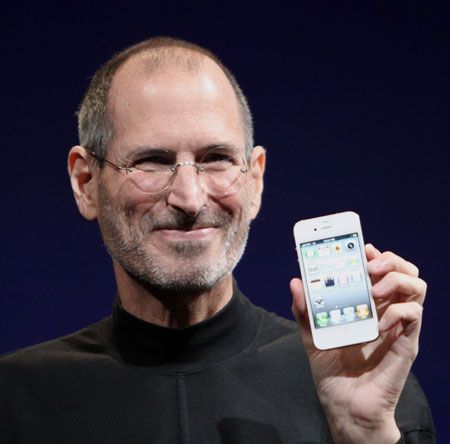
The late Apple CEO Steve Jobs / AP-Yonhap
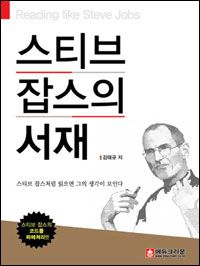
“Reading Like Steve Jobs” by Kim Tae-gyu ; Crown Publishing; 212 pp., 12,000 won
By Chung Ah-young
The late Apple founder Steve Jobs left an immeasurable legacy behind in our lifestyles with his innovative, creative technological masterpieces, regardless of region and culture. He was a charismatic genius but at the same time an oddball. His indisputable feats are widely known but his enigmatic lifestyles and way of thinking still draws curiosity.
This book “Reading Like Steve Jobs” written by Kim Tae-gyu (Crown Publishing; 212 pp., 12,000 won) offers insights into his intelligent background and geeky behavior through a list of the books that he fondly read during his lifetime.
Inspired by “Steve Jobs: The Exclusive Biography” written by Walter Isaacson, the author writes that Isaacson’s biography gave him vital clues about what kind of books influenced Jobs’ thoughts and business philosophy.
Although Jobs revealed the books he loved in some of the interviews, it is rare to form a complete list of the books Jobs was actually indulged in.
“Reading Like Steve Jobs” is more like commentaries on a single work of the list, saying “if you read like Steve Jobs, you can understand part of his eccentric behavior.”
This book focuses more on his personal side rather than corporate career by offering a peek into his profound mind and thought, which ultimately contributed to his success.
The author unravels Jobs’ life by asking a series of questions — why did he name the company Apple? Why was he obsessed with walking and why was he skeptical of undergoing cancer surgery preferring cleansing and herbal medicine?
Jobs looked perfect outwardly but deep inside he was lonely as a human being who had trauma as he was adopted at birth, having a unique perception toward life and death, bizarre eating habits mixed with fervent enthusiasm toward a great product.
The author completed Jobs’ reading list by stating those that influenced him the most: “King Lear” by William Shakespeare, “Moby Dick” by Herman Melville, “Be Here Now” by Ram Dass, “Autobiography of a Yogi” by Paramhansa Yogananda, “Cosmic Consciousness” by Richard Maurice Bucke, “Cutting Through Spiritual Materialism” by Chogyam Trungpa, “Ramakrishina and His Disciples” by Christopher Isherwood, “Zen Mind Beginner’s Mind” by Shunryu Suzuki, “Way of the White Clouds” by Lama Govinda, “Mucusless Diet Healing System,” “Rational Fasting” by Arnold Ehret, “Diet for a Small Planet” by Francis Moore Lappe, and “An Innovator’s Dilemma” by Clayton Christensen.
The author who had read all of these abstruse and unique books on the list recommends that readers read Isaacson’s biography first and then the books to better know Jobs. He classifies the reading list into four parts — leadership, religion, diet and business.
Jobs was known as a high-maintenance leader who controlled and directed almost everything from the micro to the macro. Such leadership style is in parallel with King Lear and Captain Ahab from “Moby Dick” who are willful and obsessive characters in literature, although Jobs didn’t express clear relevance of these characters to his leadership.
On a personal side, he was known as a devout practitioner of Zen Buddhism. But other various Asian religions including Hinduism affected his philosophical understanding of afterlife, cosmos and God through “Be Here Now,” “Autobiography of a Yogi” and “Cosmic Consciousness.”
Under the influence of Zen Buddhism, he was said to have raised the intensive concentration and pursue simplicity in design of the products. His religious perception was believed to have affected his mindset in business as he resorted heavily on his intuition rather than concrete figures through consulting or marketing results.
It is also well known that Jobs had unique eating habits. He was a vegetarian and also fruitarian who particularly enjoyed apples. His vegetarian inclination can be easily explained through “Mucusless Diet Healing System” and “Diet for a Small Planet.”
He was somewhere between a lacto-ovo and pesco vegetarian who refused eating meat but loved seafood. He was skeptical of a meat diet which, he believed, causes social and health problems and further obsessively stuck to the extreme diet of heavily relying on fruits — apples and carrots which are mucusless foods as Ehret suggests.
He delayed the surgical operation after being diagnosed with pancreatic cancer, though he regretted it later, because he believed all kinds of illnesses are derived from mucus that clogs the tube and membrane structures within the body. Thus he was dependent on herbal medicine and a mucus-free diet to treat the cancer. Jobs also loved walking as part of Ehret’s theory as he believed that fresh air is “invisible food” to vitalize the human body.
“Reading Like Steve Jobs” offers more insights through the in-depth commentaries of each work of the list. Also, it is helpful for readers who can’t afford to read Isaacson’s heavy-volume biography or all of the works as a compact version of his background.