'Lips of clown cannot be sewn'

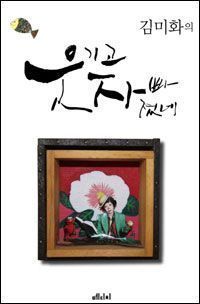
Comedienne-turned-TV host Kim Mi-hwa has released a book titled “Laugh Out Loud.” At left is its cover. / Courtesy of Medici Media
By Chung Ah-young
Koreans may well remember Kim Mi-hwa as “Mrs. Evil,” who stuck black tape between her eyebrows and wielded a baseball bat to dominate her husband in the 1980s comedy “Ssrirang Couple.”
The role made the 48-year-old comedienne a household name.
Some 20 years later, her name is more common in politics and social news sections for her work as a radio DJ, television show host and philanthropist. Renowned for her candid, outspoken views on sensitive social and political issues, she has remained in the headlines during the Lee Myung-bak administration.
Her visibility has seen her involved in legal tussles with major broadcasters. Kim now speaks out through her new book “Laugh Out Loud.”
In it, she details how she started out as a young comedienne known for her wit and satire. Her endeavors in comedy culminated as one of the original members of KBS comedy show “Gag Concert,” in 1999. Inspired by “Saturday Night Live,” it still remains a top-rated program.
However, Kim’s life path has led her to become a “politainer,” meaning an entertainer who makes extensive use of entertainment media for political ends. She rebuts the moniker, saying although she deals with many political issues in her shows, she is not a politainer.
“Think of (comedian) Shim Hyung-rae who is no fool although he plays a fool. It’s the same with me,” she writes.
The term was applied to Kim in 2007 when major conservative newspapers labeled her a strong supporter of the late former President Roh Moo-hyun. They said she was named as the host of a new radio show and an interview program because of her support for Roh during his presidential campaign. She brought the case to the Press Arbitration Commission, which was an ominous signal of a long fight with the conservative media and later the government.
Then in 2010, she was reportedly blacklisted by the state-run broadcaster KBS from appearing on its programs for her critical remarks about the Lee administration and other sensitive social issues.
KBS’ labor union backed the rumor.
She wrote on social networking services about how saddened she felt that KBS, where she started her career as a comedienne, would make such a move. She had to undergo a long investigative process by state prosecutors following a suit filed against her by the broadcaster for allegedly propagating a groundless rumor.
KBS dropped the lawsuit 127 days later leading Kim to conclude that the main reason behind litigation initiated by powerful institutions against individuals is often not intended to defend their reputations but a ploy to “frustrate the individuals through the lengthy process of investigation.”
She added that “Such lawsuits end up being withdrawn around that time the ruling is imminent after exhausting an individual in the process. It is a lawsuit that an individual can never win even before the process begins.”
But her hardships didn’t end there. The conservative media continued to scrutinize her every movement, especially citing her meeting with Roh as politically motivated. Kim revealed that she actually met Roh five times as part of her TV work and said she was impressed when the late President rhetorically said “I sometimes imagine what if politics doesn’t exist.”
She was also kicked out of her role as host of MBC program “The World and Us.”
“I am accustomed to being fired. I have been frequently dismissed from my programs without prior notice,” she says in the book.
She moved to CBS radio program “Kim Mi-hwa’s Dear People,” dealing with current issues as of last year and runs podcast “I Am Kkopsari.”
“The lips of the clown cannot be sewn,” she writes in her prologue. She has also continued numerous philanthropic and social activities while speaking against what she calls the government’s unfair policies.
In the book, she also tells personal stories related to her family, revealing her feelings about divorce, remarriage and painful experiences of an abortion and the failure of her first marriage.
She also fondly discusses her attachment to her stepson who has a development disability. Kim also introduces her beautiful house in Gyeonggi Province and trivial happiness from gardening and appreciates her husband who has been very supportive throughout her ordeals.
The book is more a criticism of the current government, frequently citing her numerous so-called legal persecutions to buttress her claims. It’s also a portrait of her personal anger and hope but also a mirror of a nation facing hard times.
“I wanted to become a comedienne in childhood, now I am a comedienne and will remain a comedienne until I die. I will return to comedy someday and I want my epithet to read ‘Kim Mi-hwa made people laugh out loud,” she writes.