Busan's Ilgwang Beach becomes outdoor art gallery

“Narratives from the Hadal Zone” (2021) by Kim Kyung-hwa / Courtesy of the artist and Busan Biennale Organizing Committee
By Park Han-sol
Ilgwang Beach in Busan, one of the many popular tourist attractions in the southern port city, was transformed into an outdoor art gallery, Saturday, as part of the month-long Sea Art Festival 2021.
This year's event, curated by artistic director Ritika Biswas from India, has invited 36 artists from here and abroad to present 22 pieces exploring the timely theme of “Non-/Human Assemblages” ― the fluid interrelations among the human agents and non-human sea and its ecosystems.
This is the first time that Ilgwang Beach has been selected as the site for the Sea Art Festival, which has previously been held in better-known and commercial locations, including Haeundae, Gwangalli and Dadaepo beaches, since its founding in 1987.
The artworks are dotted not only along the sandy beach's coastline, but also scattered throughout various facilities within the surrounding fishing village and town to better represent the core message of the ever-present interaction between human and non-human entities.
The notable installations include Kim Kyung-hwa's “Narratives from the Hadal Zone,” a gigantic egg-like structure built from abandoned pieces of lacquerware wardrobes; Bangladeshi artist Joydeb Roaja's “Liquid Roots,” which visualizes the connection between threatened nature and the precarious lives of the native population in the Bay of Bengal; and the duo Jiandyin's “The Old Pines: Becoming of the Seaside Village” that is reminiscent of the old, lush pine forest that used to cover the Ilgwang Beach region.
The Sea Art Festival 2021 runs through Nov. 14.
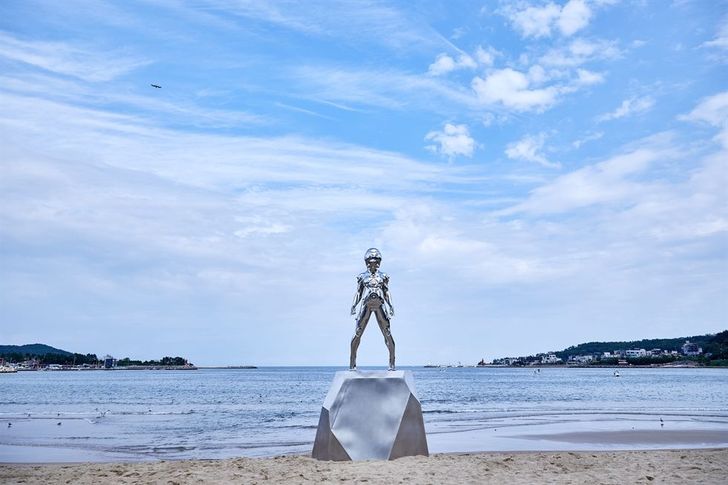
“Trance” (2021) by Choi Han-jin / Courtesy of the artist and Busan Biennale Organizing Committee