80-year-old architect, photographer rediscovered

An installation view of "Yoon Seung-joong: Architecture, Drawing As Sentence Construction" exhibition at the National Museum of Modern and Contemporary Art, Gwacheon / Courtesy of MMCA
By Kwon Mee-yoo
Two exhibitions at the National Museum of Modern and Contemporary Art, Gwacheon (MMCA), shed light on two 80-year-old doyens who made their way through the development of contemporary art in Korea, with careers spanning five decades.
"Yoon SeungJoong: Architecture, Drawing As Sentence Construction" centers around Yoon Seung-joong, the architect who laid the groundwork for modern architecture in Korea, while "Han Chung-Shik: Koyo" pays tribute to the photographer who expanded the aesthetic categories of Korean photography to formalism. These two are part of the museum’s Korean Contemporary Artists Series.
Both of the artists' works are close to daily life, bringing art a step closer to everyday life. Han's photography captures familiar objects such as trees and Yoon designed buildings seen every day such as the Supreme Court of Korea.
The Yoon exhibit, co-organized by the MMCA's curator Jeong Da-young and Remark Press' Lee Jae-jun, the exhibit features 150 floor plans, sketches and models of Yoon’s of the Wondoshi Architects Group.
Yoon is best known as the architect behind Sungkyunkwan University’s Natural Sciences Campus (1979) in Suwon and the Gwangju National Science Museum (2009) as well as the Supreme Court of Korea (1990).
Lee said the exhibit focuses on how the architect relates with the needs of the times.
"In Yoon's architecture, floor plans are an important part of his language as his works reflect how he links architecture and the city, just like the architect writes sentences in the city," Lee said.
Yoon designed buildings in the context of urbanism and the collection of his architecture creates a city. He also emphasized "major space" in his buildings, shifting interest from the exterior to inside, where people actually live, use and remember the structure.
"Art and architecture are different. Architecture has a longer public life as it stands there for over 30 years once constructed. Times change and the architect should look further with a future-oriented perspective, rather than being about the present," Yoon said.
Abstract photography
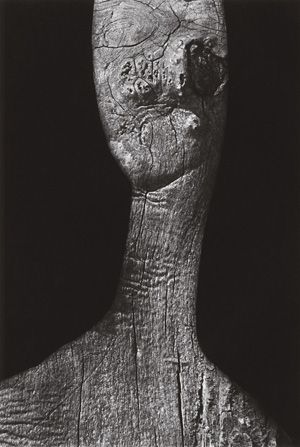
Han Chung-shik's "Trunk" (1980s) / Courtesy of the artist and MMCA
The "Han Chung-Shik: Koyo" exhibit features Han's works from his early works "Trunk" series to large printouts of the signature "Koyo ― Serenity" series.
MMCA Curator Jang Sun-gang said Han's works present the development of modern photography in Korea. "The Trunk series and Physical Landscape series printed in analog show how the artist experimented on abstract photos. These pictures portray tree trunks or body parts, but they don't look like what we normally expect from the objects," Jang said.
Han, who has been taking photographs for over 50 years, majored in Korean language education and began photography as a hobby, but the coincidence became inevitable for him.
“French photographer Henri Cartier-Bresson mentioned the decisive moment in photography and for me, that moment is when the object accords with the artist’s mind,” Han said. “That’s when I press the shutter.”
Han emphasized that abstract photography does not imitate abstract painting as the two genres are poles apart. “The term abstract photography might sound unfamiliar, but it reflects an effort to achieve formalism through photography.”
He said photographic formalism can be achieved when the photograph defies the object. "The impression from the object and the artist’s presence should predate the form of the object in abstract photography. Photographic formalism comes when the object creates second and third meanings and arrives at a stage deviating from shape and meaning," the photographer said.
"Painters can materialize their imaginations, but photographers cannot take pictures unless they encounter the actual object," Han said, quoting the reason for not being prolific.