Seoul Arts Center CEO seeks innovation
This is the first interview in a special series on culture and sports leaders. ― ED.
By Kwon Ji-youn
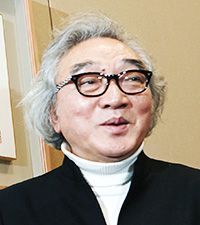
Ko Hak-chan
Seoul Arts Center (SAC) CEO Ko Hak-chan has stressed that without major changes in the classical music industry, the vestiges of the country’s classical past will fade with today’s younger generation.
In a recent interview with The Korea Times, Ko said that the development of classical music depends predominantly on innovation in marketing, management and education.
“Culture is like a river,” Ko said. “If it doesn’t flow, the water pools and goes bad. Likewise, culture needs to flow to remain fresh.”
The 67-year-old revealed how to address such challenges ― lowering the threshold of classical music venues like the SAC, creating management companies that boast expertise in nurturing stars and investing in arts management at educational institutions.
Ko pointed out that without the birth of new stars in classical music, attracting new audiences will remain a test.
“What we need are management companies, like SM Entertainment, with expertise in fostering and promoting stars in classical music,” he said. “There are so many talented young people who are sweeping trophies and awards at international competitions, but when they return to Korea they have nowhere to go.”
He pointed out that Korea is home to just one municipal ballet company ― the Gwangju City Ballet.
“There’s no point in majoring in ballet, if there are no companies to join,” Ko said. “It’s a beautiful genre and has the potential to grow, but again, there are no management companies to assist promising dancers.”
Arts management as education
For faster development, the leaders of art organizations need to know what they are doing and with whom they are dealing.
Considering Seoul Philharmonic Orchestra CEO Park Hyun-jung, Ko stressed that an understanding of art is just as important as management capabilities.
Park stepped down from the post in December following accusations that she had abused her employees.
“You can’t run an art organization with management finesse alone,” he said. “Such leaders cannot communicate with their artists. All they care about is how much money the organization has made or spent, and what their schedules look like.”
Ko’s curriculum vitae is an eclectic mix ― he spent some time bartending, some time writing and some more time producing.
“I worked with all sorts of programs when I was a producer,” Ko recalled. “I’m not an expert in one particular field, but I’m familiar with most.
“Arts and cultural management has not been a topic of conversation for a long time, but it will bear fruit in due time.”
Ko has worked incessantly to open the SAC to more of the public.
“They say the number of people who visited the SAC averaged around 3 million annually, but they were the same group of people over and over again,” he said. “We want to attract new guests; those who have yet to undergo the ultimate SAC experience.”
One such way was to hold free concerts in the SAC fountain square during the spring and summer. These concerts featured performances that were more spectator-friendly, and the square was packed with people.
“We also provided a 40 percent discount to the elderly,” Ko said. “Consequently, the number of visitors to the SAC rose from 2.3 million in 2012 to 2.98 million in 2013.”
To those who complain that allowing more visitors to the SAC will only clutter the venue and cause more havoc in the parking lots, Ko rebuts, “It is not right for culture to be created and consumed by an elite group.”
Another project that Ko launched to expand the SAC’s base was a video project, which was slammed by some critics. This project entailed the recording of performances at the SAC, which are shown at some of the major cultural venues across the country.
“This project began at the Metropolitan Opera House in New York,” he noted. “It’s hard to say the project has been a success, but it’s definitely a good start.”