Seoul’s hanok rentals captivate with traditional charm
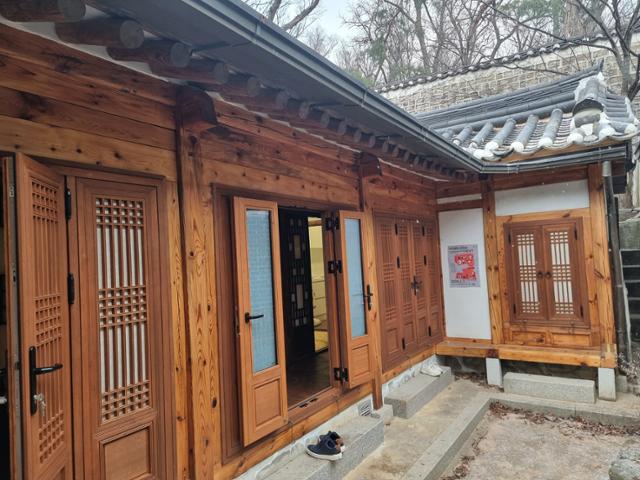
Snow falls at one of Seoul's publicly-owned hanok in Wonseo-dong, Jongno District, Seoul, on Monday. Hankook Ilbo
Snow fell on Bukchon Hanok Village in northern Seoul on Monday afternoon, but for those lucky enough to be sitting on the heated floor of a serene hanok, it felt like a relaxing step back in time.
As people stepped inside the home, a courtyard opened up, offering a striking open space. While the wooden ceiling exuded a classic hanok vibe, the interior was fully equipped for comfortable living, with features such as a modern kitchen, bathroom and air conditioning, making it suitable for contemporary living.
As Seoul opens up its first public hanok rental program, newlyweds, young families and others with dreams of living in Korea's traditional housing have flocked to check out the homes being offered.
A total of 2,628 people visited the open house event for seven units located in Gahoe-dong, Gye-dong, Wonseo-dong, Pirun-dong and Bomun-dong between Jan. 7 and Jan. 10. On Jan. 9 alone, 1,373 people came despite the cold weather.
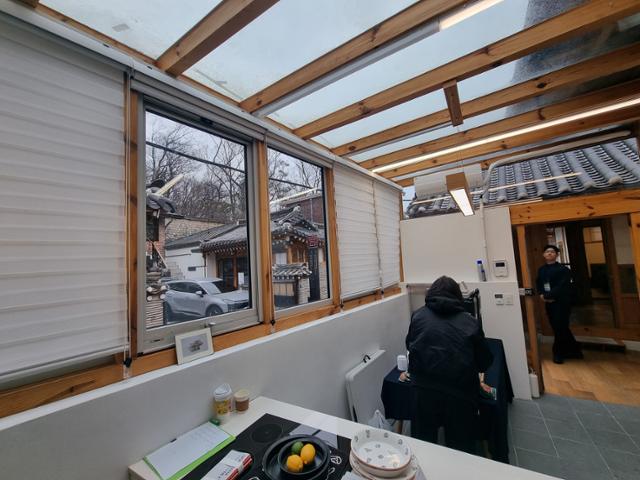
The interior of one of Seoul's publicly-owned hanok in Wonseo-dong / Hankook Ilbo
The Korean traditional homes are particularly appealing to international couples.
“Having a courtyard with a quiet atmosphere in Seoul is a huge advantage,” said Sung, a man in his 30s married to an American woman. “My wife’s eyes were wide like saucers when she toured the house.”
Even people used to apartment living showed interest. Lee, who lives in Gaepo-dong, noted the harmony between the hanok’s charming traditional exterior and neat, modern interior. Jeong, a resident of Dunchon-dong in her 30s, said, “I came because my husband wants to live in a detached house. I want to try living in a rental hanok at least once.”
Parking and heating costs remain concerns for many people, and were the most frequently asked questions during an on-site briefing held Monday at a unit in Wonseo-dong, attended by about 70 people.
Seoul’s publicly owned hanok rental units do not provide individual parking spaces for residents, so they must apply for resident-priority parking spaces through the local district office. Seoul Housing and Urban Development Corporation (SH) explained that while parking is limited due to the nature of the housing, residents will receive the second-highest priority status for parking permits.
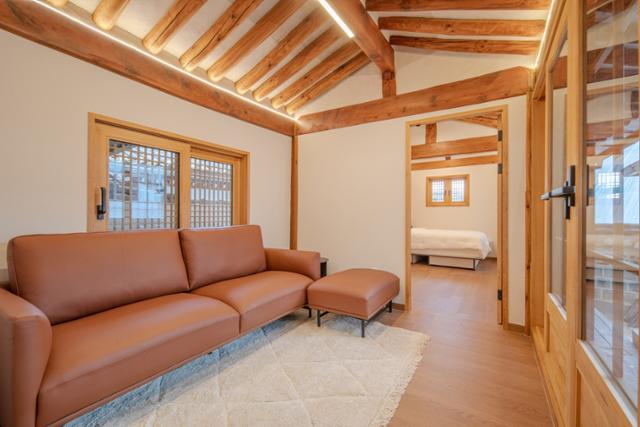
Seoul’s first publicly owned rental hanok in Gahoe-dong / Courtesy of Seoul Metropolitan Government
Electricity and gas costs are one area of uncertainty because these city-owned rentals are unprecedented. There is no separate maintenance fee; residents pay only for the utilities they consume.
“It is difficult to estimate since it was previously empty, but costs will likely be higher than general housing,” an SH official said. “All heating systems are automatic, and windows have been replaced with double-glazed windows like apartments.”
Regarding maintenance, SH added, “Given the unique nature of hanok houses, SH will fully repair all facilities that have reached the end of their lifespan.”
The city held a series of pre-opening events through Wednesday and is accepting applications Thursday and Friday. Applicants who pass the document review will be notified on Jan. 22, and those selected can move in starting in April, after eligibility checks.
Monthly rent ranges from 230,000 won ($156) to 540,000 won, depending on the deposit. The deposit is relatively high, ranging from the mid-200 million won range to the high-500 million won range.
Seoul confirmed strong demand for hanok living among newlyweds, and pledged to expand the supply of traditional housing.
“Starting in 2027, we will consistently supply about 10 units per designated area in conjunction with new hanok village creation projects,” a city official said. “We will strive to reflect the housing requirements and diverse lifestyles of newlyweds.”
This article from the Hankook Ilbo, the sister publication of The Korea Times, is translated by a generative AI system and edited by The Korea Times.