Disabled in North Korea killed at birth
By Kim Se-jeong
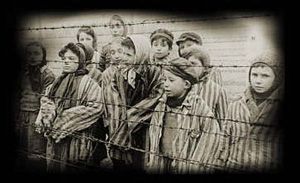
Children who were subject to medical experiments by Nazi during World War II. Defectors from North Korea said Kim Jong-un regime runs medical experiment on its disabled citizens. /Courtesy of www.auschwitz.dk
Life in North Korea is notoriously horrendous for many.
For those born with disabilities, they have little chance of survival, according to a report published Tuesday by a North Korean human rights group.
At a seminar hosted by the Database Center for North Korean Human Rights (NKDB), an NGO based in Seoul, it was revealed that people with disabilities in North Korea are killed at birth, often by their parents, or sent for use in medical experiments at universities or “Hospital 83.”
It’s unclear where “Hospital 83” is located. “Many were aware of its existence but didn’t know where it is,” a researcher from the NKDB said.
The NKDB conducted comprehensive interviews with 100 defectors who lived in North Korea between 2010 and 2014 for the report on the monitoring of North Korea’s implementation on United Nations Universal Periodic Review’s recommendations.
“A maintenance worker at a local hospital gave birth to two sons in 2012 and both had abnormal facial features. The scientific institute in Pyongyang took them for experiments. The mother tried to keep them at first but then later gave up on them,” one anonymous defector was quoted as saying.
The North Korean regime doesn’t let the disabled population be seen by outsiders, particularly in Pyongyang.
An NKDB researcher added it is common practice in North Korea for parents to kill disabled infants at birth.
The report is one of the latest reminders of severe human rights violations committed by the totalitarian regime. The UN’s special rapporteur on North Korean human rights is currently in Seoul for another report. It also came only weeks after the death of American citizen, Otto Warmbier, after he was released by North Korea. He wasn’t given consular access, a clear rights violation.
North Korean human rights violation has been on the UN agenda since early 2000.
In 2009, the United Nations Human Rights Council’s Universal Periodic Review gave the North 167 recommendations on human rights improvement and it accepted 87, fully or partially. Tuesday’s report was the result of monitoring efforts initiated by the NKDB through the interviews with the defectors and international organizations working in North Korea.
Among 167 recommendations were to ensure access to food and medicine for children, women and disabled; to provide human rights trainings on state officials; and to expand cooperation with international organizations that are working in the field.
The report said over all, the regime did little to implement the recommendations.
The report also confirmed international food aid doesn’t reach the most vulnerable in society.
“Forty-one percent of respondents answered they didn’t know the food aid existed, while 11 percent answered they were aware of it but didn’t received it personally. Only 4 percent said they were recipients,” said the report.
One defector at the seminar argued against sending the food aid, saying much of it helps the regime or people with enough resources, but many others including Oh Joon, a former South Korean diplomat to the UN, said it should continue because it has the effect of lowering food prices on the black market.