Taipei protests after South Korea tourist arrival card lists Taiwan as 'China (Taiwan)'

Foreign tourists wearing thick coats and winter gear take commemorative photos at Gyeongbok Palace in Seoul, Nov. 10. Yonhap

South Korea has designated Taiwan as "China (Taiwan)" on its online registration form for arriving tourists, visitors from the island recently discovered.
This comes as Beijing and Tokyo are locked in a diplomatic spat over the Japanese prime minister's remarks on a hypothetical Taiwan contingency.
Taiwan has protested the "unfriendly" designation, with its foreign ministry on Wednesday citing multiple reports from Taiwanese travelling to South Korea and urging that Seoul correct the "apparently factually incorrect" label.
On the website for South Korea's electronic arrival form, known as the e-arrival card, both the "previous departure place" and "next destination" fields on the drop-down menu list Taiwan as "China (Taiwan)."
Taiwan was "disappointed and dissatisfied" and had "repeatedly expressed serious concern" over the matter, the foreign ministry said on its website. It added that representations had been lodged with the South Korean government, urging an immediate correction, but no positive response had been received.
The "unfriendly listing" had caused "unnecessary confusion" and inconvenience for Taiwanese travellers and also "hurt public sentiment" in Taiwan, the statement said.
Beijing views Taiwan as part of China, to be reunited by force if necessary. Most countries, including the United States and its treaty ally Japan, do not recognise the self-governed island as an independent state. But Washington is opposed to any attempt to seize Taiwan by force and remains committed to supplying it with weapons.
On Friday, the Korean foreign ministry told Taiwan's Central News Agency that Seoul would take multiple factors into consideration and continue consulting with relevant authorities regarding the listing. It added that Seoul continued to uphold its consistent stance of promoting ongoing, non-official substantive cooperation with Taiwan.
Beijing's foreign ministry has not commented on the issue.
The controversy comes amid an China-Japan diplomatic row sparked by Japanese Prime Minister Sanae Takaichi's remarks on Nov. 7. She told parliament that a hypothetical People's Liberation Army attack on Taiwan could prompt a military response from Tokyo - crossing what Beijing calls its "red line" on the sensitive issue.
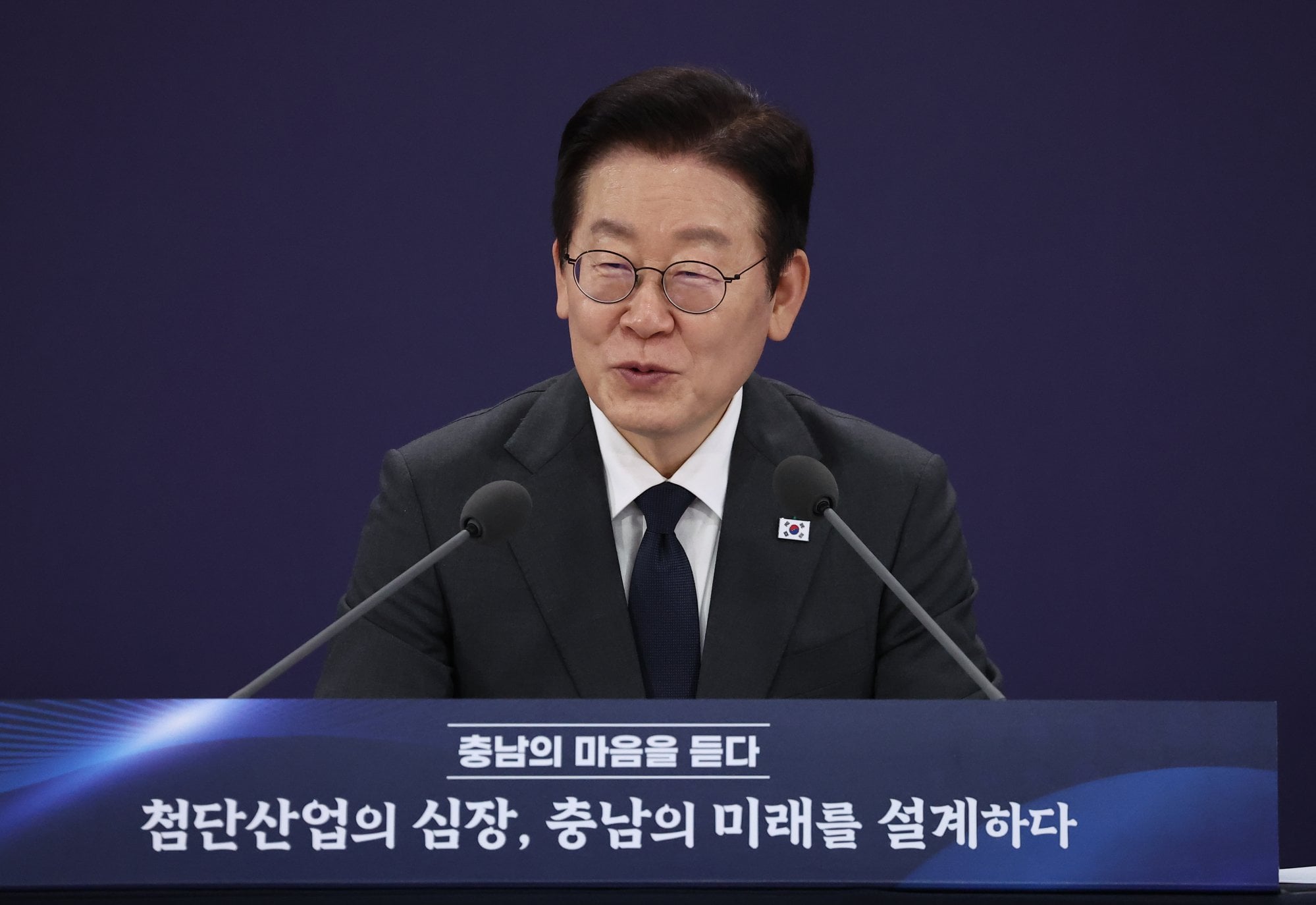
President Lee Jae Myung said Seoul could play a mediating role to ease the tensions. EPA-Yonhap
Beijing has responded with sharp criticism and a series of retaliatory steps, including suspending imports of Japanese seafood and issuing travel and study warnings, and has also repeatedly raised the issue at the United Nations.
On Wednesday, South Korean President Lee Jae Myung said that Seoul could play a mediating role to ease the tensions "where possible," while emphasising that taking sides would only escalate the dispute.
South Korea rolled out the e-arrival system in February to gradually replace paper arrival cards, which it plans to phase out by the end of the year. Travellers must fill out the electronic form up to 72 hours before arrival.
The tensions with China have taken a toll on Japan's tourism industry, with Beijing's travel warnings triggering widespread cancellations of flights, as well as hotel and tour bookings.
Mainland China is one of the biggest sources of foreign tourists to Japan, accounting for 7.48 million trips in the first nine months of this year, according to official Japanese data.
Chinese tourists seeking alternative destinations have been looking at South Korea, Thailand and Europe, including Russia, with increased interest.
Russian President Vladimir Putin on Monday signed a decree granting visa-free access to Russia for up to 30 days for many categories of Chinese citizens, mirroring Beijing's move in effect since September.
Read the article at SCMP.