Pakistan celebrates Lahore Resolution on March 23
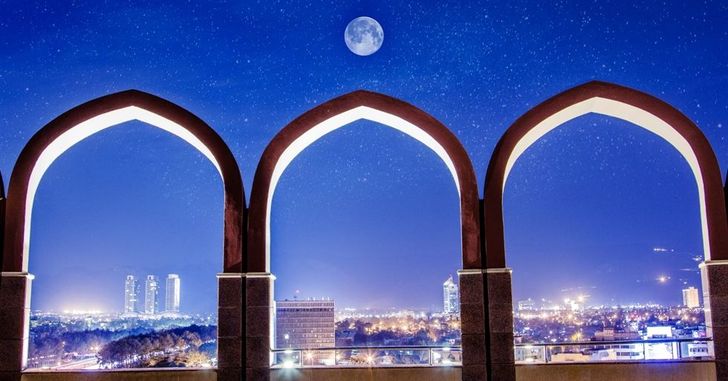
Islamabad seen through monument of Pakistan / Courtesy of Embassy of Pakistan in Korea
By Nabeel Munir

Ambassador of Pakistan to the Republic of Korea Nabeel Munir
Today, we pay tribute to the struggle and sacrifices of our founding fathers, and pledge to live up to their ideals. Unity, faith and discipline form the bed rock of our polity, and plurality and respect for human rights are ingrained in our ethos.
March 23 marks the historic day, 82 years ago, when Muslims of the South Asian subcontinent decided to unite in their democratic demand for a separate homeland, where they could establish and practice their lives in accordance with their values and traditions. Their dreams came true seven years later through the birth of Pakistan.
While diplomatic relations between Pakistan and the Republic of Korea were only established in November 1983, contacts between the two peoples date back more than 18 centuries. Buddhism was brought to the ancient Baekje Kingdom by Monk Maranantha from the Gandhara Civilization in 384.
Pakistan-Korea relations have grown from strength to strength in all fields; political, defense, trade and investment, education, science, climate change and the list goes on.
Historically, Pakistan has extended support to newly independent South Korea at the United Nations, then for its first democratic elections, and later during the Korean War. More recently, Pakistan assisted Korea in evacuating eligible Afghan nationals from Afghanistan, through the aptly named “Operation Miracle.”
Korean companies have actively engaged in investment in automotive, power and energy, chemicals and consumer goods sectors in Pakistan. New bilateral initiatives are being taken to further enhance collaboration in tourism, small and medium enterprises and human development. Leadership of the two countries remains actively engaged in promoting mutually beneficial cooperation.
As the newly arrived Ambassador, I look forward to further expanding and deepening the relations between Korea and Pakistan, both at the level of the governments, as well as between people.
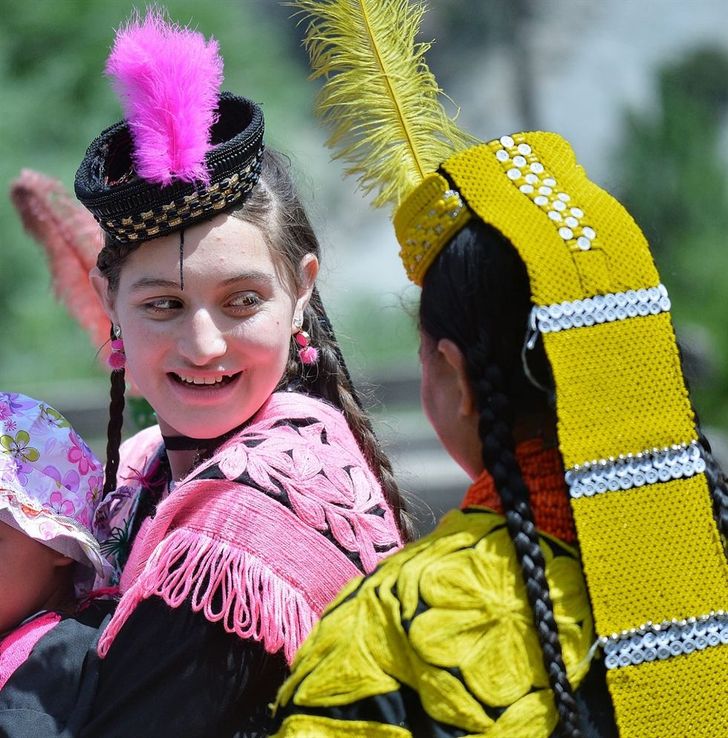
Kalash people of Pakistan / Courtesy of Embassy of Pakistan in Korea
March 23: Red-Letter Day in history of Pakistan
March 23 is a special day in more ways than one in the history of Pakistan. On this historic day, under the leadership of their founding fathers, ably led by Quaid-i-Azam Muhammad Ali Jinnah, Muslims of South Asia embarked upon a path to create a homeland of their own ― a home where they could live their lives according to the golden egalitarian principles of Islam, fulfill their desires and aspirations and develop their culture and precepts.
The Resolution adopted in Lahore that day symbolized the firm resolve of the Muslims of the subcontinent to form an independent state of their own. It was nothing short of a miracle that it became a reality within seven years (after its passage in the Annual Session of the All-India Muslim League in Lahore on March 23, 1940).
Pakistan is now the fifth-largest country in the world (population of 220 million), with a vibrant political system, a robust economy, a vocal media and an independent judiciary.
How the Muslims of the subcontinent arrived at this historic decision is a long story of peaceful political struggle to safeguard the political and constitutional rights of the Muslim community of South Asia. It is also a lesson on struggles that people face in their quest for self-determination.
Jinnah, initially, was a champion of Hindu-Muslim unity, and tried his best to reconcile the differences between the two communities. His efforts, however, failed to produce the desired results, and a formal “parting of ways” between Jinnah and the Indian Congress came after the Congress Ministries came to power as a result of elections held under the Government of India Act 1935. The Congress had won in six out of eight provinces. With total disregard for the other communities, the Congress Ministries pursued an agenda of supremacy of the Hindu culture, religion and traditions during their stint in power from 1937-39.
The Quaid, in his two-hour presidential address on the eve of the adoption of the Resolution on March 23, 1940, stated “Hindus and Muslims belong to two different religious philosophies, social customs and literature. To yoke together two such nations under a single state, one as a numerical minority and the other as a majority must lead to growing discontent and final destruction of any fabric that may be so built up for the government of such a state.”
Expounding upon his Two-Nation Theory, he said, that “Mussalmans are a nation according to any definition of nationhood. We wish our people to develop the fullest spiritual, cultural, economic, social and political life in a way that we think best, in consonance with our own ideals, and according to the genius of our people.”
The ensuing seven years were a model of constitutional agitation, peaceful protest and finding negotiated solutions, leading to the creation of Pakistan on Aug. 14, 1947.
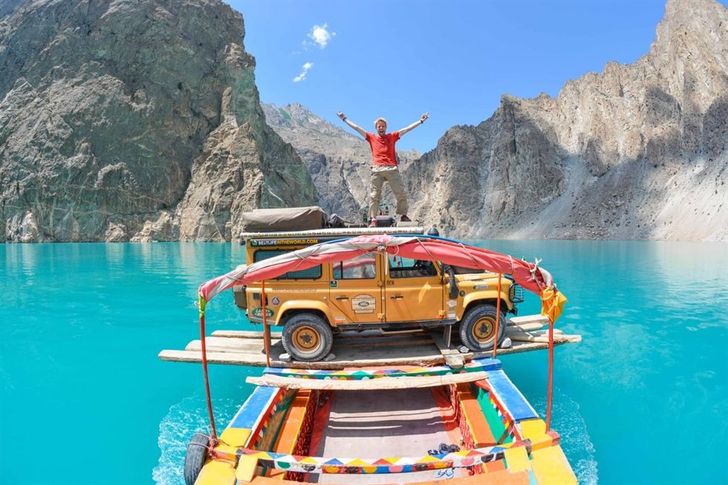
Attabad Lake in Northern Pakistan / Courtesy of Embassy of Pakistan in Korea
Virgin tourist destination
From the mighty stretches of the Karakorams in the North to the vast alluvial delta of the Indus River in the South, Pakistan remains a land of high adventure and nature. Trekking, mountaineering, white water rafting, wild boar hunting, mountain and desert safaris, camel and yak safaris, trout fishing and bird watching are some of the activities that entice adventure and nature lovers to Pakistan.
Pakistan is blessed with unmatched exotic bounties of nature. It is known for its breathtaking landscape, amazing geography, glorious history, diverse climate and clearly defined four seasons, making it irresistible for a tourist to visit this amazing land.
Pakistan is endowed with rich and varied flora and fauna. The mighty Himalayas, Karakoram and the Hindukush ranges with their alpine meadows and permanent snow line, coniferous forests, the vast Indus plain merging into the great desert, coast line and wetlands, all offer a remarkably rich variety of vegetation and associated wildlife.
Ten of the 18 mammalian orders are represented in Pakistan with species ranging from the world's smallest surviving mammal, the Mediterranean pygmy shrew, to the largest mammal ever known, the blue whale.
Pakistan is an especially important site for both Sikh and Buddhist tourists. At one point, Punjab was the center of the only Sikh empire in history. Nankana Sahib, the birthplace of Baba Guru Nanak (the founder of Sikh religion), is one of the holiest sites for Sikhs, with the potential to attract as many pilgrims as the Golden Temple in Amritsar.
Pakistan's Gandhara region, comprising Mardan, Taxila and Swat, hold a special place in the hearts of Buddhists. Buddhism in Korea was also brought by a Monk from what is now Pakistan, Monk Maranantha, and later on a Korean Monk Hyecho traveled to Pakistan some 1,300 years ago.
Just recently, a 48-foot-long Buddha was unearthed in Haripur making it the world's oldest sleeping Buddha statue. Takht Bahi in Khyber Pakhtunkhwa and the sites in northern Punjab alone have the potential to attract a major proportion of the 50 million Mahayana Buddhists in Korea, China and Japan.
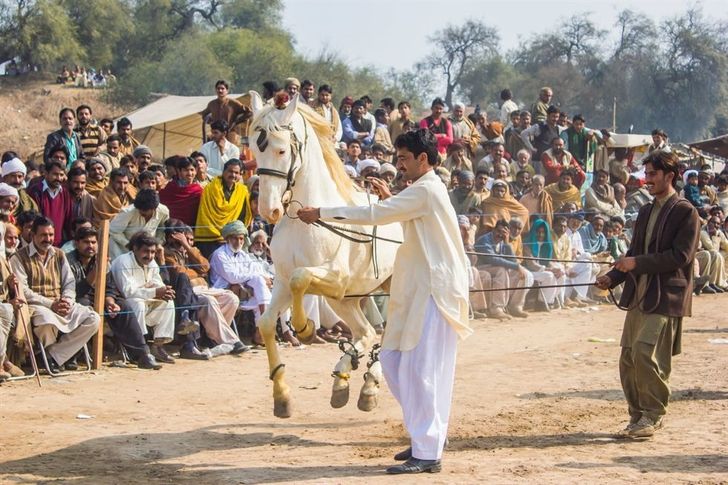
Horse culture of Pakistan / Courtesy of Embassy of Pakistan in Korea
Land of Opportunities
Pakistan, with the fifth-largest population in the world (more than 220 million), is also the 26th-largest economy by purchasing power parity and 42nd-largest economy by nominal gross domestic product. By 2050, Pakistan is tipped to become the 18th-largest economy.
The country is a federal parliamentary democracy, comprising of four provinces and other federal territories, based on the principle of separation of powers, and an efficient regulatory system that oversees the economy. There are a number of very good reasons why Pakistan is an attractive destination for investment, including investor-friendly policies, big market, availability of skilled workforce, developed infrastructure, geographic location and abundant natural resources.
The Government of Pakistan has created a regulatory regime that is the most investor friendly in the region. Foreign investors, in relation to the establishment, expansion, management, operation and protection of their investments are entitled to treatment “No Less Favorable” than that granted to national investors in like circumstances.
Pakistan receives considerable FDI from across the globe, including Asia, Europe, the Americas, Africa and Australia.
Many Korean investors have been taking increasing interest in Pakistan's market. Kia, Hyundai, Lotte Confectionary and Lotte Chemicals have benefited beyond expectations. Kia, for instance, has become the third-largest car manufacturer in Pakistan within two years of production.?Seeing the success of other companies, Samsung Electronics has also entered the Pakistani market, commencing manufacturing of cellphones and LED TVs in Pakistan.
Korean companies also envision?tapping the vast Central Asian market through Pakistan. As the government in Pakistan is visualizing increased?connection with its neighbors to integrate economically, Pakistan and Uzbekistan have already entered into an agreement to allow transit of goods from Pakistani sea ports to Uzbekistan via land routes and vice versa. Similar transit agreements will be concluded with other Central Asian countries to enhance trade and investment linkages.
Apart from this, Pakistan encourages investors to invest in Special Economic Zones (SEZ), Special Technology Zones and Export Processing Zones, all with their very competitive incentives, such as no income tax for 10 years and zero tax on import of machinery for setting up industries in SEZs.??The Government encourages investment in logistics, food processing, tourism and hospitality, information technology and housing etc.??
Nabeel Munir is ambassador of Pakistan to the Republic of Korea.