ROUNDTABLE Female ambassadors present different views on diversity

EU Ambassador Maria Castillo Fernandez, front, takes part in a roundtable on diversity and multiculturalism co-hosted by the Ministry of Gender Equality and Family and The Korea Times at The Korea Times' office in central Seoul, Feb. 24. Korea Times photos by Shim Hyun-chul
Philippine Ambassador Maria Theresa Dizon-De Vega
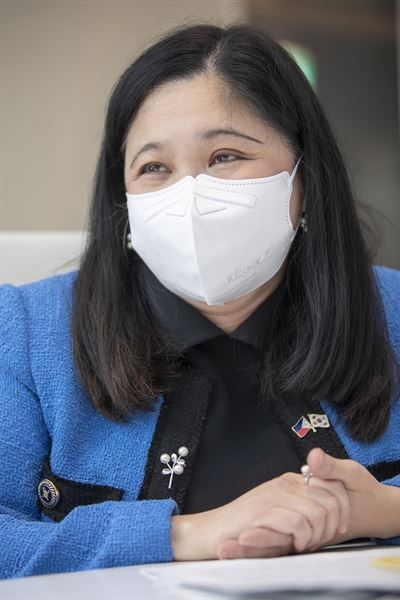
Philippine Ambassador to Korea Maria Theresa Dizon-De Vega
In the Philippines, which is more of a migrant-sending country, we still do have to take into account the presence of differences in different cultures and Indigenous backgrounds as we have over 180 different Indigenous groups. On the domestic level, what we've done is something similar to what Korea is doing in its approach and many other countries are doing in their approaches to greater integration.
That's being able to balance a healthy respect for the Indigenous rights and Indigenous traditions in the history of the culture. But at the same time, also being very careful and being very sensitive not to isolate them from mainstream society. There has to be a balance and it has to cut across different fields, whether it is in access to education or to the decision-making process.
One other way to raise public awareness about the importance of multiculturalism is to have a national campaign on narratives of multicultural families coming together. I think it's important for people to know about the challenges, but also about the ability to rise above the challenges and to be able to integrate more fully into Korean society. There are many success stories out there and if we bring it out there to the public, they will appreciate and better understand.
Another is for embassies to work more closely with partners in Korea and among their own migrant communities to help in the information dissemination process for migrants. At the Philippine Embassy we have launched a “Know Your Rights and Responsibilities Information” series with resource persons from the Korean Government, the Filipino Community, and other important support entities.
Indian Ambassador Sripriya Ranganathan
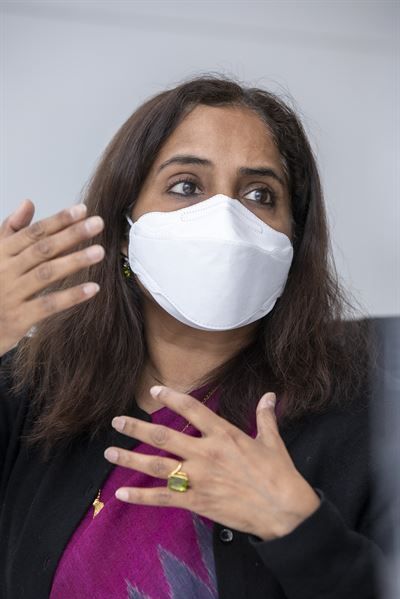
Indian Ambassador to Korea Sripriya Ranganathan
At its heart, the value of multiculturalism and diversity is a fundamental value which modern societies embrace as part of the commitment to creating what is suitable and equal.
We have also tried to protect the rights of minorities not just by way of what they can do with their families, but also in how they can participate in the economic and political opportunities in the nation. That is also as important as social and cultural rights. We've also tried to do what we can to make the benefits of education available across the country, regardless of the region and different levels of economic development.
At the same time, we try not to lose sight of the original vision of the country, which is diversity and multiculturalism.
Rwandan Ambassador Dalila Yasmin Amri Sued
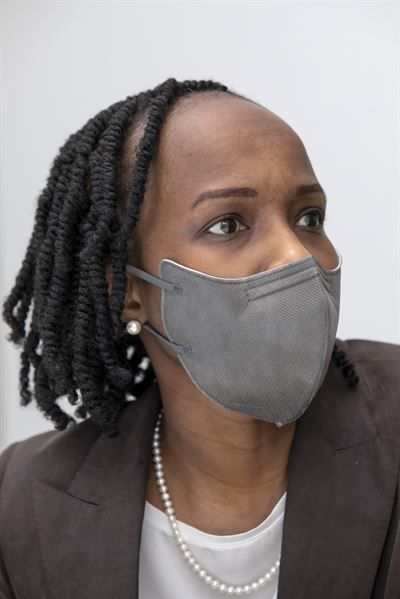
Rwandan Ambassador to Korea Dalila Yasmin Amri Sued
Our students here, and probably other African students, do stand out. I think sometimes it is a bit difficult because the perception of the continent is not the best and it gives more of a feeling of not knowing and maybe fearing sometimes. But it is changing. I think the (ministry's) campaign is helpful, but we should do a bit more. We'll be very glad if we could do something together. It's not just to me but to the whole continent in general.
For us, what has really helped was the fact that nationality is obtained not only by the parents, but also for the people who have been in the country a long time. I think it was a big signal for the population to understand that people who contribute totally are equal to the others and should be integrated. I think these are small signals but it sends a strong message to the youth and to the families that it is okay and it is actually a huge benefit to have diversity in your society.
EU Ambassador Maria Castillo Fernandez
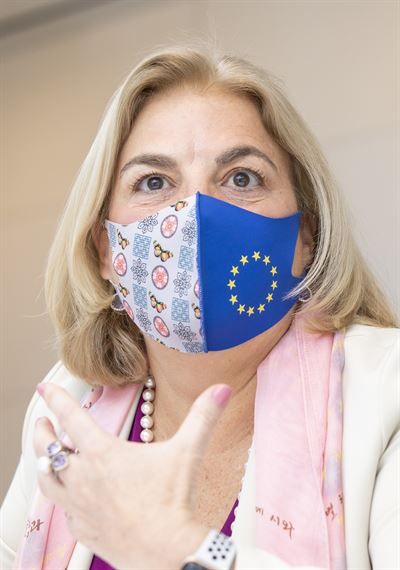
EU Ambassador to Korea Maria Castillo Fernandez
(Multiculturalism) is an issue of human rights. This is about equality, human rights and laws that enabled us to live with the same conditions, especially to take care of multiculturalism, which is in our society, and that certainly is the migrants.
I think the government needs to put (multiculturalism) throughout all the policies, these cross-cutting issues of multiculturalism, gender equality and equality in general. It is not only to take care of the most vulnerable part, but also for all of us. It will be very important for Korea to manage to continue the economic growth without forgetting the social part of the economy.
(The key to integration is that) we all have rights and responsibilities such as important values of respect and tolerance. This is a two-way ― it's for migrants and also for the people that choose to accept them.
Dutch Ambassador Joanne Doornewaard
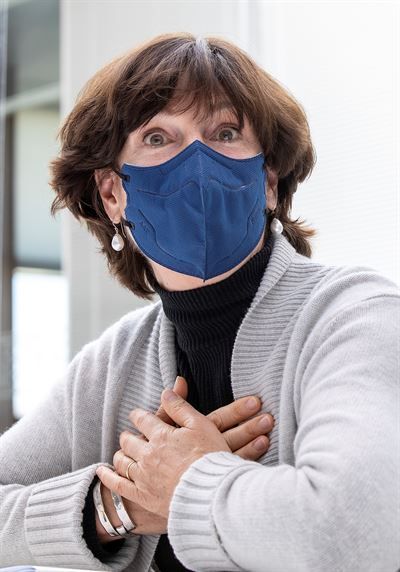
Netherlands Ambassador to Korea Joanne Doornewaard
We really see what diversity really brings ― a lot of positive things for innovation that enrich your society.
Now, for people who want to come to the Netherlands, they have to learn Dutch. If you want to get into the depth of the society, you have to understand these values.
It starts with education, starting early with children when they are in the elementary school. They play with different friends, learning that we are all equal, doesn't matter what color we are. You can have your own culture, but we have certain values that we think are important. It starts to help these people to integrate in a new society together. So as a society, we felt overwhelmed, then we had to adapt and assimilate. And that's a process that's still going on.
Australian Ambassador Catherine Raper
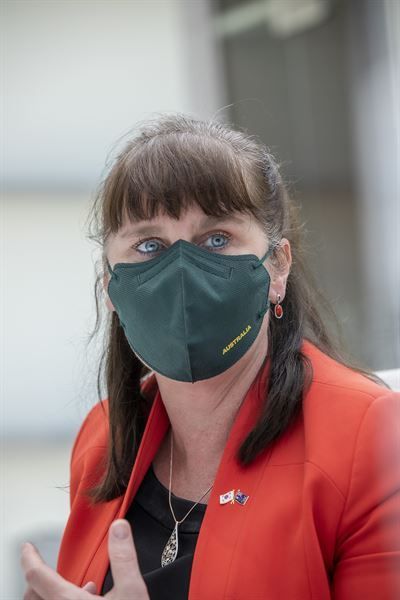
Australian Ambassador to Korea Catherine Raper
We see our diversity of people as a real strength. It brings us great cultural diversity ― lots of different languages and beliefs and traditions that help strengthen and contribute to a rich social fabric and help spark innovation and creativity. It builds our skills base and contributes to our economic growth. Australia would not be the country we are without a very diverse population built on many decades of strong immigration.
We make sure that people coming to Australia have the opportunity to learn about Australian democratic traditions and culture and to be a contributor to our shared values, rights and responsibilities. Feeling connected is an important part of that.
It's a two-way process. We get a lot in Australia from the cultural traditions and diversity and creativity that comes from our migrants. It makes us a richer society. At the same time, there are certain basic values in Australian society that we ask our migrants to adopt and live up to. That's the balance that we're trying to strike.