Qatar celebrates National Day 2021
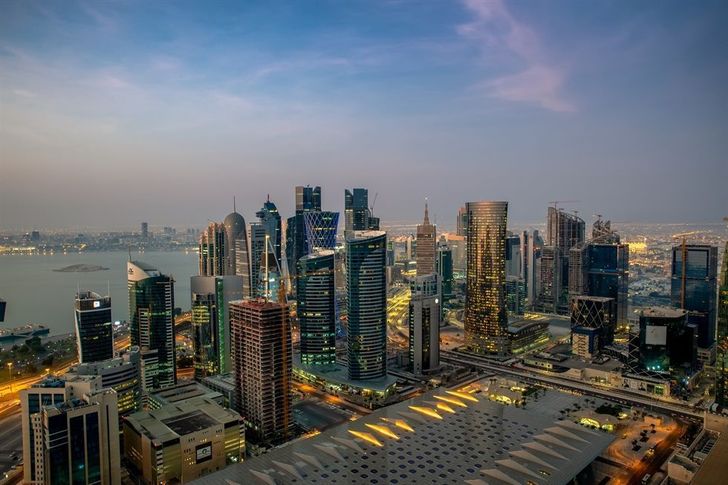
West Bay of Doha City / Courtesy of Embassy of Qatar in Korea
The Embassy of Qatar in Korea contributed this below article on the occasion of the country's National Day. ― ED.
By Khalid bin Ibrahim Al Hamar
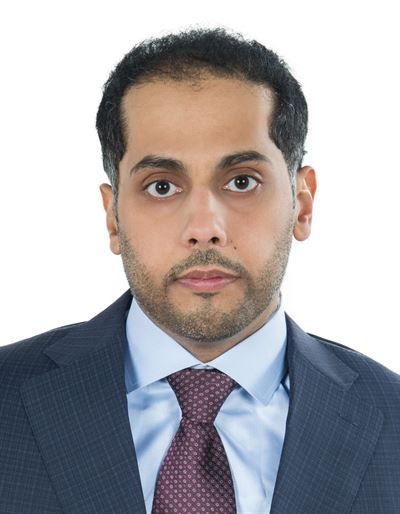
Khalid bin Ibrahim Al Hamar, ambassador of the State of Qatar to the Republic of Korea / Courtesy of Embassy of Qatar in Korea
In my capacity, as ambassador of the State of Qatar to the Republic of Korea, I feel greatly privileged and honored to celebrate the National Day of the State of Qatar in this wonderful city of Seoul. This occasion is celebrated annually on Dec. 18 to mark the date in 1878 when Sheikh Jassim bin Mohammed Al Thani succeeded his father.
It is genuinely pleasant that this glorious celebration takes place at a time when the relations between the State of Qatar and the Republic of Korea reach one of their highest peaks.
Reciprocal visits among leaders of both countries have contributed to strengthening and making relations between the two countries reach the current level.
On top of these visits comes the visit of His Highness the Amir Sheikh Tamim bin Hamad Al Thani in June 2019. This visit contributed to opening new horizons for cooperation between the two countries.
During the visit a number of agreements and memorandum of understanding were signed, which strengthened the special relations between the two countries.
Energy relations
Qatar and Korea share a strong relation spanning over 47 years, and have made great milestones and achievements together. In 1995, Qatargas signed the first LNG sales and purchase agreement, and four years later delivered the first cargo to Korea.
Since then, Qatargas has increased its deliveries to reach more than 9 million tons per annum (MTPA) of LNG to Korean customers. Lately, Qatar Energy signed a long term sale and purchase agreement with Korea Gas Corporation for the supply of 2 MTPA of LNG to Korea.
Today, Qatargas is the largest LNG supplier in the world and it clearly intends to maintain its leading position in the LNG industry and is determined to continue to be a trusted and reliable supplier of clean energy to the market.
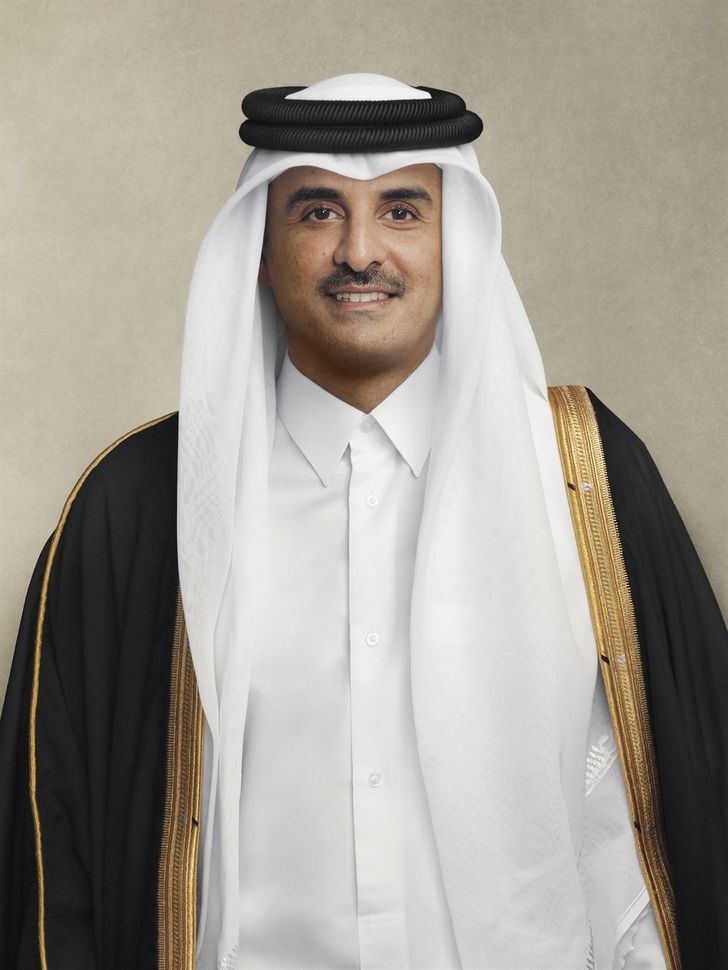
His Highness The Amir Sheikh Tamim bin Hamad Al Thani / Courtesy of Embassy of Qatar in Korea
Largest LNG shipbuilding
Qatar Energy signed, on June 1, 2020, agreements to reserve LNG ship construction in Korea to be utilized for Qatar petroleum's Future LNG carrier fleet requirement, including those for the ongoing expansion projects in the North Field and the United States.
Under these agreements, The big three Korean shipyards ― Daewoo Shipbuilding & Marine Engineering (DSME), Hyundai Heavy Industries (HHI) and Samsung Heavy Industries (SHI) ― will reserve a major portion of Their LNG ship construction capacity for Qatar Energy through the year 2027.
It is worth noting that Qatar requested 73 LNG carriers (for the export of LNG) from 2001 to 2012, and the three Korean companies won all of these orders, which indicates the extent of Qatar's confidence in the technology of Korean companies.
These milestone agreements indicate the close relations between the two countries, highlight Korea's position as a key and strategic energy partner with the state of Qatar, and will take the relations between Qatar and Korea to greater and brighter Horizons.
The deal will create more than 160,000 jobs and revive the shipbuilding and related industry such as steel, amongst others. Moreover, it will reinforce Korea's position as the world leader in the shipbuilding industry and it will further consolidate the already existing cordial relations between the two countries.
Foreign Policy
The foreign policy of Qatar is based on the principles of consolidating international peace and security, promoting peaceful settlement of international disputes, mutual respect and common interests, peaceful coexistence and international cooperation, adherence to the values of justice and openness and respect for human rights.
To that end, Qatar is keen on practicing the principles of good neighborliness, avoiding interference in the internal affairs of states, supporting the right of peoples to self-determination, in accordance with the principals of international law and the U.N. charter.
The foreign policy of Qatar has accomplished many feats. Lately, Qatar played a major role in evacuating thousands of afghan civilian and nationals from other countries out of Afghanistan, and works alongside its international partners on Afghan soil to ensure the safe passage of Afghans and other nationalities in order to secure a safe path for them outside Afghanistan.
Qatar has facilitated the evacuation of about 58,000 people through Doha in coordination with the concerned countries and the parties present in Afghanistan, where most of them have settled as guests in Qatar for a while until they resume their way to their final destinations.
The evacuation efforts came in the context of Qatar's commitment to the brotherly Afghan people and their right to live with dignity and in safety, and the evacuees include families, women and children, in addition to minorities.
Because of the COVID-19 pandemic and the challenges it poses, Qatar has decided to provide free health care facilities, free quarantine and COVID-19 tests as well as free vaccination for all those coming from Afghanistan. In addition to free accommodation and other necessary services.
Qatar continues its efforts to support and facilitate efforts to reach a comprehensive political consensus that achieves security and stability in Afghanistan and involve all Afghanis in the process. This can only be achieved through diplomacy and dialogue that includes all sectors of Afghan society.
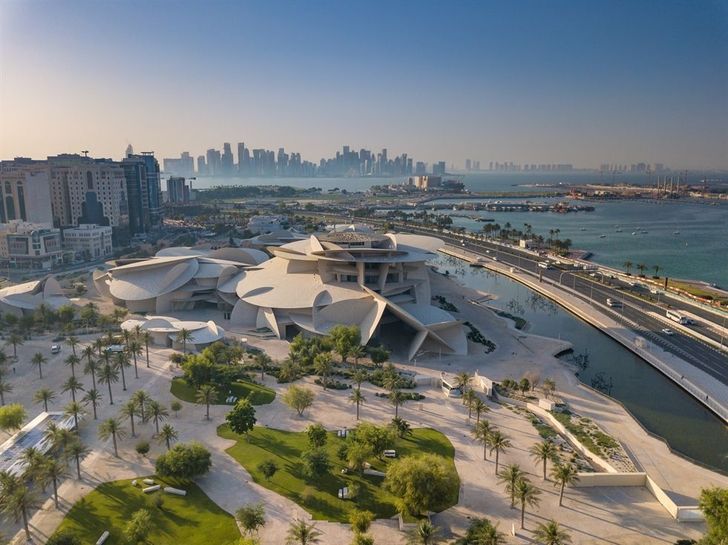
Qatar National Museum / Courtesy of Embassy of Qatar in Korea
Qatar National Vision 2030
Qatar National Vision 2030 is a developmental plan that has been launched during the reign of His Highness the Father Amir Sheikh Hamad bin Khalifa Al Thani to serve as a clear roadmap for the future of the State of Qatar. It aims at building a bridge between the present and the future through its sustainable development goals. It aspires to provide current citizens along with future generations with a standard of high living in an active and prosperous society.
Qatar National Vision 2030 was established by the Qatari leadership in order to secure the prosperity of the Qatari people and enabling them to occupy honorable ranks among the countries of the world at all levels, especially the well-being of the people, the health system and the quality of education.
As far as the standard of living is concerned, the Qatari citizen is ranked first worldwide regarding GDP per capita, which according to the Suisse Credit Bank statistics, reached $147,000 a year in 2020.
At the healthcare level, Qatar was ranked 18th worldwide and first in the Middle East according to the Numbeo Health Care Index 2020. It is worth mentioning that the healthcare system in Qatar is free for both Qatari citizens and foreign residents.
Furthermore, Qatar's national vision established solid grounds for the economy of the country. The Qatari economy will grow by 1.9 percent this year and 4 percent next year, despite the pandemic. While the trade surplus of the country increased with 101 percent in the third quarter this year compared to 2020. These ratings show the strength of the economy of Qatar and its ability to overcome challenges.
The Qatar National Vision 2030 strives for establishing a society that embodies the principles of the State's constitution that protect public and personal freedoms. It also aims at achieving economic and social equality by promoting justice and charity, and emphasizing ethical and religious values.
In addition to its human, social, and economic goals, the Qatar National Vision 2030 aims at managing growth to ensure and maintain a harmonious development of society, economy and natural environment. It also aims at continuing to manage its hydrocarbon resources to enhance its people's high standard of living.
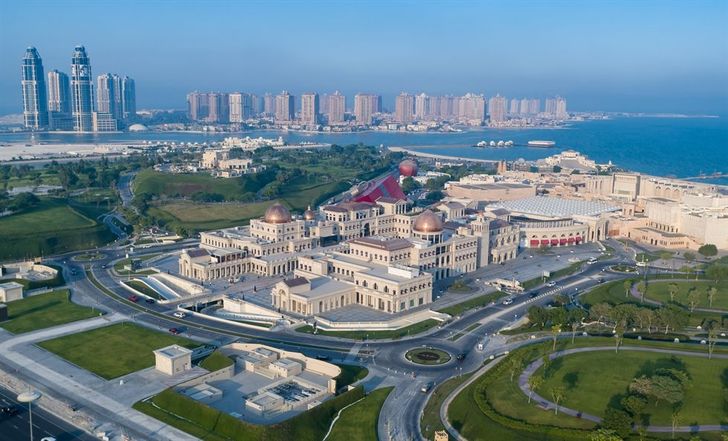
Katara Cultural Village / Courtesy of Embassy of Qatar in Korea
Gender equality and female empowerment
Gender equality and female empowerment are central to Qatar's success and vision. Qatar is an outspoken advocate for women's rights at home and abroad.
In Qatar, women hold prominent roles in all aspects of life, including economic and political decision making. Qatar leads the region by nearly every gender equality indicator. This includes the highest labor force participation rate for women, equal pay in the government sector, and the highest percentage of women enrolled in university programs.
Education is the basis for equal opportunity and development. Qatar has invested heavily to ensure all women have access to quality education and opportunities in all sectors, especially STEM (science, technology, engineering and mathematics) industries.
New hub of education in Middle East
In its pursuit of a brighter future for its people, Qatar attributes great significance to the sector of education. Qatar believes that education is the key to the development of nations. It is the innate right of every person and the responsibility of all communities and governments.
It was in 1952 that Formal Education started in Qatar. The comprehensive educational policy of the country has developed on solid bases ever since. It has been strongly based on the adherence to the heritage of the Islamic nation and its moderate character. It has also been firmly established on the commitment to the development of educational curricula and systems; in addition to, constant endeavors to benefit from modern and technological achievements and new educational experiments.
The vision of Qatar towards education is a comprehensive, broad and open-minded vision. It seeks to involve children and adults, males and females from all social, economic and educational backgrounds, and despite all challenges in the process of learning and acquisition. In this regard, the government has released an initiative to develop general education in the country under the slogan "Education for a New Era.”
The initiative aims at providing the best education. Qatar also allocates special attention to private education. The country supports the establishment of private educational institutions of different kinds. Major policies, programs and institutions have been established to provide private education with continuous support in legal and supervision aspects.
With the establishment of education city, Qatar achieved its dream to have the best schools, programs and universities in the world. Qatar has always believed that this dream can come true if the right effort was made. Qatar also believed that institutions and universities such as Virginia Commonwealth University, Academy Bridge Program, Weil Cornell Medical College, Texas A&M University for Engineering, Rand Qatar Policy Institute, Carnegie Mellon University, HEC Paris, Stenden Qatar, UCL Qatar, among others could exist in the State of Qatar. This mosaic collection of prestigious schools and universities, including some of the leading universities in the Unites States, France, Netherland, the United Kingdom and Canada makes education city so unique.
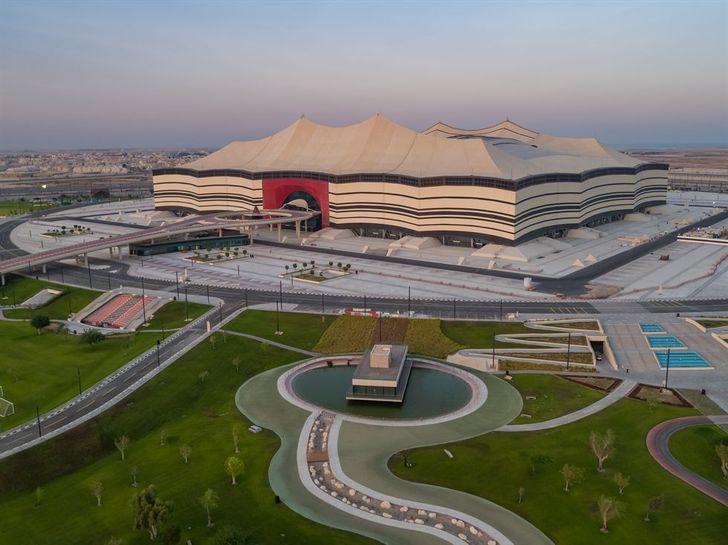
Al Bayt Stadium / Courtesy of Embassy of Qatar in Korea
World Cup Qatar 2022
The FIFA World Cup Qatar 2022 will take place from Nov. 21 to Dec. 18 in eight magnificent stadiums across Qatar, all of which are now ready, with main contractor works on Lusail Stadium ― the 80,000-capacity venue for next year's final ― having been completed.
Qatar has achieved unprecedented success over the past years, as it built seven stadiums entirely specifically to host the World Cup competitions, while Khalifa International Stadium witnessed comprehensive development work.
The 2022 FIFA World Cup will be a tournament like no other. It will be connected, green and personalized to your individual preferences. It will be the first time the world's biggest football tournament is held in the Middle East, and the first FIFA World Cup where the stadiums are so closely linked that fans can easily attend two matches in a single day.
Khalid bin Ibrahim Al Hamar is ambassador of the State of Qatar to the Republic of Korea.