'Washington, Pyongyang should first strike small deals to reach big deal'
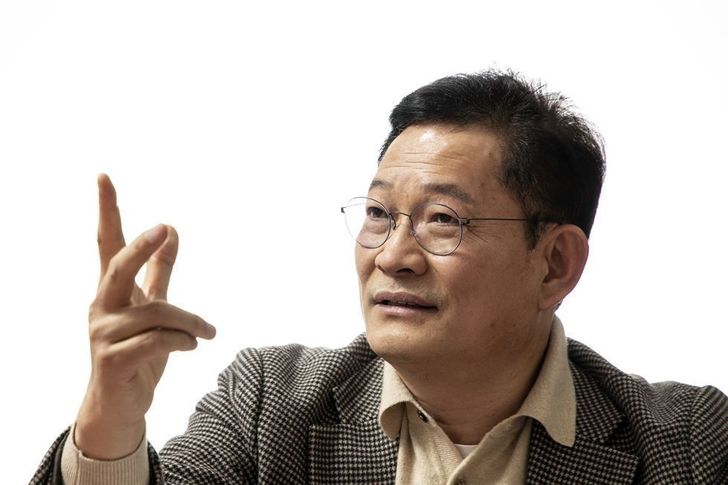
Rep. Song Young-gil of the ruling Democratic Party of Korea speaks during an interview with The Korea Times at his office at the National Assembly, Seoul, Jan. 20. Korea Times photo by Choi Won-suk
Biden administration urged to take gradual approach to denuclearize North Korea
By Jung Da-min
Some international relations watchers here have expressed concerns that the issue of the denuclearization of North Korea and security issues of the region will be pushed back on the priority list of the new U.S. administration under President Joe Biden, who was inaugurated Jan. 20 (local time). This is because Biden has said he will focus on dealing with domestic issues such as uniting the divided American people and fight the COVID-19 pandemic first.
Rep. Song Young-gil, a five-term lawmaker with the ruling Democratic Party of Korea and chairman of the National Assembly Foreign Affairs and Unification Committee, however, said the denuclearization of North Korea is also a pressing matter for the United States when Pyongyang continues to develop nuclear weapons that could strike U.S. territory.
“The war between the Koreas is still ongoing and we are currently in an armistice, which means the security situation here is like a dormant volcano that could explode at any time,” Song said during an interview with The Korea Times at his office at the National Assembly in Seoul, Jan. 20, hours before the inauguration of Biden. “Pyongyang seemed to have returned to its past byongjin policy, meaning a parallel development of its economy and nuclear weapons, on the occasion of the 8th Congress of the Workers' Party of Korea carried out earlier this month.”
Song said North Korea showing off its development of nuclear weapons, such as submarine-launched and intercontinental ballistic missiles, at the party congress followed by a military parade showed that the denuclearization negotiations between Washington and Pyongyang could return to their previous level before the three meetings between former U.S. President Donald Trump and the North's leader Kim Jong-un.
“As the North will not easily give up developing nuclear weapons unless the U.S. eliminates its concerns over security threats and economic sanctions, both Washington and Pyongyang will need to turn to salami tactics, a step-by-step approach striking small deals first.”
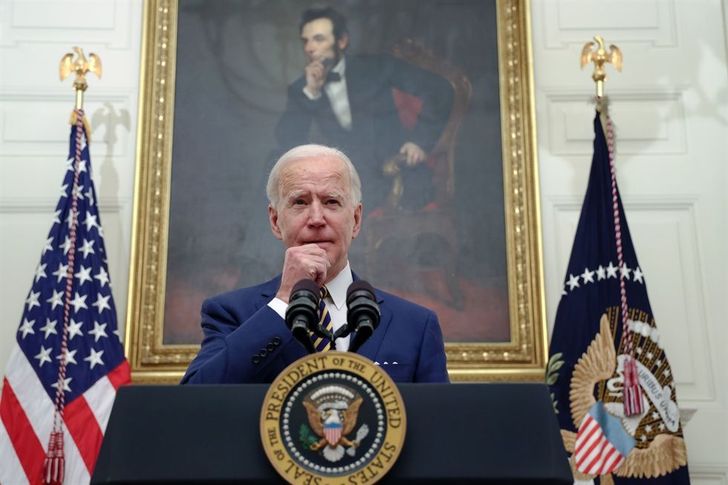
U.S. President Joe Biden speaks about his administration's plans to respond to the economic crisis, in the State Dining Room at the White House in Washington, D.C., Jan. 22 (local time). Reuters-Yonhap
Song said Washington will be able to get Pyongyang to take action such as demolishing a nuclear site like the previous cases of Tongchang-ri and Punggye-ri, by first lifting a travel ban on American citizens to North Korea or allowing South Korean organizations' investment projects in the North.
He also said the Biden administration will need to create a post for an official to assume full charge of North Korea-related issues, like the special representative for North Korea taken by Stephen Biegun under the Trump administration, as the issue of denuclearization of North Korea requires much dedication and commitment.
As for how the South Korean government should deal with diplomatic relations with other neighboring countries including China, Russia and Japan during the Biden administration, especially amid the growing rivalry between the U.S. and China, Song said Seoul should try to keep a balanced stance between the two countries, although the military alliance between Seoul and Washington should be a priority for Seoul.
“Seoul needs to be careful not to give the wrong signal to China or Russia that it is trying to build a trilateral military alliance between the U.S., South Korea and Japan, as that could provoke China and Russia to strengthen their military partnership and pose another threat to South Korea when the South is already facing the security threat from North Korea,” Song said. “Also, Seoul needs the cooperation of China and Russia in dealing with the issue of the denuclearization of North Korea.”