Kyrgyzstan celebrates Aug. 31 Independence Day

A celebration takes place in Kyrgyz city of Bishkek for the 28th anniversary of Kyrgyz Republic's Independence Day in 2019. / Courtesy of Embassy of Kyrgyzstan
The following is a contribution from the Embassy of Kyrgyzstan in Korea. ― ED.
The Kyrgyz Republic celebrates the 29th anniversary of its Independence on Aug. 31, 2020.
In fact, the statehood of the Kyrgyz people dates back several centuries. According to history, the Kyrgyz nation had their own state in the VIII, X, XVII centuries. Kyrgyz people maintained wide diplomatic ties with Mongolia, China and other states. From the year of 860 to 873, the Kyrgyz sent three plenipotentiaries to China. Later, due to number of reasons, the Kyrgyz state collapsed and has become dependent on the conquerors. The centuries-old history of the Kyrgyz people is marked by severe losses, incessant struggle for freedom and independence. Starting from the XVII century until the October Revolution in Russia the Kyrgyz people no longer had their own statehood. Later, in 1936 Kyrgyzstan became a republic of the Union of Soviet Socialist Republics (USSR). After the collapse of the Soviet Union Kyrgyzstan gained the independence.
On Aug. 31, 1991 the Supreme Council of the Republic of Kyrgyzstan adopted a declaration on the state sovereignty. The countdown of the new history of Kyrgyzstan, which has become an independent, sovereign, democratic state, begins from that date.
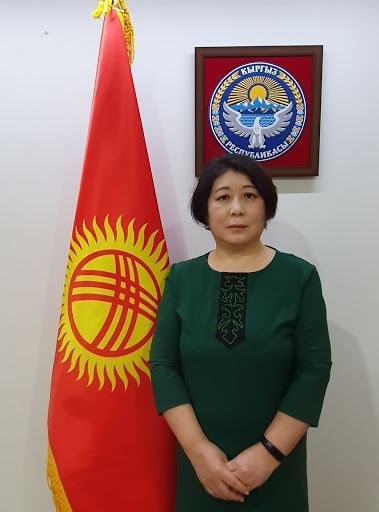
Kyrgyz Ambassador to Korea Dinara Kemelova
Since the beginning of its sovereignty, the Kyrgyz Republic has chosen the presidential-parliamentary path of development, the elections of the first president of Kyrgyzstan were held in 1991. The state has taken a course towards the development of a market economy and the implementation of democratic principles, the protection of human rights and freedoms.
The Constitution of Kyrgyzstan, state symbols ― flag, coat of arms, anthem ― were adopted on May 5, 1993.
Since March 2, 1992, Kyrgyzstan has been a member of the U.N. Kyrgyzstan was the first country among the countries of the former USSR to introduce its national currency, the som, and is the first country out of the region to join the WTO in 1998.
Over the years of its independence, Kyrgyzstan has established diplomatic relations with 164 countries and is a member of 124 international organizations.
However, along with its achievements, the Kyrgyz Republic, which had a winding path towards democracy, has had certain difficulties too. The freedom-loving people of Kyrgyzstan had protested twice against the authoritarian regimes of the country, against the corrupted family-clan rule in 2005 and 2010. As a result of these mass protests of the population, two presidents of the country have been displaced from the post.
As an outcome, a new Constitution was adopted through consensus building in 2010, which introduced parliamentary system of governance. Openness and accountability of the government to the people is now bearing fruit.
Thanks to the introduction of the advanced technologies in the electoral process, transparent and competitive parliamentary and presidential elections were held in Kyrgyzstan in 2015 and 2017. This is a progressive example of democracy in the region.
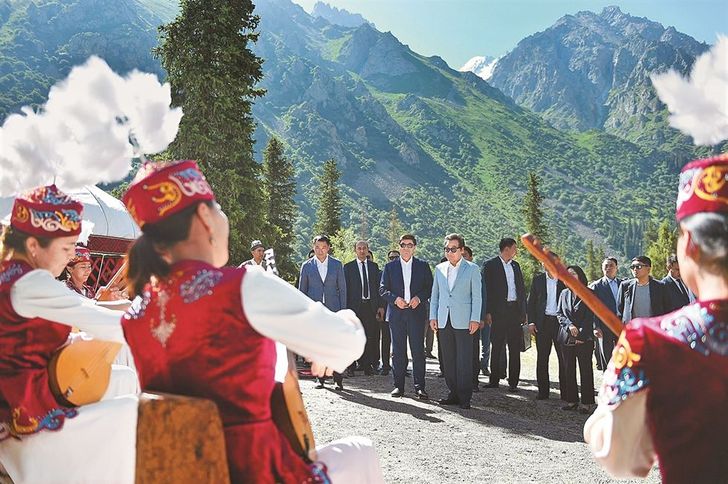
Kyrgyz Prime Minister Mukhammedkaly Abylgaziev and Prime Minister Lee Nak-yon visit Ala-Archa gorge in July 2019. / Couresty of Embassy of Kyrgystan
Since the establishment of diplomatic relations in 1992, Kyrgyz-Korean relations have been developing progressively on the basis of mutual respect and mutually beneficial cooperation. Nowadays both sides have an active political dialogue, and the dynamic cooperation is supported by high-level visits, as well as various collaborations of ministries, business circles of the two countries, an expansion of the number of joint projects, teachers' and students' exchanges, as well as Kyrgyz labor migrants in South Korea.
One of the significant events of the past year was the first in the history of bilateral relations, the official visit of the Prime Minister of the Republic of Korea Lee Nak-yon to Kyrgyzstan on July 17-19, 2019.
Within the official visit, the prime minister of the Republic of Korea had meetings with the President of the Kyrgyz Republic Sooronbai Zheenbekov and the head of government Mukhammedkalyi Abylgaziev, which were accompanied by a business forum with the participation of 50 Korean companies and 200 entrepreneurs from the Republic of Korea. During this visit, important arrangements on expanding cooperation in the fields of trade, tourism, agriculture, industry, information technology and education were reached.
Taking into account the fact that the Republic of Korea is one of the most dynamically developing countries in the world, the Kyrgyz Republic continues to study the Korean experience of economic reforms, the development of e-government, information technologies, health care, agriculture, textile and processing industries.
The KOIKA representative office has been operating in Kyrgyzstan since 2015, which promotes important projects for the development of agriculture, regional development, ICT and education.
The Korea Program for International cooperation in Agricultural technology (KOPIA) is planned to open this year in Kyrgyzstan, which will promote the cooperation in agricultural research and capacity building in Kyrgyzstan in agriculture.
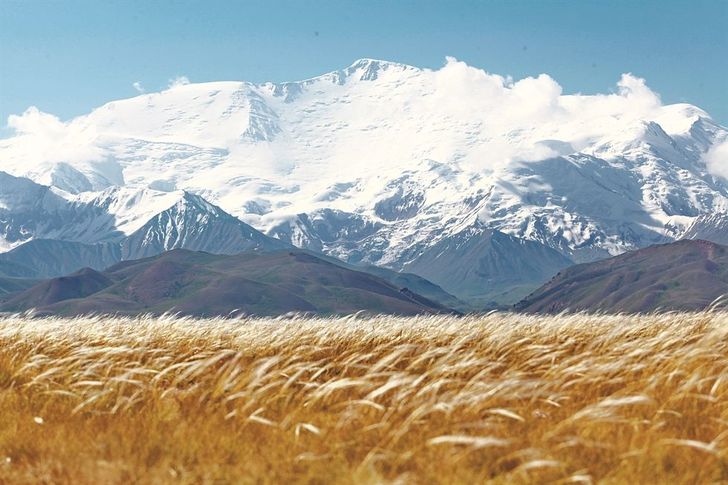
The 7,134-meter tall Lenin Peak on the border of Kyrgyzstan and Tajikitan / Courtesy of Ushakov
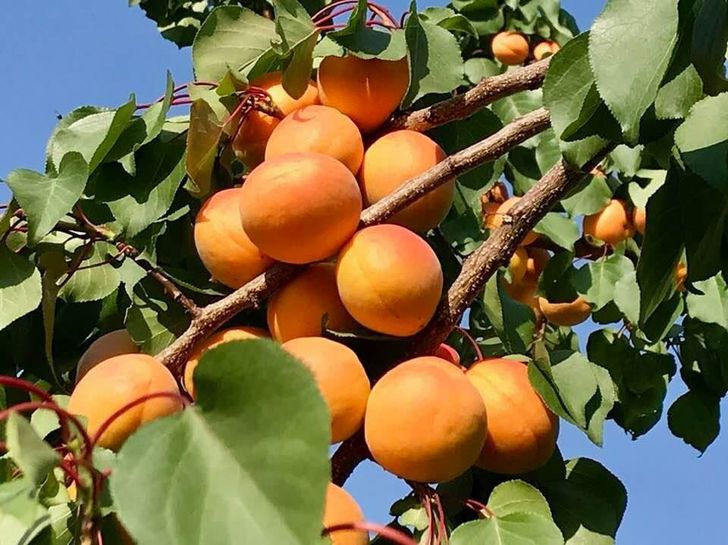
Apricots are one of the eco-friendly products from Kyrgyzstan / Courtesy of Embassy of Kyrgystan
The Kyrgyz Republic and the Republic of Korea have a great potential in the trade and economic cooperation, but, unfortunately, the trade turnover between the two countries remains small, but we hope that as part of the implementation of the South Korean initiative on a “New Northern Policy" we will be able to expand trade and investment cooperation in the energy sector, industry, transport, infrastructure, education, tourism and agriculture.
Import of ecologically clean products from Kyrgyzstan to South Korea has another potential. Being a high-mountainous country with clean water, clean air and mostly sunny weather, Kyrgyzstan is proud of its delicious fruits and vegetables and cattle breeding in alpine meadows. In order to accomplish these tasks, we are ready to cooperate with Korean companies, including within the framework of KOIMA.
Today Kyrgyzstan has an economic climate with liberal and favorable conditions for foreign investors and businessmen. It should be noted that the Kyrgyz Republic is a member of the EAEU.
In addition, the Kyrgyz Republic, having the GSP+ status, has the ability to access the markets of 28 EU countries with a population of over 508 million people on preferential terms.
GSP+ expanded preferences mean the elimination of tariffs for more than 6,200 products. For example, exporters from Kyrgyzstan can supply agricultural products to the EU at a zero tariff rate: fruits, processed agricultural products (canned food, juices), dried fruits, food products, textiles, felting products and clothing. And in this regard, Kyrgyzstan continues to attract South Korean investors. As of 2019, 976 enterprises were registered in Kyrgyzstan with Korean capital, among them 352 are joint ventures.
As an important tool for promoting trade and economic relations is the Intergovernmental Commission of Kyrgyz-Korean Economic Cooperation, which had third meeting in Seoul on Oct. 4, 2019.
Another potential for bilateral cooperation is tourism. Kyrgyzstan can become a place of pilgrimage for Korean tourists. From year to year, the number of Korean tourists in the Kyrgyz Republic is growing by about 10 percent. Last year alone, more than 16,000 Korean citizens visited Kyrgyzstan. The beautiful nature of Kyrgyzstan, sky mountains, clean and beautiful lakes and routes of the Silk Road attract Korean tourists to Kyrgyzstan. Of course, the coronavirus pandemic has negatively affected this sector, but we hope that mutual travels of citizens will resume post-COVID-19 period.
Kyrgyzstan actively participates in the South Korean EPS Program for official recruitment of foreign labor, according to this program 1,060 Kyrgyz people are currently working in South Korea, gaining experience and the necessary skills.
As of April 2020, about 444 students from Kyrgyzstan were studying in South Korea.
At present, when the world community is fighting the COVID-19 pandemic, South Korea, after proving to the whole world how to tackle the coronavirus effectively, began to help other countries, including Kyrgyzstan.
Thus, I believe that the long-term and mutually beneficial political and social economic relations between the two countries will continue to develop, demonstrating a “success story.”
Taking this opportunity, I would like to congratulate Kyrgyz citizens with the Independence Day of the Kyrgyz Republic and wish the peoples of Kyrgyzstan and the Republic of Korea friendship, peace and prosperity.