Budapest-Seoul ties prosper from 1956 Hungarian Revolution
By Mozes Csoma
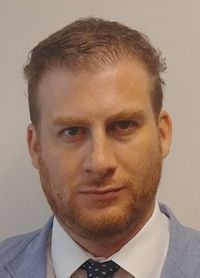
Mozes Csoma
At the end of October and the beginning of November, Hungarians commemorate the 1956 revolution, when the Hungarian population rose up against communist repression.
The uprising also echoed a great solidarity in South Korea. Older Korean generations may still remember the poem of Kim Chun-soo, published with the title “The Death of a Girl in Budapest,” after the Hungarian Revolution was repressed. However, it is scarcely known that South Koreans had been collecting donations to support the aggrieved of the Hungarian Revolution, and even personally, Syngman Rhee, head of state, had also provided support to help Hungarians. The textiles purchased from the donations were finally shipped at the beginning of 1957 via the International Red Cross from Incheon harbor.
It is also not widely known that, following the overthrow of the Hungarian Revolution, nine students from Yonsei University founded the Volunteer Student Soldiers for the Hungarian Freedom team and asked Kim Yong-woo, then Minister of National Defense, to send them to Central Europe to fight for Hungarian freedom. Of course, this could not happen because of the Cold War’s realities.
Decades later, the Hungarian state honored the former leader of the organization, Lee Man-sup (1935-2015), who also served as chairman of the Korean National Assembly for a long time. Organization member Yoo Jay-kun, later a representative of the Korean National Assembly, also received honors.
In the autumn of 1956, Ban Ki-moon, later U.N. Secretary-General, also expressed his condolences to Hungarian freedom as a high school student, addressing a speech to then U.N. Secretary-General Dag Hammarskjold that condemned the intervention of the Soviet Union, which suppressed the Hungarian Revolution. Decades later, the Hungarian state also acknowledged his action with honors.
However, the 1956 Hungarian Revolution was not only supported by South Koreans. It is barely known that at that time nearly a thousand North Koreans who had war experience studied in Budapest, arriving there from the Korean battlefront a few years earlier. Since at the time of the outbreak of the Hungarian Revolution, young insurgents — mostly college students and high school students — did not have war experience, several asked their fellow North Korean students to help with the use of weapons.
Many Hungarian memorials underline that in the period of the Hungarian Revolution the insurgents received help from those North Korean students. I, as a university professor of Korean Studies and historian, was particularly interested in the role of North Korean students in 1956, of which I sought to gather all available archival information and personal reminiscences.
During my research, the greatest experience for me was that I was able to find two former North Korean students who, after the fall of the Hungarian Revolution, to avoid their deportation to the DPRK, fled to a “third country” through the western border.
When listening to their remembrances, it was particularly a great experience for me that I was able to have conversations with them in Korean — the language they used 60 years before, and in Hungarian — the language they had learned at the time of the Revolution. The results of my research were published in a book in Budapest and Seoul some years ago.
The Korean stand for Hungarian freedom carries an important message. It is clear evidence that the two people’s desire for freedom does not know compromises. As a professor of Korean Studies, I have always taught my students the history of the Korean Peninsula by paralleling Korean historical events and people with chapters of Hungarian history. Whether we think of peaceful times or war events, in both cases we can find comparable historical figures.
For example, medieval Hungarian culture’s golden ages related to Matthias Corvinus (1458-1490), who also strengthened the country’s position as a military force and created a culture of excellence through the Bibliotheca Corviniana library. He was surrounded by Italian humanists and gained great international recognition.
His path can be clearly paralleled by Sejong the Great (1397-1450), who strengthened the military position of the Joseon Kingdom with action against the Jurchen people and his expedition campaign on Tsushima Island, and made a contribution to Korean culture with the creation of Korean national letter writing. The Korean national hero Yi Sun-shin (1545-1598), who at the end of the 16th century took his famous turtle-shaped warships into battle against the Japanese fleet, can be compared with Janos Hunyadi (1406-1456) who, as a brilliant strategist and military leader, successfully tackled the overwhelming advancement of the Ottoman Empire.
The decisive battle took place in 1456 in the territory of today’s Belgrade (Nandorfehervar in Hungarian), before which Pope Callixtus III ordered the bells to sound every noon in the churches of Europe, to think of Hunyadi Janos’ overcoming soldiers. The origin of noon’s bell tolling can be traced back to that historical event.
Next year, Hungary and the Republic of Korea will jointly commemorate the 30th anniversary of the two countries’ diplomatic engagement. In my opinion, exploring the eagerness for freedom and historical connections of the two peoples is a very good opportunity to further develop bilateral relations.
As a newly appointed ambassador in Seoul, I believe that, despite the great geographical distance, I may contribute to making our peoples better acquainted with each other’s past and their attachments.
Mozes Csoma is the Hungarian Ambassador to Korea and a former Korean Studies professor at the ELTE University in Budapest.