Korea benefits from eventful past: FM
By Kang Hyun-kyung
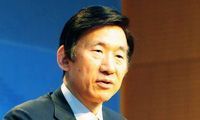
Foreign Minister Yun Byung-se

Over the past number of decades, Korea experienced all the horrible things that a country could possibly experience. As a result of this eventful past, Foreign Minister Yun Byung-se said, it has won the hearts of many developing countries.
Yun singled out Korea’s 36 years ruled by Japan, the Korean War and the devastating poverty that followed, as the bad things that this country had to overcome. Once a war-torn and poverty-stricken country, Korea’s dramatic rise as a middle-power state and a full-blown democracy from the ashes of the war has become an inspiration for many countries aspiring to be just like Korea, he said during a speech to the Korea Foundation on Wednesday.
His remarks were construed as meaning that many developing countries are now undergoing some of these challenging experiences and from their point of view, Korea can be seen as a country of inspiration as it has achieved so many things within a very short time period.
Yun made the remarks to encourage the state-run agency to redefine its role in the ever-changing environment and respond to the calls to play a role in making a difference in developing countries. “We are now living in an era where global issues and problems can affect our way of life. So they are not separable from domestic issues,” he said.
He made the remarks to offer a rationale behind Korea’s joining of the global endeavor to fight the Ebola virus in Africa. Yun said that Korea became what it is today thanks to the support of the international community and thus has to live up to its commitments by making a difference now for developing countries.
His remarks offered some clue as to why Korea has received a wave of calls from Africa and other regions asking it to share its experiences in order to help break the vicious circle of poverty.
African nations have expressed their willingness to learn Korea’s rural development project, dubbed Saemaeul Undong or New Village Movement which transformed poverty-stricken rural areas in Korea in the 1960s to a modern agricultural sector.
Aid-receiving countries in other nations also requested the government to provide technical assistance and knowhow for them so that they can achieve further economic growth.