‘Poetic justice’ isn’t enough: K-courtroom dramas raise stakes
Summary
Legal dramas are multiplying on Korean TV, with new series trying to stand out through unusual themes and genre blends. tvN’s Pro Bono centers on public-interest cases, while MBC’s The Judge Returns uses regression fantasy and SBS is preparing the occult courtroom drama Phantom Lawyer. Critics and professors say the genre remains popular because it offers catharsis, social reflection and broad narrative possibilities.
Key Facts
- Pro Bono has been airing on tvN since Dec. 6, 2025 and follows a judge who becomes a public-interest lawyer at a major law firm.
- The series takes on unprofitable cases involving abandoned dogs, children with disabilities and migrant women who lacked legal access because of economic or social barriers.
- The Judge Returns premiered on Jan. 2 on MBC and follows Lee Han-young, a deeply corrupt judge who returns to his younger self a decade earlier.
- SBS plans to air Phantom Lawyer in March, starring Shin Yi-rang, a lawyer who can see ghosts, and Han Na-hyun, an elite attorney, as they resolve the grudges of the dead.
- Drama critic Gong Hee-jung said courtroom dramas can expand narratives and genres by drawing on a wide range of legal precedents.
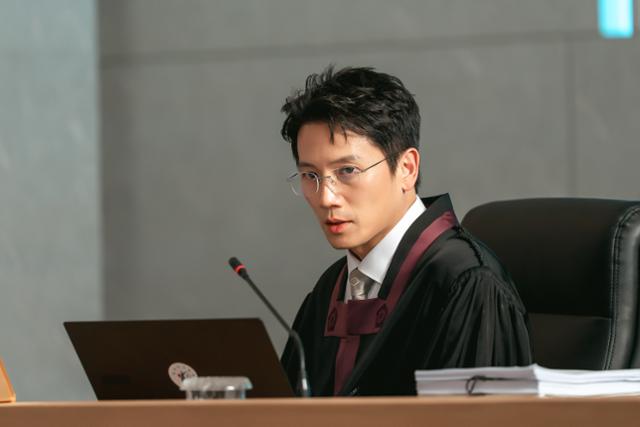
In MBC drama "The Judge Returns," the protagonist Lee Han-young (Ji Sung) lives as a disgraced judge who tailors his rulings to the interests of major law firms, before regressing 10 years into the past. Courtesy of MBC
As a new year begins, dramas featuring legal professionals — lawyers, judges and prosecutors — continue to flood onto the small screen. But while the core formula remains the same — delivering catharsis through dramatic resolutions that uphold justice — new works are making bold attempts to set themselves apart by embracing unusual themes and diverse genres.
A case in point is "Pro Bono," tvN’s new series that has been airing since Dec. 6, 2025. Built around public-interest cases, the drama places humanitarian concerns front and center.
The protagonist, Kang Da-wit (Jung Kyung-ho), is a status-obsessed judge who unexpectedly sheds his robe and becomes a public-interest lawyer at a major law firm. Taking on so-called “unprofitable cases,” he encounters new clients — including abandoned dogs, children with disabilities and migrant women — who have been denied access to legal services because of economic or social barriers. Though buffeted by setbacks, Kang ultimately secures hard-won victories.
The drama’s script is written by former judge Moon Yoo-seok, lending the series a high degree of realism down to the finest details. Director Kim Seong-yoon said at a production presentation that the drama is “a work that tells stories our society needs and encourages reflection.”
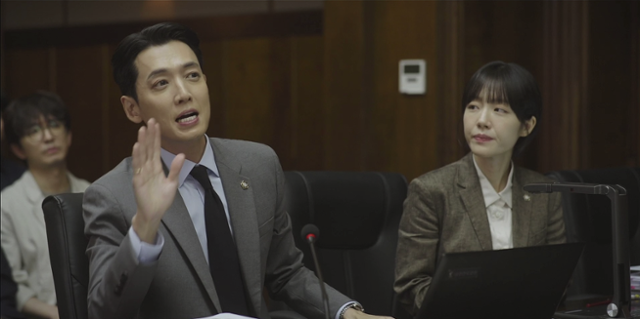
A scene from tvN drama "Pro Bono" / Courtesy of tvN
Fantasy-driven legal dramas are also drawing attention. ‘The Judge Returns,’ which premiered on Jan. 2 on MBC, is a courtroom drama that incorporates regression fantasy elements following the second life of a deeply corrupt judge.
Bending to power and money, Lee Han-young (Ji Sung) blindly delivers verdicts suiting major law firms, only to find himself discarded. He returns to his younger self decade earlier, working off his karmic debts and moves toward justice.
A legal drama with an eerie undertone is also set to follow. SBS is set to air the occult courtroom drama "Phantom Lawyer " in March. The series stars Shin Yi-rang (Yoo Yeon-seok), a lawyer who can see ghosts, and the cool-headed elite attorney Han Na-hyun (Esom), as they work to resolve the lingering grudges of the dead.
Other notable experiments include Genie TV’s "I Dol I," which combines a legal thriller with fandom culture, and "Honor: Their Courtroom," a mystery drama centered on three female lawyers.
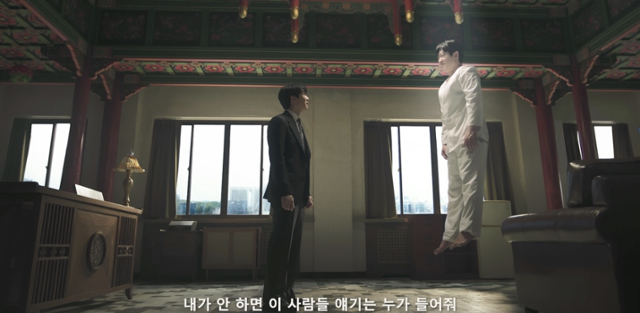
A scene from a teaser video for SBS drama "Phantom Lawyer," set to air in March / Courtesy of SBS
The more frustrating reality becomes, the more audiences are drawn to dramas that provide vicarious satisfaction, a dynamic that helps explain the enduring appeal of courtroom series centered on poetic justice.
“As distrust in the real judicial system grows, people continue to turn to dramas to point out problems and explore solutions,” said Yun Suk-jin, a professor at Chungnam National University. “Just as medical dramas that deal with physical life itself, courtroom dramas engage with social life itself, which creates intense conflict and strong dramatic appeal.”
With legal dramas pouring out every year across multiple channels and platforms, producers face mounting pressure to capture viewers’ attention through fresh approaches. But at time same time critics warn that straying too far from everyday reality can lead to fatigue
Drama critic Gong Hee-jung said, “Courtroom dramas are highly advantageous in expanding narratives and genres as they can draw endless stories from a wide range of legal precedents.” She added that “dramas can become more compelling when they focus on raising awareness and offering comfort within the legal system, rather than indulging in extreme private revenge or power games among elites.
This article from the Hankook Ilbo, the sister publication of The Korea Times, is translated by a generative AI system and edited by The Korea Times.
Explore More
- Q.
- Q.
- Q.