Global viewers discover Korean nostalgia as dramas go retro
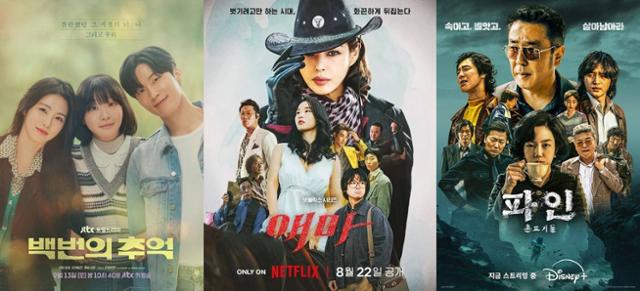
Posters for "A Hundred Memories," "Aema," and "Low Life" / Courtesy of JTBC, Netflix and Disney
Korean dramas are increasingly turning back the clock, weaving retro themes into their storytelling as a way to connect with viewers across generations.
Recent series such as “A Hundred Memories,” “Aema,” and the recently concluded “Low Life” have all leaned into previous decades, tapping into nostalgia while offering fresh appeal to younger audiences. Producers are finding that retro is no longer a fleeting trend but an element with staying power.
Why retro resonates
For audiences who lived through certain eras, retro settings bring back vivid memories. For those who did not, the depictions feel novel and engaging. Even a single item such as a pager, payphone, or cassette tape can instantly trigger emotional connections for viewers who grew up in the 1990s.
Nostalgic details such as 1980s alleyways or modest family dinners also serve as a form of comfort, offering a temporary escape from modern-day pressures. In particular, middle-aged viewers often find resonance in sentimental reflections of what life was like, which can spark conversations across generations. The hit drama “Reply 1988” remains one of the most effective examples of how a retro backdrop can anchor both story and emotion.
A tool for global appeal
In today’s crowded content market, producers view retro as a strategic way to differentiate stories. Unlike contemporary dramas that may struggle to stand out, shows set in past decades automatically incorporate the music, fashion, and social atmosphere of the era, immersing viewers without heavy exposition.
Retro themes also bridge age groups, an important factor in the streaming era where shows must appeal beyond niche demographics to achieve major success. Moreover, Korea’s unique historical and cultural backdrops add to the global appeal. For international audiences, the recreation of an unfamiliar 1980s street in Seoul can feel like a cultural discovery, adding freshness to the K-drama experience.
Challenges and limits
Still, retro dramas face limitations. If they rely too heavily on period details without adding contemporary relevance, they risk inducing fatigue. Producers must balance nostalgia with modern themes to keep stories resonant.
Ultimately, the reason Korean dramas keep boarding the “time machine” is not simple fashion. It is a deliberate strategy — to stir emotions, provide comfort, and carve out distinctive storytelling amid intense global competition.
This article from the Hankook Ilbo, the sister publication of The Korea Times, is translated by a generative AI system and edited by The Korea Times.