Why are Koreans so curious about other people’s homes?
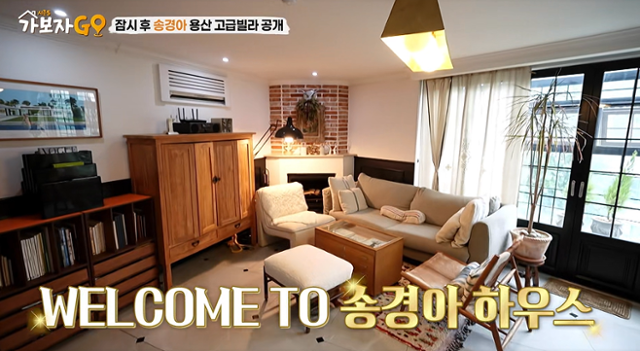
Season 5 of “Let’s Go” features stars inviting guests to their homes to share personal stories in a housewarming-style variety show. Courtesy of MBN
In Korea, people have long been fascinated by homes — not only as places of rest, but also as symbols of lifestyle, taste, and financial success. That curiosity has translated into a growing appetite for entertainment programs that showcase the homes of others.
One of the most well-known is MBC’s long-running show “Where Is My Home?” which features celebrities helping busy clients search for new houses. Since its 2019 debut, the program has remained popular by mixing real estate exploration with lighthearted competition.
MBN’s “Let’s Go” is now in its fifth season and takes a slightly different approach. It invites viewers into the homes of celebrities and offers glimpses into their personal stories, creating what the producers call a “housewarming variety show.”
JTBC has also joined the trend with its recently launched show “One Meal Show,” where celebrity chefs visit ordinary households, rummage through their kitchens, and create special meals. The show, which averages modest ratings of two to three percent, has drawn attention not only for the star power of hosts like Kim Hee-sun and Tak Jae-hoon, but also for the featured homes themselves.
According to Good Data Corporation, keywords like “One Meal Show homeowner” and “One Meal Show Seongbuk-dong” ranked fifth and sixth in the non-drama keyword search rankings for the third week of July, showing how much viewer attention is focused on the homes featured in the show.
The psychology behind peeking into other people’s houses
There are risks involved with home-centered programming. Broadcaster Ham So-won once faced controversy when a house shown on the reality show “Taste of Wife” — said to be her Chinese in-laws’ villa — was later alleged to be a rented Airbnb property. At a press event for “Let’s Go,” host Ahn Jung-hwan noted, “Some people are reluctant to allow filming in their homes.”
A predecessor to “One Meal Show,” the show “Let’s Eat Dinner Together” also revealed the difficulty of persuading everyday citizens to open their doors to cameras. If a home is not particularly attractive or unique, the entertainment value can drop — and producers must also tread carefully around privacy concerns.
Still, the continued popularity of these shows indicates a clear demand. After each broadcast, online communities and social media platforms buzz with discussion about the homes shown. Viewers gush over luxurious houses or take interest in specific interior design choices and furniture pieces. These post-show conversations have become part of the appeal.
Why do we care so much about other people’s homes?
“Human beings have always placed importance on the basics of food, clothing, and shelter,” said Lim Myung-ho, a psychology professor at Dankook University. “We naturally want to see how others live — especially how they sleep and rest — because home is a deeply personal space, and we’re spending more time indoors than ever.”
He added that the rise of fine dust and extreme humidity has made indoor spaces more critical to physical health than outdoor environments. “Research shows that spatial memory loss is often one of the first signs of dementia. The arrangement of familiar home features — the position of a bed, computer, windows, or even the shower — has a profound effect on mental stability,” he said.
With strong ratings and continuous viewer engagement, programs centered around home spaces are likely to remain a mainstay in Korean entertainment. As long as people remain curious about how others live, the trend of opening the doors to “someone else’s house” won’t be closing anytime soon.
This article from the Hankook Ilbo, the sister publication of The Korea Times, is translated by a generative AI system and edited by The Korea Times.