Dark turn for Gi-hun: ‘Squid Game’ Season 3 ends in blood and betrayal
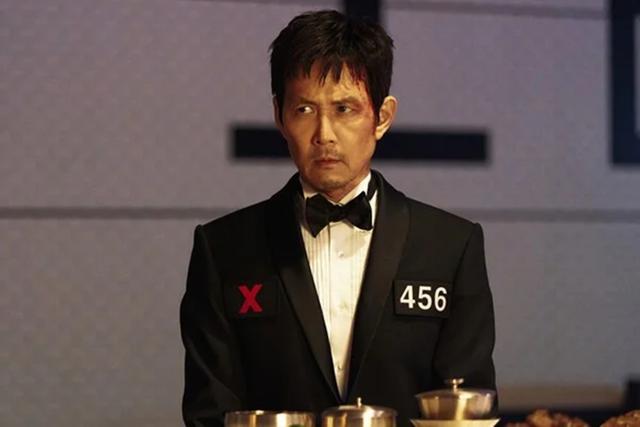
A scene from "Squid Game" / Courtesy of Netflix
Netflix’s “Squid Game” returns with its darkest chapter yet — and a version of Gi-hun that fans have never seen before.
Released June 27, “Squid Game" Season 3 explores the aftermath of Gi-hun’s return to the deadly game, this time with a personal mission. Fueled by revenge and loss, the former protagonist who once cried “freeze” to save others now wields a knife to take a life — embodying the show’s descent into moral ambiguity.
The new season follows Gi-hun (Lee Jung-jae) after he lost his closest friend Jeong-bae (Lee Seo-hwan) during the game. Believing fellow player Dae-ho (Kang Ha-neul) is responsible, Gi-hun hunts him down during the first challenge, a brutal twist on hide-and-seek. When Dae-ho accuses Gi-hun of being the reason others died, the confrontation escalates Gi-hun’s internal breakdown.
Other characters also unravel. After the death of Thanos (Choi Seung-hyun), Nam-gyu (Roh Jae-won) begins to mimic him — delighting in violence and acting as though murder is sport. Meanwhile, Jun-hee (Jo Yu-ri) and Geum-ja (Kang Ae-sim), the most vulnerable participants, are left fleeing for their lives, evoking a chilling sense of helplessness.
The most shocking transformation in Season 3 is Gi-hun himself. In Seasons 1 and 2, he clung to hope and humanity, even when mocked by the mysterious Front Man (Lee Byung-hun) for believing in people. But now, the very man who once stood for decency has been consumed by vengeance.
Gi-hun raising a knife to kill Dae-ho represents the central theme of Season 3: a meditation on the fragility of human morality. Director Hwang Dong-hyuk uses Gi-hun’s descent to pose a larger question — what truly separates good from evil? Each character is shaped to represent a different facet of human society, from cult leaders and followers to VIPs and exploited contestants, highlighting deep divisions between class, gender, age, and identity.
The brutal games are now layered with even more disturbing sociopolitical symbolism. Scenes of desperate screams over cheerful music, a signature of the series, continue to deliver a chilling contrast that underpins the horror of the competition.
As the final season, Season 3 attempts to tie up all character arcs. That task comes at a cost, with some critics in Korea noting that the tension between the Front Man and Gi-hun — once the show's emotional core — has become diluted among too many side plots.
Still, the show delivers powerful moments. Previously foreshadowed developments — like Jun-hee’s impending childbirth or Myeong-gi’s (Yim Si-wan) sacrifice — play out with dramatic intensity.
Director Hwang had long expressed confidence in Season 3, not simply as a conclusion, but as the culmination of the series’ deeper message. Internationally, the response has been largely positive. TIME magazine noted the final season reclaims its brutal charm and delivers a strong final blow.
This article from the Hankook Ilbo, the sister publication of The Korea Times, is translated by a generative AI system and edited by The Korea Times.