Four finalists of 'Phantom Singer' to become Korea's Il Divo

Finalist in JTBC’s “Phantom Singer,” “Hyoong Spresso.” / Courtesy of JTBC
By Yun Suh-young
The project to find the final four people who will become Korea's first crossover quartet similar to Italy's Il Divo is nearing an end with the last episode of JTBC's "Phantom Singer" to air Jan. 27 with the announcement of the winners.
Ahead of the airing of the second to last episode Jan. 20 featuring the 12 finalists divided into three teams of four performing in the first half of the final round in front of a real audience, the singers and the program's producer met with the press to brief them on their past five months and plans going forward.
"We deliberately divided the final round into two sections so that we could get well-rounded reviews from the judges and the audience. It's difficult to judge a team's performance with just one performance. So we decided to let them perform twice in front of a real audience and gather their votes on which team they liked the best," said the producer of the show, Kim Hyung-joong, during a press conference Thursday at the JTBC building in Sangam-dong, western Seoul.
"The winning team will receive 100 million won in prize money and will be given an opportunity to record their own album. They will also officially begin their career as a crossover quartet, performing tours and concerts."
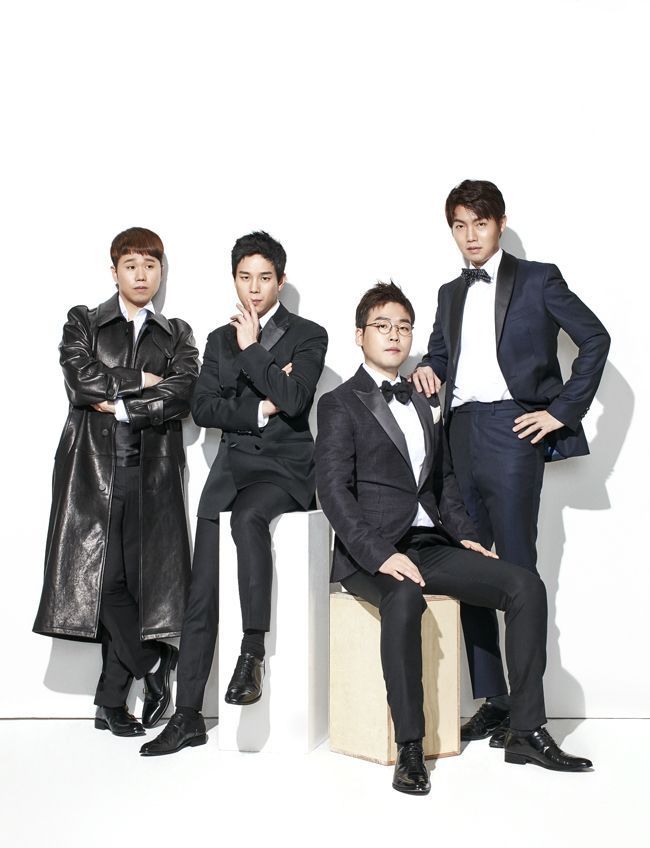
Finalist in JTBC’s “Phantom Singer,” “Forte di Quatro.” / Courtesy of JTBC
The show has been the talk of the town since its Nov. 11 launch last year. Despite the unfamiliarity of the genre of "crossover music," the show garnered steady viewers and fans. The viewer ratings for the show rose continuously week by week. Starting with 2 percent on the first show, the ratings reached 5 percent on its ninth episode, the fastest gain among all the music entertainment shows aired on JTBC.
When asked what he thought the key to the popularity of the show was, producer Kim said, "I think it is sincerity. The participants are being themselves and not trying to pretend. I didn't expect such strong affection for each other between the participants since this is a competition, but there's something like brotherhood among them, which goes beyond camaraderie."
Kim said the reason for holding the press conference at this stage, before the final round, was "because we believe all three teams are winners and they all deserve to be winners."
"The producers all wanted to provide the 12 finalists with an opportunity to speak to their audience," he said.
"For the final winning team, we'll offer them many more opportunities to meet with their fans on a wider and more frequent scale."
Songs that have been performed by various teams on the show, many of them Italian, were also big hits, making it on the music charts, which was unusual for crossover songs. "Il Libro dell'Amore" was ninth on music site Mnet's charts, while "Per Te" was 30th, "Luna" and "Grande Amore" were also within the top 50.
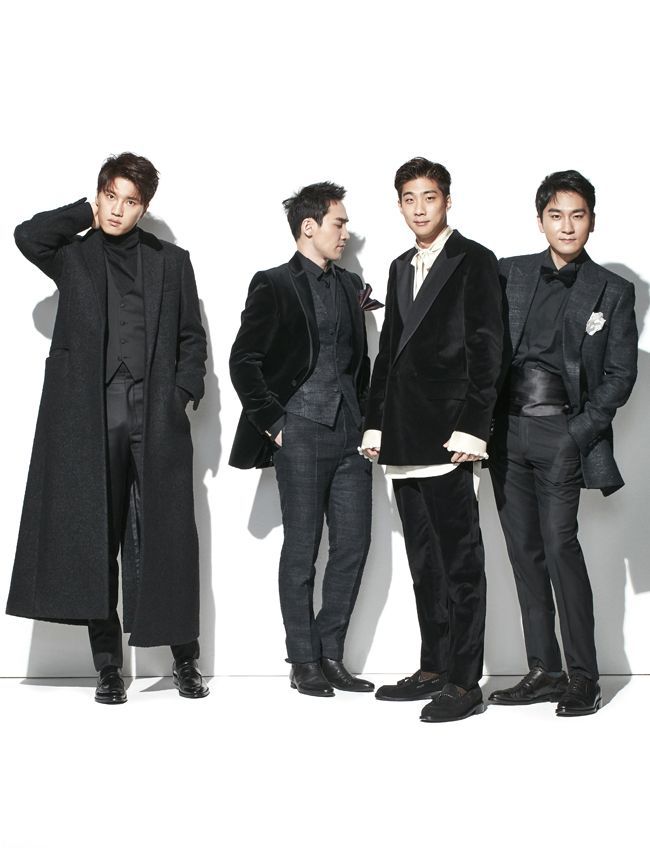
Finalist in JTBC’s “Phantom Singer,” “In-gi-hyun-sang.” / Courtesy of JTBC
"Italians and Koreans are emotionally similar. I think the feelings in Italian songs resonated well with the Korean audience, which is why I think we kept choosing Italian songs to perform," said base baritone Kwon Seo-kyung.
"We hope crossover music will also be considered as popular songs as time passes," said pop singer Kwak Dong-hyun.
"I don't think these songs had been exposed much to the public, which is why they may be unfamiliar but because of this show, they became much more approachable for the audience," said musical actor Ko Hoon-jung.
Musical actor Ko Eun-sung added, "The reason I fell in love with musical songs was because I was exposed to them. If you've never heard it, you can't like a song. I think Koreans have had very limited opportunities to hear these types of songs. This program gave them that opportunity."
Baritone Park Sang-don thought the popularity of the show was attributed to "newness" and "freshness" in its approach.
"I don't think any other music program approached with the context of harmony. Here, we're competing to become the team with the most harmonious sound," he said.