Early filming of K-dramas targets Chinese market

Park Hae-jin, above, and Kim Go-eun star in the drama “Cheese in the Trap” / Courtesy of tvN
By Kwon Ji-youn
The temperature in Seoul dropped to minus 18 degrees Celsius on Sunday, but its summer going on fall in “Cheese in the Trap,” which airs on Monday-Tuesday evenings on tvN.
This is because the filming for the hit drama series, featuring Park Hae-jin, Kim Go-eun and Seo Kang-jun, began in the second half of last year, and is now in its final production stages. The seventh segment of the 16-episode drama aired Monday.
“Cheese in the Trap” is among many drama series for which the greater part of the shooting took place, or will take place, before the first episode airs, or is set to air. SBS’s “Saimdang: the Herstory,” in which actress Lee Young-ae will make a comeback to the small screen as Shin Saimdang (1504-1551), a noted artist, poet and the mother of Confucian scholar Yulgok, will be filmed in its entirety before being broadcast later this year.
The filming for Song Hye-kyo and Song Joong-ki’s “Descendants of the Sun” wrapped up in December last year, and is set to begin airing on Feb. 24.
Kim Woo-bin and Suzy’s “Uncontrollably Fond” (working title) and the Korean version of the 2011 Chinese time-travel hit “Scarlet Heart” based on the novel Bu Bu Jing Xin by Tong Hua will also begin filming early.
Producers and actors have time and again complained of poor working conditions in the production of drama series. Actress Han Ye-seul in 2011 made headlines for a no-show while filming KBS’s “Spy Myeongwol,” forcing the broadcaster to air re-runs, and veteran actor Lee Soon-jae called on broadcasters to overhaul its current system of issuing scripts just a day prior to filming and editing being left until a few hours before an episode is due to air.
Beginning filming early for a drama series is convenient for the producers and for the actors. The actors don’t need to pull all-nighters and can buy enough time to understand and build a character, as well as get their lines down pat. It also provides producers with enough time to make sure every scene is of a high quality, which in turn reduces the risk of making mistakes in editing.
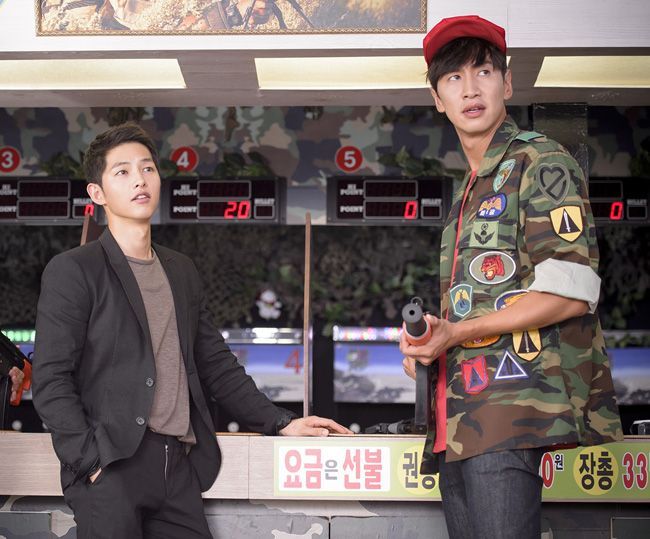
Song Joong-ki, left, in a scene from the drama “Descendants of the Sun,” which finished filming last December and is set to begin airing on Feb. 24 / Courtesy of KBS
But there are pitfalls.
The reason broadcasters film the greater part of a drama series before it is aired is because China regulates Korean drama imports. Each drama series must pass a preliminary review for it to be aired there. This has raised concerns that the industry is putting too much of an emphasis on the Chinese market amid uncertainty regarding when China’s regulation standards will change and what the criteria for its evaluations are.
The actors are also unable to reference viewer feedback regarding their performances.
Fans of “Cheese in the Trap,” based on a popular webtoon of the same name, say that Lee Sung-kyoung’s acting isn’t up to scratch, and that her character is not an accurate reflection of the role as depicted in the original webtoon. As most of the filming has already been completed, viewers will need to put up with Lee’s under-par performance for the remaining nine episodes. Likewise, the producers and writers are unable to take constructive criticism and apply this in their work.
This also affects the number of product placement (PPL) advertisements a drama series can secure. It is standard procedure for producers to enter discussions regarding PPL advertisements four or five months before a drama series goes on air, but if filming takes place too early, advertisers, who must keep up with ever-changing trends, will no longer find PPL deals attractive, especially if the filming and broadcasting of the series occur in different seasons.
“It’s true that the new system has been implemented to increase drama exports to China,” said an official at one of the three major broadcasters. “But this isn’t causing any major problems in the production of quality drama series, and it’s a change we need to adapt to. Still, no matter how fast the market in China grows, meeting the needs of our Korean audiences will always remain a priority.”