Nongshim guns for Islamic noodle markets
By Park Si-soo
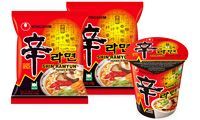
Nongshim instant noodles
Korea’s biggest instant noodle maker Nongshim exported halal-certified products worth $1 million to Islamic nations during the first half of the year.
While the number seems quite small compared with the firm’s overseas sales of $440 million throughout last year, the figure is meaningful, a company spokesman said, in that it was a 54 percent increase from the corresponding period last year.
Halal is an Arabic word meaning “lawful” and “permissible.” The certification is conferred on meat and other food products that have been slaughtered, harvested or processed in a way recognized by Islamic (Sharia) Law. It’s not mandatory for Muslim people to consume only halal-certified products, but it’s obvious certified products have a massive marketing advantage in these countries.
“Our performance in Islamic regions is still humble, but we see huge growth potential there,” said Chun Jae-ha, the spokesman. “We will soon see a steep sales increase.” The firm expects the sales of halal-certified products to reach $2 million by the end of the year.
Nongshim started exporting such products in 2011 to Saudi Arabia, Qatar, Pakistan, Indonesia, the United Arab Emirates and Oman.
Including Nongshim, many Korean food makers are paying keen attention to Islamic countries. It was driven by an explosive growth of demand for Korean food in populous Muslim countries such as Indonesia, Malaysia and Pakistan.
Experts said the increase has largely been attributed to the international boom of Korean pop culture, a socio-cultural phenomenon called “hallyu.”
Nearly 1.6 billion Muslim people in 140 countries, including some 135,000 in Korea, consume halal-certified food products and the global market size was estimated to be worth $661.6 billion as of 2010, according to the World Halal Forum.
That swells to $2 trillion when halal-certified beauty and other non-food products are added, the forum said.