AKS seeks to expand horizon of Korean studies
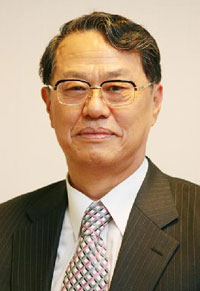
Chung Chung-kil, president of the AKS
By Chung Ah-young
For sustainable development, the Academy of Korean Studies (AKS) seeks to expand the academic boundary of Korean studies to encompass ancient history and present-day needs of social values
The institute said it will strike a balance through diverse research fields such as ancient history, community spirits and social awareness, to reestablish Korean values.
The institute emphasized that national, social and public calls are rising for the nation to leap forward as an advanced country in cultural, moral and welfare aspects, which are proper for its economic standards. So it needs to research spiritual and social values as well as materialistic achievements.
However, Chung Chung-kil, president of the AKS, said the recent academic situation can be a stumbling block in the further development of Korean studies, at a recent press conference.
He said that over the last 10 years, young scholars of Korean studies have shown strong preference for the academic fields of the modern era, in which they can easily earn a degree.
He said the institute tried to find the right people to perform scientific creativity research in ancient Korean history as part of the project named “Korean Values and Civilization Research in the Global Era,” but there were few suitable applicants.
“I was shocked that there are almost no scholars who majored in science history of ancient times,” he said.
He explained that such a trend of imbalance in research topics began worsening some 10 year ago. Many young scholars wanted to study modern history, for example since liberation from Japanese colonial rule (1910-45), because of easy access to resources. Conversely, they avoid ancient history which requires difficult access of historical materials, mostly written in abstruse Chinese characters. It is the same with Korean literature, he said.
The president said such a case is rare in Japanese academic circles. “Some fields can be more popular than others in the Japanese social science sphere but Japanese scholars are dedicated to their fields, regardless of the difficulty and popularity,” he said.
The “Korean Values and Civilization Research in the Global Era” project, which began last year, is designed to find the roots of Koreans’ scientific creativity and public consciousness in ancient Korean history and compare them with those of Japan and China.
“There was a time when Korea lagged behind in terms of science technology some 10 years ago and sometimes mimicked Japanese technology. But, during the reign of King Sejong the Great (1397-1450), our scientific technology outpaced Japan’s. We will conduct research to compare Koreans’ scientific creativity to Japan and China by era,” he said.