‘Airport chaos’ sparks debate in Korea: Should K-pop stars be required to submit a ‘travel plan?’

Fans gather at Incheon International Airport, July 16, 2024, to see actor Byeon Woo-seok return from his Asia fan meeting tour in Hong Kong. Byeon’s agency issued a statement apologizing for the excessive security measures. Newsis
Every time a major K-pop star arrives or departs for an overseas schedule, chaos erupts at Korea’s airports. Departure halls are flooded with fans, photographers, and onlookers, creating bottlenecks that often inconvenience — and sometimes endanger — regular passengers. The phenomenon has become known as “airport nuisance,” and while authorities are trying to respond, an effective solution remains elusive.
Last month, Incheon International Airport Corp. convened a safety meeting with private security companies to discuss the growing issue. The airport operator asked that celebrity management teams submit a “travel plan” in advance before arrivals and departures, and said it will remind security personnel to enforce safety rules and airport regulations during crowd control.
From transportation hub to fashion stage
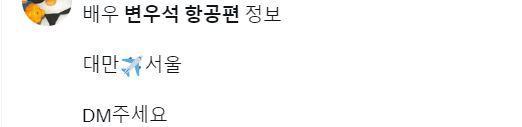
A social media post from July last year sharing actor Byeon Woo-seok’s flight information / Screenshot from X
These days, airports have become more than just transit points — they are also prime marketing stages. Celebrities frequently alert the media to their flight schedules so that photographers can capture them showcasing sponsored outfits from luxury brands.
Helping to fuel the frenzy are fan photographers and “home masters” — operators of dedicated fan sites — who use high-end equipment to capture images and sometimes sell them or turn them into merchandise. Some have even been accused of paying airline staff to obtain flight details.
But the clashes between fans, home masters, and security personnel often spill over to inconvenience ordinary travelers. In one widely discussed incident in March, reporters and fans crowding around rookie girl group Hearts2Hearts at Gimpo Airport blocked access for other passengers. A frustrated man was filmed shouting, “We need to board too, you know!” — a clip that went viral online. “Are celebrities royalty now?” one commenter wrote. “What if someone misses their flight because they’re stuck behind them?”
Court criticizes celebrity behavior: ‘It was like a fan meeting’
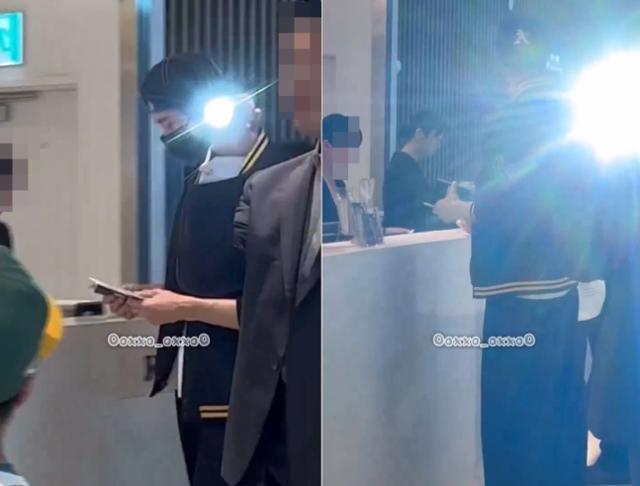
Actor Byeon Woo-seok’s bodyguard shines a flash toward passengers at Incheon International Airport, July 12 last year. Screenshot from X
In some cases, the chaos has led to criminal charges. Two bodyguards protecting actor Byeon Woo-seok during his departure for a fan event in Japan were indicted for violating the Security Services Act. Prosecutors said the men shone bright lights at passengers and inspected their boarding passes without permission in an attempt to block photos outside the Korean Air lounge.
The airport considered introducing a separate gate for celebrities to avoid such incidents, but scrapped the plan after lawmakers criticized it as a “celebrity privilege.”
A court ruling in the case came on Oct. 2 — 15 months after the incident. The Incheon District Court fined one of the bodyguards, identified as A, and the security company 1 million won ($720) each. Judge Shin Heung-ho said, “Shining a light constitutes the use of physical force and goes beyond the scope of security duties,” adding that “the act of projecting light at people who posed no apparent threat, simply because they were taking photos, amounts to visual stimulation.”
The judge also offered a pointed alternative. “If the intent was to prevent excessive filming,” he said, “the schedule could have been kept confidential, and the individual could have worn a hat and mask and moved through a less crowded area.” Instead, the court noted, Byeon “publicly revealed the schedule and moved through a location full of fans, almost as if holding a fan meeting.”
This article from the Hankook Ilbo, the sister publication of The Korea Times, is translated by a generative AI system and edited by The Korea Times.