Latest global K-pop trends blend old with new

BLACKPINK performing “Typa Girl” at Coachella on April 22 with traditional Korean tiled roofs adorning the stage behind them. The group also showcased a traditional Korean fan dance. Courtesy of YG Entertainment
K-pop draws inspiration from traditional Korean culture as hip crowd finds appeal in the country's old heritage
By Yang Seung-joon
A musician begins playing the traditional Korean instrument “haegeum” against the backdrop of a majestic painting depicting a mountain scenery drawn on a roll of white cloth. The brief solo is joined by the humming of other Korean instruments, including the “geomungo” and “gayageum,” to form an ensemble.
Contrary to what you might think, this was not a traditional Korean music performance that you might typically see at the National Gugak Center. In fact this was a scene in a documentary featuring BTS member Suga released on Disney Plus on April 21, titled “Suga: Road to D-Day” with the BTS star rapping on stage to the tune of traditional Korean instruments. Suga's new track, “Haegeum,” inspired by the instrument of the same name, soared to the number 1 spot on the iTunes Top Song Chart in 90 countries including the United States on April 22.

Screen capture from a live performance by BTS member Suga showcasing his new track “Haegeum” released on April 21. The traditional Korean instruments “haegeum” and “daegeum” are featured.

Screen capture from a live performance by BTS member Suga showcasing his new track “Haegeum.” The set has been decorated like an ink landscape painting.
On April 22 at Indio, California, a large set resembling a traditional Korean tiled roof was installed on the main stage of the Coachella Valley Music and Arts Festival. Against a rose-colored backdrop, BLACKPINK performed the track “Pink Venom” featuring sounds of traditional Korean instruments including the “geomungo.”
Traditional Korean culture was the central theme of their stage production, which was also on display when BLACKPINK showcased a fan dance in their performance for “Typa Girl” as they “stomped and sassed beneath a towering temple roof” as described by the Los Angeles Times.

In their music video for “Thunderous” (2021), Stray Kids showcased a lion dance in the background of a traditional palace. Courtesy of JYP Entertainment
K-pop stars incorporate sounds of traditional instruments
K-pop singers are now drawing inspiration from elements of traditional Korean culture in their music and performances. In a world of fast-moving trends where novelty and innovation are requirements for survival, old Korean traditions were once considered by the industry as something of an impediment to the globalization of Korean content.
But this is no longer the case.
The K-pop stars of today have recognized the potential of ancient Korean culture to make their music more unique and distinct, an answer to the growing calls for cultural diversity in the industry.
According to an official at Bit Hit Music on April 23, BTS member Suga had been working to incorporate the sounds of traditional Korean instruments in his music for the past three years. His experiment began with the track “Daechwita” in 2020, which was influenced by a royal procession music from the Joseon Dynasty.
Suga was quoted as saying “Ryuichi Sakamoto once said the world is full of sound and it left a strong impression on me. I want to create music with different sounds with the help of musicians who play unique instruments from all over the world”. Suga has been pushing the envelope and shattering boundaries ever since, culminating in his solo album “D-Day” released on April 21, which fuses traditional Korean music with hip hop beats and rock influences. While his music promotes openness and inclusivity, Suga's lyrics also deliver biting commentary on the growing hatred we're seeing in society today.
BLACKPINK's set design featuring a traditional Korean tiled roof was first seen in their music video for “DDU-DU DDU-DU” in 2018 and that entire set was flown over to the United States when they were asked to headline Coachella, the first such invitation extended to a K-Pop idol group.
A YG Entertainment official said, “Coachella is not only a music festival, but a platform to exchange the latest trends in culture” and added, “The decision was made to showcase Korea's unique cultural traditions in BLACKPINK's performance and stage design following long discussions with the group members”.
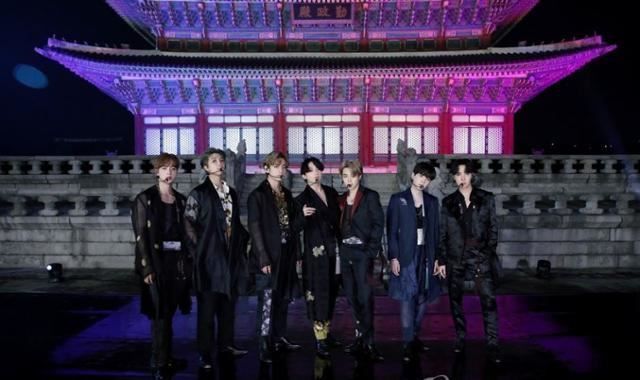
BTS performing at Gyeongbokgung Palace / Courtesy of Big Hit Music

Foreign tourists dressed in Hanbok near Gyeongbokgung Palace on March 29 / Yonhap
Korea's old palaces see tourist boom thanks to K-pop
Elements of traditional Korean culture have been fueling the creative minds of the K-pop industry over the last several years. Stray Kids showcased an old Korean genre of musical storytelling known as ”Pansori,” as well as a traditional lion dance, during their concerts in the U.S. and Japan for the track, “Thunderous”.
BTS's concert set in Korea's ancient royal palace of Gyeongbokgung was broadcast on the Tonight Show with Jimmy Fallon in 2020. According to DJ Hitchhiker, a musician now based in the U.S. and a former member of the rock band Rollercoaster, Korea's old cultural heritage is now resonating with the hip crowd in countries across the globe and that K-pop artists are capitalizing on this trend to emphasize the traditional influences in their music.
Meanwhile, Korea's old royal palaces are witnessing a surge of tourist interest after these locations were used as a backdrop for major K-pop performances. According to Korea's Cultural Heritage Administration, 350,000 foreign tourists visited Korea's four major palaces, including Gyeongbokgung Palace and Changgyeonggung Palace, last month, 50,000 more than the number of visitors seen in the same month back in 2010.
Yang Seung-joon (comeon@hankookilbo.com) is a reporter at The Hankook Ilbo, a sister publication of The Korea Times. This article, previously published in The Hankook Ilbo, has been translated as part of a news-sharing program.