YG faces ruthless 'test for survival'

YG Entertainment's stock price is shown slipping down since Feb. 26 when police started an investigation into BIGBANG member Seungri over suspicions that the K-pop star had procured prostitutes for foreign investors in his business. Korea Times photo by Shim Hyun-chul
This is the second in a two-part series about YG Entertainment's uphill battle with a drug/prostitution scandal involving disgraced K-pop star Seungri. ― ED
By Dong Sun-hwa, Lee Gyu-lee, Park Si-soo
A scandal can be short-lived, but its aftermath drags on much longer.
This is the prospect financial analysts have for scandal-struck YG Entertainment. They said the ongoing investigation into the drug/prostitution scandal involving disgraced K-pop star Seungri could come to an end in the coming weeks, but it won't be the end of the hard times facing the nation's second biggest K-pop label.
Rather, the end of the investigation may mark the beginning of a new challenge for YG on the business and financial fronts, which will essentially test the company's ability to survive.
If YG endures, the company could see a chance to rebound one day. If it fails to withstand the scandal, however, it will only drag the company deeper into trouble.
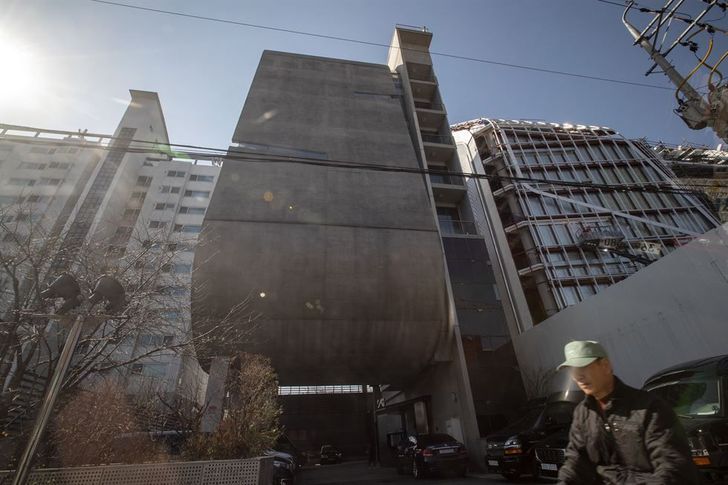
YG Entertainment headquarters in Seoul. Korea Times photo by Shim Hyun-chul
“BIGBANG has accounted for 40 to 50 percent of YG's total sales. But with Seungri ousted (from the band) and the band's name seriously tarnished, it is unclear whether the group will be able to make a comeback in the second half of the year as initially planned,” a financial analyst who requested anonymity said. “This can be likened to the closure of the main factory at a manufacturing firm.”
YG's sales for 2018 were 285.8 billion won ($252.5 million) producing a 9.4 billion won operating profit, according to data from the Financial Supervisory Service, which doesn't detail sales by each artist.
The analyst said YG may try to make up for the immediate loss with BLACKPINK, a popular all-girl K-pop band set to return with a new album on April 5, but it won't be easy to cover it all because “girl bands have their own limits.”
“A boy band and a girl band are essentially different. For K-pop stars, hefty revenues usually come from concerts, but most girl groups cannot hold as many concerts as boy groups because they have weaker ticket power,” the analyst said. “Frankly speaking, BLACKPINK does not have enough fans to replace BIGBANG.”
A recent sell-off by investors reflects widespread concerns that the scandal has chipped away at YG's core business structure, according to analysts. More than 220 billion won ($193 million) of capital has evaporated since the scandal hit the headlines nearly a month ago.
'No longer surefire ticket to stardom'
If the BIGBANG case is a short-term risk, analysts said YG's tarnished brand could be a long-term threat to the company's financial health.

YG Entertainment terminated its contract with Seungri, March 13, as an investigation into a drug/sex-for-favors scandal widened. Courtesy of YG Entertainment
“Before the scandal, being admitted to YG and trained there was considered to having grabbed a surefire ticket to stardom, because YG was so powerful and influential in the music industry. But the scandal has damaged the halo effect YG artists have benefited from,” a music critic said.
“How will people react to new faces coming from YG?” the critic asked. “Cheers or jeers? Let's see what happens.”
Analysts say a 61 billion won ($54 million) investment deal signed between YG and international luxury good brand LVMH in 2014 is yet another potential threat to the label's financial health.
The deal awarded Great World Music Investment, a private equity fund (PEF) owned by LVMH, the position of the second biggest shareholder of YG ― after founder Yang Hyun-suk ― with 1,863,276 shares, including 1,359,688 redeemable convertible preferred shares, or 9.53 percent of the total.
The deal gave the PEF an option to convert the preferred shares into common shares or redeem the invested money in the form of cash, at an annual compound interest rate of 2 percent, on the investment's maturity date of Oct. 17. If the PEF opts for the latter, YG will have to pay back 66.2 billion won in cash.
Which option it will take is unknown, but chances are high that it will opt for the second if YG's stock price hovers below 43,574 won ($39). YG's stock price closed at 36,600 won, Tuesday, up 1,100 won or 3.1 percent from the previous day.
“I doubt that the price will be that high in October,” an analyst said.
As of the end of the third-quarter of 2018, the latest data available, YG held 47 billion won in cash and cashable assets. This means that if the investor opts for the cash withdrawal, YG will have to sell some of its assets, dealing yet another blow to its financial health.
“It's like the calm before a storm,” the analyst said. “YG will soon confront grave challenges on its financial and business fronts, which will test its ability to survive.”