Chicago Symphony Orchestra to debut in Korea

As part of the Hyundai Card Super Concert Series, the Chicago Symphony Orchestra under the direction of Italian maestro Riccardo Muti will perform in Seoul next February. / Courtesy of Hyundai Card
By Do Je-hae
In recent years, several renowned European orchestras have visited Seoul, such as the Berlin Philharmonic or Amsterdam’s Royal Concertgebouw. But local tours of major U.S. orchestras have been rare.
The Chicago Symphony Orchestra (CSO) Seoul tour in February 2013 at Seoul Arts Center is already creating a buzz in the classical music community here. It is the first time for the iconic ensemble to visit Korea in its 121-year history.
The two dates on Feb. 6 and 7 are part of the Hyundai Card Super Concert Series, organized jointly by Hyundai Card and Credia.
“A winner of 62 Grammy awards, the orchestra has built a reputation for an extensive repertoire. Their program in Seoul will focus completely on orchestral music, rather than starting the performance with a soloist,” Lee So-jung, a Credia PR official said.
On Feb. 6, the orchestra will play Stravinsky’s “Divertimento” from “The Fairy Kiss,” Busoni’s “Turandot” Suite and Brahms’ Symphony No. 2 in D major. The concert on Feb. 7 will feature Verdi’s overture to “I Vespri siciliani,” Mendolssohn’s Symphony No. 4 “Italian” and Beethoven’s “Eroica” Symphony No. 3 in E flat major.
Although the CSO has never performed locally, it is very popular among classical music fans, particularly those into Mahler symphonies.
A video recording of Mendelssohn Violin Concerto in E minor with Chung Kyung-wha playing under the baton of the legendary Hungarian-British conductor Georg Solti (1912-1997), who led the CSO from 1969 until 1991, is beloved by Korean violin fans.
The CSO took the classical music community by surprise when it was named the top U.S. orchestra in the latest U.K. Gramophone magazine critics’ poll, ahead of the New York Philharmonic.
Since 1891, many charismatic conductors have led the Chicago Symphony, honing its trademark sound and carving an identity as one of the most respected cultural institutions in the United States.
The CSO is a rare combination of sonic and financial health, making it a benchmark for Asia, where growing aspirations to create top-class orchestras has not yet produced a resounding success.
The success of the CSO has been carried on through the years, regardless of transitions in its leadership.
“The orchestra has a strong identity of its own. It has a great work ethic and the players are passionate about what they do,” said CSO concertmaster Robert Chen in a previous interview with The Korea Times.
The CSO went through a leadership change from maestro Daniel Barenboim from Argentina to Italian maestro Riccardo Muti, who took the helm of the CSO in 2010.
“We are very reflective of the conductor standing in front of us. There are things that we will never do with maestro Muti that we did with Barenboim and things that we did with maestro Barenboim that we will never do with maestro Muti,” Chen said.
Under Muti, who has a formidable background in opera, the CSO has programmed more operas, like Verdi’s “Othello.”
Another unique quality of the CSO is its financial stability. It has a strong fundraising track record, with ticket sales exceeding 85 percent paid capacity, which is high in comparison to other U.S orchestras.
The CSO is also a leader in promoting classical music to young people, thorough educational projects like the “Beyond the Score” series.
Tickets for the CSO Seoul dates range from 70,000 to 360,000 won. For more information, visit
.
In the CSO
record shelf
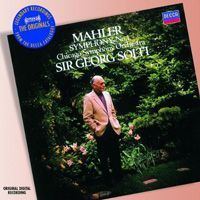
Mahler’s symphonies conducted
by Sir Georg Solti (Decca)
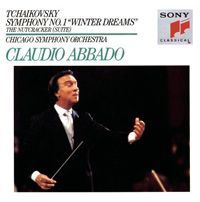
Tchaikovsky Symphonies No. 1-6, conducted by Claudio Abbado,
(Sony Classical)
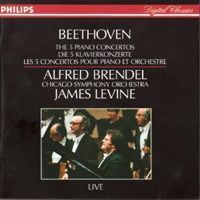
Beethoven’s Piano Concertos No. 1-5; conducted by James Levine
with Alfred Brendel on piano (Philips)
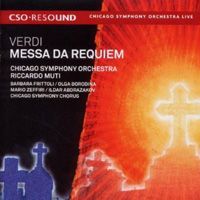
Verdi’s “Messa da Requiem; conducted
by Riccardo Muti (CSO Resound)