Jeonju International Film Festival highlights auteur Lee Chang-dong's universe

Director Lee Chang-dong speaks during a press conference for “Lee Chang-dong: The Truth of the Invisible” at Jung Bu Vision Center in Jeonju, North Jeolla Province, Friday. Courtesy of JIFF
By Kwak Yeon-soo
JEONJU, North Jeolla Province ― Director Lee Chang-dong has been passionately devoted to Korean cinema throughout his 25-year career. This year's Jeonju International Film Festival (JIFF) will screen six of Lee's films remastered in 4K digitally-restored versions.
“Lee Chang-dong: The Art of Irony,” a documentary directed by French director Alain Mazars, as well as Lee's short film, “Heartbeat,” produced with the support of the World Health Organization (WHO), will have their world premieres at the festival.
Lee talked about the challenges of shooting a film amid a pandemic and being the subject of a documentary film.
“As far as I know, I was the last person to join the WHO's project of using short films to create awareness about depression. However, I was the first one to complete it. It's weird because it usually takes a long time for me to make a movie,” he said during a press conference for “Lee Chang-dong: The Truth of the Invisible” held at Jung Bu Vision Center in Jeonju, North Jeolla Province, Friday.
“We shot 'Heartbeat' in late fall or early winter of 2020 and completed the post-production in January last year. While waiting for other directors to finish making their films, I decided to unveil mine at JIFF,” Lee said.
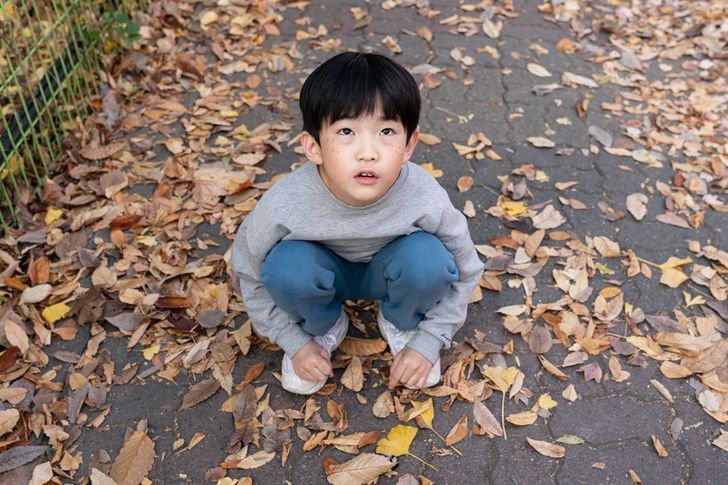
A scene from director Lee Chang-dong's short film, “Heartbeat” / Courtesy of JIFF
“Heartbeat” follows the story of a young boy who tries to save his mother, who struggles with depression.
The film auteur revealed that it was uneasy to appear in a documentary film, having to explain his own films. “Because of the pandemic, the director couldn't come to Korea. So we had our conversations via Zoom. Frankly speaking, it was pretty awkward. I think I explained too much about my films and I'm not really sure how audiences might perceive that,” he said.
Lee also shared his thoughts on what enabled Korean films to capture audiences around the world.
“I think what differentiates Korean cinema from foreign cinema is its diversity. If you think of Japanese or Chinese cinema, there is a certain image that comes to mind. However, each Korean director has his or her own distinctive filmmaking style. Moreover, Korean films have dynamic energy, just like K-pop and K-dramas,” he said
The auteur also discussed the future of the film industry while over-the-top (OTT) platforms continue to surge in popularity.
“I firmly believe that films that capture the essence of human nature will survive after the pandemic ends,” he said.
Lee revealed that he has received many offers to direct films for different OTT players. “I'm open to original OTT content as long as it's a good story and is worth talking about,” he said. “Many ask me about my next feature film. I can't promise when it's going to be available. All I can say at this moment is that I'm still working on the script.”
On Friday, the festival also held a press conference in support of Ukraine. Ten directors of Korea's international film festivals, including the director of the 23rd JIFF, as well as Ukrainian actor Olena Sydorchuk and writer Mariia Chernozhukova, attended the event to voice their support for Ukraine.
After the event, there was a screening of Ukrainian director Alina Gorlova's “No Obvious Signs,” about a woman who returns from war and battles posttraumatic stress disorder and panic attacks.