Two films revisit nation's painful history

Film “Herstory” revolves around the Korean victims of wartime rape and Japan's brutal sexual slavery during World War II. / Courtesy of NEW
War orphans, wartime rape back in spotlight
By Park Jin-hai
Two films based on real life stories featuring painful chapters of modern Korean history have been released in the local box office, revisiting the tragedies of Korean War orphans and sexual slavery during the Japanese occupation.
“Ayla: The Daughter of War,” a Turkish film released June 21 and set during the 1950-53 Korean War, tells the story of the bond between a five-year-old orphan girl and a Turkish soldier.
The touching tale, directed by Can Ulkay, depicts the real life story of Turkish sergeant Suleyman Dilbirligi, who encounters a girl whose entire village _ except for the girl _ had been massacred. He brings the girl, who is mute from shock, to his military base and gives her the Turkish name Ayla, meaning moonlight, for her cute round face.
She becomes the darling mascot of the Turkish troops and comes to call Dilbirligi “Baba” (papa).
Upon the withdrawal of his troops, Dilbirligi desperately tries to find a way to bring the girl home, but they end up separated for 60 years.
The film was inspired by MBC's 2010 documentary “Ayla, My Korean Daughter,” which was well-known to both countries. Dilbirligi and Kim Eun-ja (Ayla) are reunited during the program after six decades apart.
The film was initially released in Turkey in September 2017 and has attracted over 5 million people, to become the sixth-most-watched film that year. Dilbirligi died at age 91 late last year.
The film won the best foreign film and best of fest awards in March at the 24th Sedona International Film Festival in the United States and it was selected as the Turkish entry for the Best Foreign Language Film at the 90th Academy Awards.
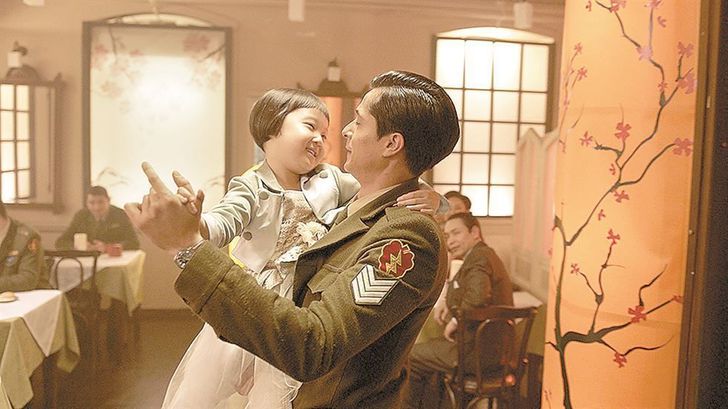
A scene from the Turkish film “Ayla: The Daughter of War” / Courtesy of Bigfilm
“Herstory,” which will be released today, sheds light on the lesser-known real lives of 10 wartime rape victims and their six-year-long legal fight against the Japanese military that began in 1992 in Shimonoseki, Japan.
Kim Hak-soon, who broke her silence in 1991 about wartime rape, became the first woman in the country to testify her experience as a sex slave for the Japanese military. Then, 10 Busan-based former sex slaves, with assistance from Moon Jeong-suk, head of a travel agency, and a Korean-Japanese lawyer, begin the long legal battle to demand an apology and compensation from the Japanese government which hitherto has been evading responsibility citing lack of evidence.
The 10 victims and their supporters went back and forth between Korea and Japan and appeared in court 23 times between 1992 and 1998.
A court ordered the government to compensate the plaintiffs for the first time, which was later overturned in the higher court. Their tales have not been given due attention so far.
Director Min Kyu-dong mostly follows historical facts in his latest movie and calmly tells the tragic stories through the elderly women's voices in the courtroom rather than using flashbacks to depict their traumas at a young age. Instead, some of those women told the Japanese government in court, “I'm both the evidence and witness," revealing old scars on their bodies from being stabbed and mutilated under the knives of Japanese soldiers.
“It was a shame that I was well and off alone,” the director said. “Since I've witnessed the testimony of Kim, I felt like I have been carrying a heavy stone in my heart. So 10 years ago, I made up my mind to make a film dealing with comfort women's stories. While doing research, I came across the court documents in Shimonoseki. Finding out their seemingly little victory contains big, heartening life stories, I began my project.”