'Unique Korean ways' forged K-content's global success: Sam Richards

Sociology professor at Pennsylvania State University Sam Richards teaches the largest race and cultural relations university course in the United States. Courtesy of Sam Richards
US sociology professor focuses on traditional, community-oriented values of Korean content
By Lee Gyu-lee
Triggered by a wave of K-pop phenomena like BTS, the presence of Korean pop culture on the global stage has been stronger than ever, also seeing a surge in popularity in not only its entertainment content like films and series but also in fashion, video games and food.
Sam Richards, a sociology professor at Pennsylvania State University, was one of the scholars who started paying attention to the Korean cultural wave, called “hallyu,” at least a decade before Korean cultural content was starting to appeal to people in other countries. The longtime observer and analyst of Korean society and culture noted that the originality of Korean content has led to its rise worldwide.
“There is a long list of reasons why Korea captured the attention of people around the world in the area of cultural content development and production. Many of these reasons are rooted in Korea's impressive technological innovations, but an equal number are rooted in how skillfully you have been able to innovate without abandoning those unique Korean ways of being in the world,” the professor said in a recent written interview with The Korea Times.
“You didn't copy what others were doing; you created from within your culture and the content contains characteristics that have been congealing on the Korean Peninsula for centuries.”
The sociologist has been teaching the largest race and cultural relations course in the United States for about 28 years, inviting almost 800 students each semester to explore different social and cultural perspectives and controversial topics. In 2018, the course was the subject of an Emmy Award-winning TV broadcast, “You Can't Say That,” and has garnered enormous views with its livestream on YouTube, collecting over 61,000 subscribers.
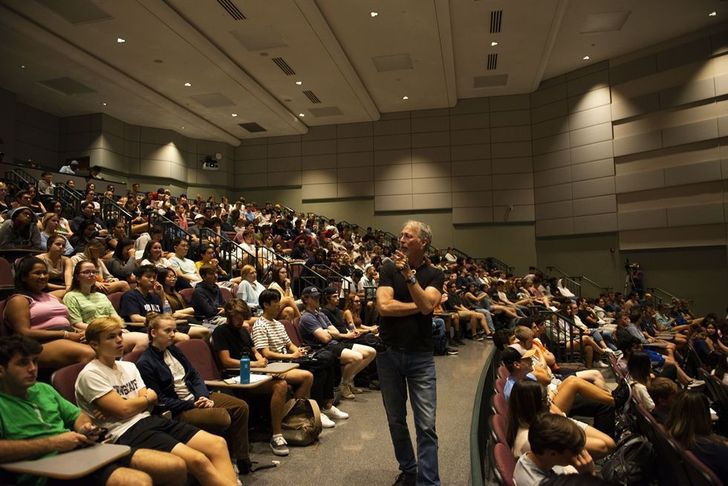
Pennsylvania State University Sociology Professor Sam Richards' course, SOC 119, has nearly 800 students each semester. Courtesy of Sam Richards
Professor Richards first found interest in Korea in the 1980s after meeting a fellow graduate school student and his wife from the country. He was further fascinated by the country when a gradual shift in Korea's economic and cultural life drew attention from people around the world.
“I was quickly intrigued by the way they presented themselves to the world and by their calm, introspective, and humble personalities,” he said. “Those personality and social qualities that I observed in 1984 in my first two Korean friends are traits that actually come through in so many things related to K-entertainment. And they fascinate the world just like they fascinated me when I was in my early 20s.”
While there are various reasons that global audiences find K-content unique, the professor said that the two notable reasons are traditional and community-oriented values the content holds.
“Korea very much appeals to people who are living in cultures with more traditional values and sensibilities and who wrestle with daily ethical and moral concerns in ways not too different from how their ancestors did,” he said. “And by 'traditional' I refer to societies in which important segments of their cultural systems are not yet organized around the modern way of economizing human interactions around transactional exchanges.”

K-pop boy group BTS / Courtesy of Big Hit Music
He explained that although Korea has a highly transactional economy, the country's traditional elements are still deeply rooted throughout the society. And this appeals to those who live in countries that are yet slow to modernize and who also have cultural backgrounds with long histories.
“Because so many people around the world have one foot firmly planted in traditional ways of being, Korean content creatives are able to thoughtfully captivate the imaginations of these tradition-minded people just by inserting 'Koreanness' in their work,” he said.
At the same time, Korea's ability to maintain community-oriented values in its cultural content draws interest from audiences with a more modernized economistic-oriented background like those from North America and Western Europe.
“What probably appeals so greatly to them are the ways in which Koreans have masterfully produced content that does not slide into vulgarity, division and vain individual advancement at the expense of the community,” he said. “The communitarian-oriented moral order of these societies has been profoundly weakened, and yet it still clings to life in their worlds and therefore remains appealing to them when they encounter it, as they do in content coming out of Korea.“
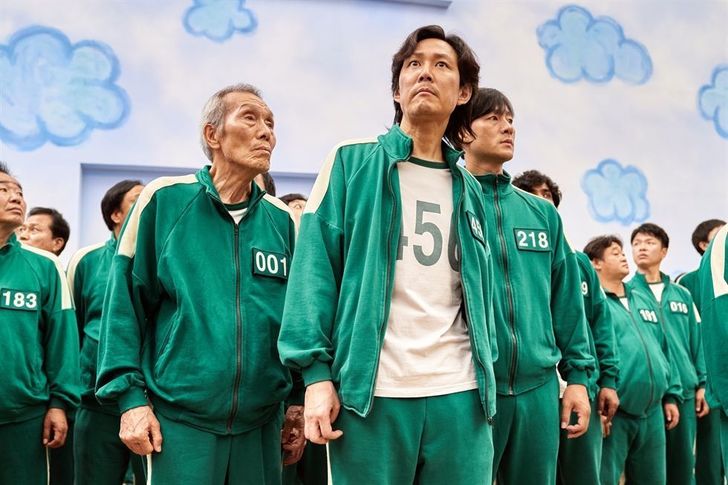
A scene from the Korean hit series "Squid Game" / Courtesy of Netflix
With the growing attention toward Korean content on the global scene, more Korean content production has become transnational, with projects involving creators from different countries. The professor explained that this could be seen as an optimistic outlook on Korea's cultural industries.
“In recent years, I have watched growing numbers of Korean artists pair with artists in other countries and I'm certain that these artists are wanting to partner and collaborate with Korean content producers because they want to tap into that 'Koreanness' in some way,” he said.
“Why wouldn't they want this? And if pieces of Korea are woven into their creations, then I see the result as positive for Korean culture industries.”
Despite the ongoing phenomenon of Korean culture, the question lies on whether this would just be a temporary trend or if it would be able to continue expanding its presence and become mainstream in the global entertainment market.
While noting that he doesn't have confident expertise in entertainment marketing, Richards shared that he has been witnessing how global capitalist enterprises are organized in a fast-paced environment that brings immediate successes, and Korean producers may see “stronger inclinations to follow and not lead,” but he stressed that they need to ensure their content maintains its unique elements.
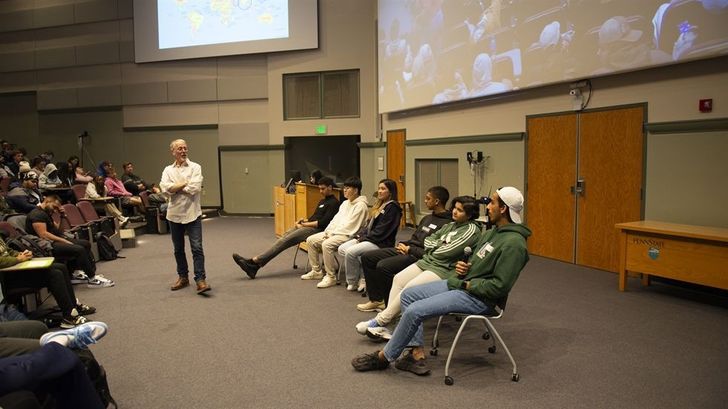
Pennsylvania State University sociology professor Sam Richards lectures during his class. Courtesy of Sam Richards
“Primarily creating ― or building ― new successes on top of old successes is not what catapulted Korea to where it is today, and so I have the idea that it is essential that these content producers keep navigating the outer edges of K-entertainment in search of what will excite fans and consumers in the more distant future. And don't lose that Korean magic that is as essential as it is undefinable,” he said.
With its ever-growing competitiveness in the entertainment market, Richards noted that cooperation between the private sector and the government is essential for the country's cultural content to secure its stake in the market and survive environmental and social crises.
“We're all venturing into a world with problems that will only be solved by large collectivities or significant sectors of populations working in concert and with minimal conflict,” he said.
“Those societies that are strongly divided and where the populace has an extreme distrust of the governing institutions, like my own, will surely weaken and falter under the pressures of these serious problems that are on the planet's horizon. This is my way of saying that both the Korean public sector and private sector will need to work together.”