Predator in the guise of filmmaker?
Kim Ki-duk's films mirror his real life
By Kang Hyun-kyung
Award-winning filmmaker Kim Ki-duk's life has parallels to the characters of his films. He has fulfilled his basic instincts by coercing vulnerable women to provide him with sexual favors.
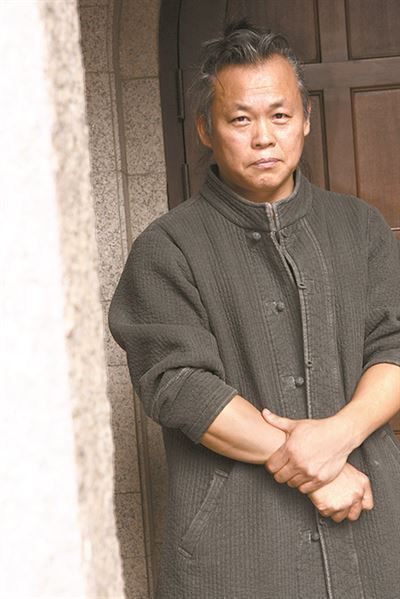
Filmmaker Kim Ki-duk / Korea Times file
His characters are social outcasts, such as a homeless man or a sex trafficking predator.
His films were critically acclaimed particularly by overseas critics at top-tiered international film festivals and some of them earned Kim international fame and recognition.
Like his characters, the self-taught filmmaker allegedly is a habitual sex offender having raped and assaulted actresses and crew members from his film projects.
Unlike his films that are protected by freedom of expression, Kim in real life has no such safety net. He is poised to pay the price for his sadistic sexual behavior.
The police are looking into allegations he faces in order to figure out if his deeds are punishable. Once evidence is secured, the police will question him.
Asked if it's common that directors make films based on their personal experiences or lifestyles, critic Jeon Chan-il said the answer varies, depending on the director.
“Kim and Hong Sang-soo, for example, are the filmmakers whose films are closely related to their real lives. For this reason, some say Hong's movies are biographical,” he said.
“But the opposite also holds true for some filmmakers, such as Park Chan-wook. His films are cruel and brutal but he's not a man like the characters he has created in his movies. He's the opposite. His wife is the decision-maker and he just follows her decisions.”
Jeon said people in the film industry have been all too familiar with rumors about Kim Ki-duk, noting the source was the filmmaker himself.
“He used to brag of his affairs (with actresses and crew members). I didn't check whether his remarks were true or not, because that's none of my business. I am a critic and just comment on him and his films, not his private life,” he said.
Some victims allege he's a predator in the guise of a filmmaker and uses films as an instrument to fulfill his pathetic sexual desires.
“(Seen from his films and real-life behavior), he apparently has sadistic sexual fantasies,” said Lee Soo-jung, a professor of criminology at Kyonggi University. “His sadistic tendencies have been manifested in his films. He seems to have confused his real life and the characters he created in his films.”
Kim's real life has parallels to his 2002 film “Bad Guy,” among others.
In the movie, the male character Han-ki kidnaps the college girl Sun-hwa and sells her to a sex-trafficking ring. Han-ki watches her having sex with other men. Sun-hwa hates the kidnapper but her attitude changes after she sees him brutally beaten by other gang members. She finds sympathy for the guy who sold her into the sex trade and he grows deep in her heart.
The reconciliation of Sun-hwa and the gangster Han-ki is likened to the friendship between the two girls in the 1998 film “Birdcage Inn.”
In the film, a prostitute, Jin-ah, is eager to be a friend of Hye-mi, a college student of the same age, and keeps trying to curry favor with her to win her heart. Hye-mi gives Jin-ah the cold shoulder as she despises the latter's lifestyle. Like Sun-hwa in the “Bad Guy,” Hye-mi gradually opens her heart toward Jin-ah and the two become friends.
Critic Kim Kyung-wook says Jin-ah and Han-ki have been in “a struggle for recognition” until they are finally accepted by their counterparts.
The critic said the characters created by Kim Ki-duk are outcasts leading unthinkable lives. For example, the character in his 1996 debut film “Crocodile” is a homeless man earning money by selling the corpses of suicide victims to their family members. He rapes a woman who attempted to commit suicide. Violence, rape and the sex trade are some of the common elements of his films.
“His characters are disgusting and pathetic,” the critic wrote in the BUON books Master Class series “Kim Ki-duk vs. Hong Sang-soo.”
Through his films, the critic said, Kim Ki-duk delivers the message that his characters may be disgusting, but they are still part of society, so their ways need to be accepted rather than judged.
“Kim Ki-duk depicts people who judge his characters based on their own criteria as hypocrites who hide behind dirty secrets,” the critic said.
Jeon said Kim's films reflect the way he views the world and people-to- people relationships, rather than his real life.
In his book “Kim Ki-duk, Wild or Scapegoat,” Kim admits pathetic sadism has been part of his life and it was his reaction to the hypocritical society.
“How can I escape this deep pain and agony that has engulfed me? I may be able to find comfort if I turn my attention to those who are weaker than me and torment them. In this pathetic society, killing frogs or dogs is acceptable but killing people is punishable. How are the two different? To me, life is unfair. It's like someone slapped me in the face and ran away. But I have no idea how I can get revenge. Filmmaking is sort of my revenge to the cruel, unfair life and it is also a way to punish me for my cowardice.”
The filmmaker's sexual misconduct has continued for over two decades since he made his directorial debut in 1996 with “Crocodile.”
He has faced sexual assault allegations recently. Inspired by the #Me Too campaign, victims broke the silence and disclosed what they had gone through while working with the filmmaker. Their revelations were shocking.
The filmmaker stayed safe for so long by hiding behind the “casting couch” practice.
“We took such practices for granted for a long time,” Jeon said. “Few raised questions about such a practice. But times have changed. Sexual assault is no longer acceptable.”
The critic said Kim Ki-duk is not the only director who has abused his position in return for sexual favors from aspiring actresses.
Jeon said the casting couch practice is still there in the film industry as director Cho Keun-hyun told some actresses he interviewed for his music video projects. Cho is also accused of sexual misconduct.
“I don't think what Cho said is all true. But I do believe his remarks were not fabricated. He just mentioned the practice that is still going on in the film industry,” Jeon said.
The critic said he felt he's partly responsible for the sexual misconduct. “I now feel I am not free from criticism that I was one of the colluders or bystanders who let such things happen, because I didn't stop him from doing that,” he said.