BOK hikes policy rate to 1.75% to combat inflation
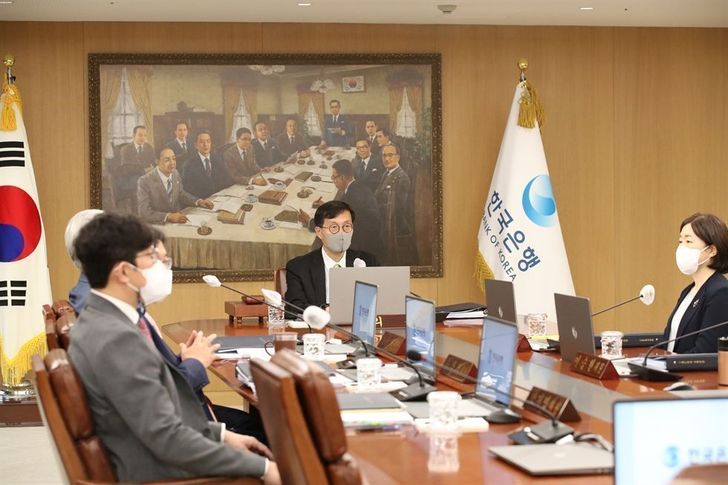
BOK Gov. Rhee Chang-yong presides over a rate-setting meeting at Bank of Korea in Seoul, May 26. Yonhap
The central bank hiked its key policy rate by a quarter percentage point Thursday as it strives to rein in inflation that is running high amid soaring oil and commodity prices driven up by global supply chain disruptions and the ongoing war in Ukraine.
As widely expected, the monetary policy board of the Bank of Korea (BOK) voted to increase the benchmark seven-day repo rate to 1.75 percent at a rate-setting meeting held early in the day.
This marked the third rate hike this year after 0.25 percentage-point increases in both January and April.
It also represented the fifth rise since August last year when the central bank began rolling back its easy monetary policy put in place for about two years to bolster the pandemic-affected economy.
The latest rate hike came as the country grapples with high-rise inflation pushed up by soaring oil, energy and other major commodity prices amid the protracted Russia-Ukraine war that has exacerbated global supply chain disruptions.
Korea's consumer prices, a major gauge of inflation, jumped 4.8 percent year-on-year in April, the fastest rise since October 2008.
Inflation expectations also rose to 3.3 percent in May, the highest level since October 2012, which could drive up demand for wages and add to upward pressure on inflation.
The BOK has emphasized that its top priority is to keep inflation in check before it gets out of control, though it remains cautious that rising borrowing costs could put a damper on the economy.
The BOK has also been under pressure to raise its rate as the U.S. Federal Reserve hiked its interest rate by a "big-step" 0.5 percentage points early this month to the 0.75-1 percent range and hinted at further increases down the road as part of monetary policy tightening to tame runaway inflation.
The Fed's hawkish monetary policy stance has spawned worries here that the spread in borrowing costs between the two countries could reverse in the months to come and spark a massive capital outflow from Korea and further weaken the local currency against the dollar.
A weak currency could increase upward inflationary pressure by making imports more expensive.
BOK Gov. Rhee Chang-yong recently said the possibility of a big-step rate hike cannot be ruled out for Korea should inflation woes persist. (Yonhap)