ANALYSIS Bank of Korea feared to suffer leadership vacuum

Bank of Korea Governor Lee Ju-yeol speaks during a National Assembly audit in Seoul, Oct. 15. Joint Press Corps-Yonhap
By Lee Min-hyung
The Bank of Korea (BOK) is set to face a leadership vacuum after Governor Lee Ju-yeol ends his term at the end of March 2022, as his replacement is unlikely to be announced before the country's next president takes office in May.
President Moon Jae-in should, in principle, appoint the next leader of the central bank sometime as early as February, so that the potential candidate can have a National Assembly confirmation hearing and start his or her term on April 1.
But the plan will not proceed as scheduled due to the March 9 presidential election. The incumbent administration is unlikely to do so, as a political gesture to respect the decision of the next president and his administration, experts said.
Another reason that increases the likelihood of there being a leadership vacuum is that no specific figures inside or even outside of the central bank have so far been considered as favorites for the position.
Lee started his term back in March 2014, following former President Park Geun-hye's appointment, and President Moon decided to extend Lee's term in 2018. As he cannot serve a third term, financial market watchers expect a BOK deputy governor to fill the void by serving as an interim leader of the central bank for a couple of months before the next administration comes into power in May.
The possible absence of BOK leadership comes at an inopportune moment when the central bank should be busy mapping out post-pandemic monetary policies after the Korean economy entered a cycle of monetary tightening by increasing its key rate in August of this year.
The BOK also plans to make a set of crucial monetary decisions throughout 2022, when the U.S. Federal Reserve will also start raising its key rate after ending its tapering by the end of the first quarter.
The climbing COVID-19 infection caseload and the emergence of new variants here and abroad are also expected to escalate financial uncertainties next year, for which Lee underscored the need to step up the monitoring of global financial markets in real-time, so as to take quick action if any signs of economic crisis are detected.
This situation sparks concerns that the months-long leadership vacuum will hinder the timely decision making of the central bank. As the BOK's monetary decisions are generally in line with those from the Fed, calls are growing that a new leader should be appointed on time to minimize the vacuum and nimbly keep track of the financial situation here and abroad.
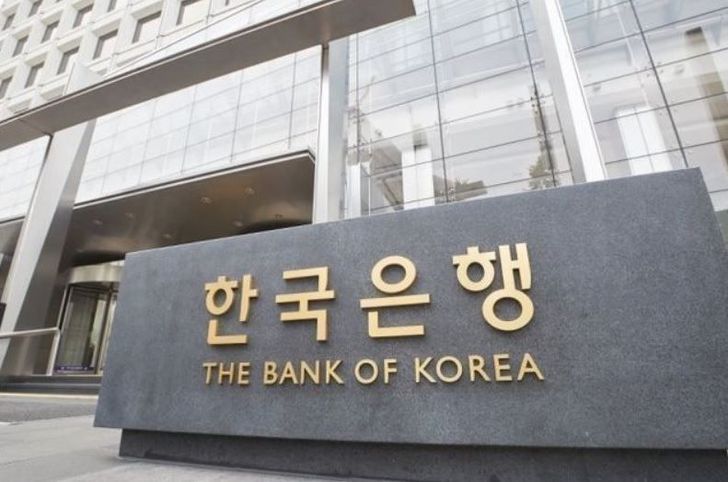
The Bank of Korea's headquarters in Seoul / Yonhap
Internal dissatisfaction with Lee
Lee may have set a record as the nation's longest-serving BOK governor, but the central bank's labor union is complaining about his management style.
According to a survey released Tuesday by the BOK's labor union, six out of 10 BOK officials called for the need to appoint an outside figure as the next governor. A total of 716 BOK employees took part in the survey for eight days from Dec. 3. Only about 26 percent of those surveyed said that they wanted a BOK official to be promoted to governor.
Those who distrusted Lee took issue with his “unfair” personnel management policy and negligence in enhancing the employee wage system.
“While Lee was in office for eight years, employees' dissatisfaction with and distrust of the organization have reached their peak,” Yoo Hee-joon, head of the BOK labor union, said. “Aside from wages, employees have been dissatisfied with his incompetent management and authoritative personnel policies.”
Back in 2009, most state-run financial firms cut employees' annual salary by 5 percent in line with the then-administration's policy stance. The union argued that most of them ― such as the Ministry of Economy and Finance and the Financial Services Commission ― have since restored employee salaries, except for the BOK.
According to data from the union, BOK employees' salaries have increased by 1.66 percent each year since 2017 on average. However, BOK salaries rose merely 0.8 percent and 0.7 percent in 2019 and 2021, respectively.