Contribution Financial education should be included in regular school curriculum
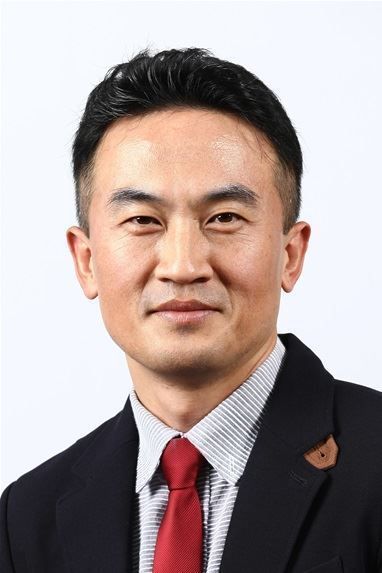
Hwang Sei-woon is the senior research fellow at the Korea Capital Market Institute (KCMI). Courtesy of KCMI
By Hwang Sei-woon
Ever since the start of the COVID-19 pandemic in 2020, the global economy has been undergoing a fundamental paradigm shift. The rise of the non-face-to-face economy, changes in the global supply chain and active responses to climate change will be keywords to summarize post-COVID-19 economies.
In a financial perspective, a clear change after the COVID-19 pandemic will be a money move, from bank deposits to capital market products that entail loss probability. As the era of low interest rates is expected to continue, a deposit-oriented strategy is losing ground for wealth management and retirement preparation. In contrast, risky assets represented by stocks and cryptocurrencies are emerging as the key financial products owned by households.
The importance of risk management increases when households raise their holdings on risky assets such as stocks. Having too many risky assets should be done in a pre-planned manner. Otherwise, an increase in the proportion of risky assets may not positively result in acquiring the average risk premium, but rather exaggerate the loss possibility through excessive risk pursuit. This is the reason why we need to strengthen financial education.
In the domestic financial market, individuals' financial activities are clearly increasing. In the wake of the COVID-19 pandemic, retail investors' entry into the stock market has soared. The number of retail investors active in the stock market stood at 6.13 million in 2019, increased to 9.13 million in 2020 and exceeded 10 million this year. It is also well-known that the number of retail investors participating in cryptocurrency trading has also increased rapidly. Korean retail investors have a strong preference for direct investment over fund investment, which has advantages in terms of risk management. In addition, the trade frequency is quite high along with a very short investment horizon.
Despite such a propensity for aggressive investment, it is difficult to conclude that retail investors' understanding of the financial market is adequate. When we look at the financial literacy index on households announced through the media, Korea is not in the high level group among OECD countries.
Many people tend to start financial activities for reasons such as fear of being left behind or simply herding purposes. However, the financial market climate is full of storm and blizzard. If you are underprepared, then you are more likely to suffer losses.
Therefore, it is reasonable to learn the necessary principles and management skills through financial education. In an economy where low interest rates and an aging population continue chronically, financial education becomes more important. It is imperative to build up the necessary awareness so that retail investors can check their financial status and set long-term financial goals properly. Financial education should be supported institutionally so that it can be incorporated as a part of the regular curriculum and expanded into life-long education.
The writer is the senior research fellow at the Korea Capital Market Institute.