Fundamental solution for AI lies in educational reforms

Lee Jae-hyeon
By Lee Jae-hyeon
Artificial intelligence (AI) is one of the most overused terms that dominate heated discussions on future societies. The term carries hype and excitement towards an unprecedented era of exponential technological growth, as well as grave concern towards an unpredictable future.
More often, the sense of unnervingness overshadows optimism, with emerging predictions of a bleak future characterized by automation, job displacement and mass unemployment. These daunting phrases reflect the central issue regarding the future of AI, as well as the need to prepare and adapt to the transforming labor market.
I believe that the fundamental solution lies in education reforms and the development of effective labor models.
Many students today strive to get into prestigious universities and earn unaffordable degrees only to confront job rejections and all-time high unemployment rates.
Unemployment rates have increased significantly due to various factors. The level of education has increased, with the increase in tertiary education graduates since the 1940s. Due to globalization as well as advancements in communication technologies, companies employ workers from different countries to make the most cost-effective choices.
Automation is expected to displace jobs to varying degrees across all occupations.
While the value of university degrees has dropped and higher-level education does not guarantee job security, education has failed to follow up on this change.
Schools continue to induce students to choose a profession upon graduating high school and attend university to study a specific major suited for this profession. Teachers feed information to students who are expected to memorize the information and take exams that rank them based on carefully calculated scores.
This traditional teaching method is outdated. The current education system is suited to training laborers who can passively perform relatively simple tasks, which was in demand in the 1900s.
Students of the future need different skill sets. In a world of digitalization where knowledge is readily accessible and university degrees are devalued, students must be trained to make use of the flood of information available, collaborate with others through digital platforms and become flexible, independent learners who can adapt to the rapidly changing environment.
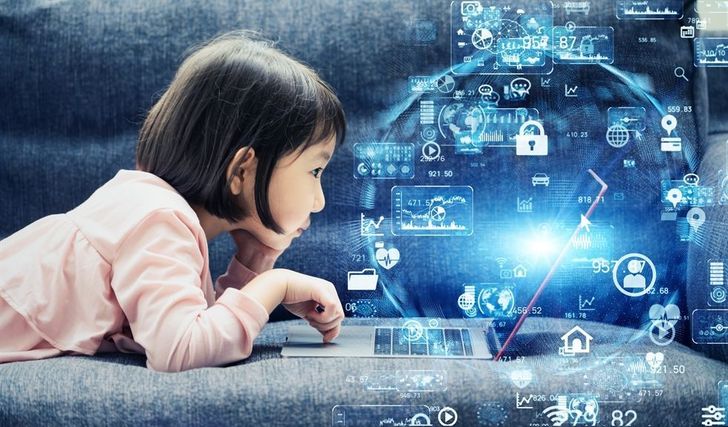
In fact, technology can effectively guide the educational reform required in the transition towards an economy with a high degree of automation.
Massive Open Online Courses (MOOCs), including Coursera and EdX, grant access to many lectures from prestigious institutions at an affordable price. Platforms such as YouTube, TED-Ed and numerous blogs act as decent sources of expertise.
More sophisticated technologies allow “personalized learning,” where software collects data on individual performance and provides an intensive one-to-one tutoring system to each student. Such a learning approach has already been implemented by Rocketship Education in 2013.
The role of educators is shifting. Teachers can spend less time delivering information in classrooms and marking papers. Instead, educators can exploit the necessary technological means to guide students in effectively navigating through alternative sources of information, tailoring learning to meet the needs of each student and equipping students with important skills, such as problem-solving, critical thinking and communication.
gettyimagesbank
Education reforms are of further significance as the aforementioned skills are entrepreneurial skills that can foster employers.
The rise of entrepreneurs is hopeful especially in the future labor market. Digital platforms act as low-cost, thus low-risk distribution channels. The necessary knowledge to launch a startup is readily available. The low barriers to pursuing entrepreneurial activities will allow new markets and businesses to emerge, thus yielding an economically favorable outcome of growth in self-employment.
Aside from education, new labor models should be planned to sufficiently meet the labor supply.
First, nations should foster more specialists in fields such as data science and system engineering who can utilize or work closely with AI. Though it is not difficult to imagine an increase in demand for practical expertise in such fields, many people still choose traditional professions for the sake of job security and high salaries.
This phenomenon is pronounced in Korea. According to Maeil Economic Daily, over a hundred freshmen from Seoul National University dropped out to apply to medical, dental or pharmacy schools last year. The high preference of these healthcare professions over fields of engineering or computer science reflects that the Korean government must do more to support such professions that will be at the forefront of advanced research in artificial intelligence and big data systems.
Governments should also recognize the fact that professions are facing decomposition and multi-sourcing.
Professional work is being broken down into simpler, constituent tasks and allocated to workers that can perform such tasks effectively at minimal costs. For instance, consulting firms utilize research done outside of the firm, while educators utilize teaching materials put together by someone else and uploaded on a website. Such division of labor within professions including but not limited to law, healthcare, journalism and education needs to be addressed by governments.
Namely, governments can implement training of “para-professionals,” who are experienced and knowledgeable enough to undertake one of the constituent tasks that contribute to professional service. This will also allow governments to identify which tasks can be automated and which tasks must be left in human hands.
An uncertain and unpredictable future lies ahead of us. No one can accurately foresee which jobs will survive in the long run and the extent to which capable machines can replace work performed by humans.
What is unquestionable is the fact that automation is inevitable and we must prepare for change. Only then can we hope that AI will bring innovation and positive change instead of pure automation and complete job displacement.
Lee Jae-hyeon is a student at KAIST.