'Market-friendly' FSS governor faces backlash

Financial Supervisory Service Governor Jeong Eun-bo responds to lawmakers during a National Assembly audit in Seoul, Oct. 21. Korea Times photo by Oh Dae-geun
Jeong to meet top executives of banks, brokerages, asset managers
By Park Jae-hyuk
Financial Supervisory Service (FSS) Governor Jeong Eun-bo is drawing criticism from progressive civic groups, after he promised to reform the financial watchdog's system of inspecting financial firms to focus more on preventing risks than imposing reactive sanctions.
Some of his subordinates also remain skeptical of the change, raising concerns about the possibility of the FSS staff being blamed for the recurrence of illegal acts by financial firms.
Earlier this month, Jeong said the FSS will upgrade its inspection methods to be flexible in coping with changes in the financial environment and to manage its workforce more efficiently.
“Considering each financial firm's size and the complexity of their businesses, we will reasonably adjust frequency, range and methods of our inspections,” he told financial holding company CEOs last Wednesday. “For smaller subsidiaries of financial holding firms, we will consider being flexible about the frequency of our inspections of such companies.”
In accordance with his stance, the FSS has indefinitely delayed its “comprehensive inspections” of Woori Financial Group and Woori Bank, which were initially supposed to take place this month.
The People's Solidarity for Participatory Democracy viewed Jeong's remarks as “inappropriate,” urging him to tighten supervision, instead of taking a “market-friendly” attitude.
“Compensations and sanctions have not been finalized, regarding a series of private equity fund fiascos that caused massive losses for consumers,” the civic group said in a statement. “We hope Jeong will perform his duties in compliance with the purpose of the FSS's establishment.”
Financial Justice Solidarity leader Kim Deuk-eui told reporters last week that weaker inspections will allow the management of financial firms to abuse their power more intensively.
“After the FSS stopped its comprehensive inspections in 2015, a series of private equity fund fiascos occurred as a result, harming consumers, but the financial authorities did not learn any lesson from this,” he said.
Financial firms have been subject to comprehensive inspections every couple of years, ever since the Office of Banking Supervision was founded under the Bank of Korea in 1962, prior to the creation of the FSS in 1999.
Although they were able to temporarily avoid the month-long inspections from 2015 to 2018, the FSS brought back the system in 2019 under the leadership of Jeong's predecessor, Yoon Suk-heun.
In response to critics, Jeong said that he does not intend to abolish comprehensive inspections.
“We will continue deliberations about sanctions against financial firms involved in unfair trading of private equity funds, discussing the matter with the Financial Services Commission,” he said.
The FSS also kicked off its comprehensive inspection of the Korea Exchange, Monday, for the first time in 11 years.
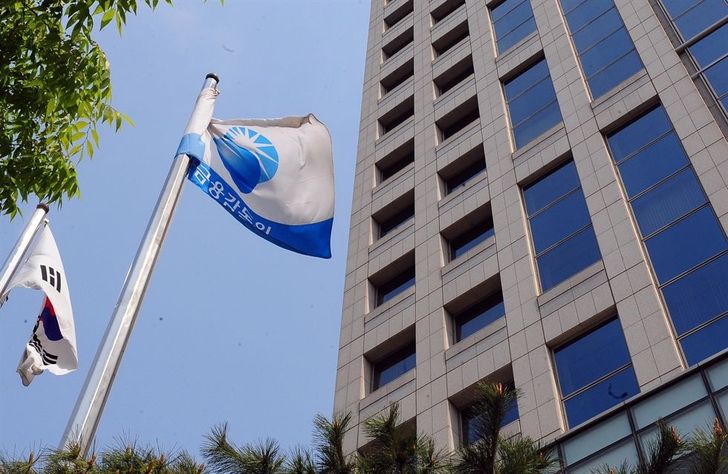
Financial Supervisory Service headquarters in Seoul / Korea Times file
The governor, however, did not stop his efforts to extend an olive branch to financial companies that complained about the hawkish stance of his predecessor.
Following his first meeting with the leaders of financial holding companies last week, Jeong will meet the CEOs of commercial banks, Tuesday, and the heads of regional banks, Wednesday, for the first time since his appointment in August.
He will have detailed discussions with them about reforming inspection systems.
The governor plans to hold a luncheon Nov. 23 with top executives from Mirae Asset Securities, Korea Investment & Securities, Samsung Securities, Kyobo Securities, Eugene Investment & Securities, IBK Securities and Korea Asset Investment Securities.
Jeong said during a National Assembly audit last month that the FSS was considering reducing a total 48 billion won ($41 million) in fines on securities firms that allegedly disrupted the market by abusing their status as market makers, or liquidity providers, which refers to market participants that make purchases and sales in order to keep financial markets liquid.
Attention is therefore being focused on whether the governor will offer benefits to securities firms during his first meeting with their CEOs.
His meeting with CEOs of seven asset management companies is also slated for Dec. 2. The primary focus is whether Jeong will comment on the ongoing inspections of firms managing private equity funds, which started in July last year to prevent the recurrence of illegal acts by asset managers.