KDB, IBK, Eximbank, KIC pressured to leave Seoul

Korea Development Bank headquarters in Seoul / Yonhap
President Moon to discuss relocation plan next month
By Park Jae-hyuk
Prime Minister Kim Boo-kyum's recent remarks on moving state-run financial institutions out of the Seoul metropolitan area are raising concerns that such a move will make it more difficult to attract talent and foreign investors, according to industry sources and experts, Monday.
“Foreigners will avoid investing in Korea, if they have to visit multiple regions that are distant from each other to meet officials of state-run financial institution,” said an insider of one of the state-run financial institutions facing relocation.
He cited the National Pension Service (NPS) Investment Management which was moved to Jeonju, North Jeolla Province, as an example. The pension fund has been suffering for several years from the outflow of investment experts following its relocation, eventually deciding to hire inexperienced fund managers to cope with the employee shortage.
Specifically, Kim's remarks are unnerving the employees of Korea Development Bank (KDB), the Industrial Bank of Korea (IBK), the Export-Import Bank of Korea (Eximbank) and the Korea Investment Corp. (KIC), given that he mentioned more details about the government's ambitious plan.
Earlier expectations were that the relocation of state-owned financial institutions would be difficult for the government before President Moon Jae-in ends his term, due to the ongoing COVID-19 pandemic and the presidential election next year.
Presidential Committee for Balanced National Development Chairman Kim Sa-yeol also said earlier this month that the relocation of public institutions seemed to have been postponed over political reasons.
But the prime minister said on Sunday that the plan will become more tangible, once President Moon meets with mayors and provincial governors this autumn. This was a reiteration of his previous remarks at the National Assembly, Sept. 13, when he said that the Moon administration would soon disclose its thoughts about relocating public institutions outside of the greater Seoul area.
While the state-run financial institutions are concerned about decreased productivity after their departures from Seoul, the government is apparently trying to accelerate its efforts to move them, before the end of Moon's five-year term next year.

Prime Minister Kim Boo-kyum speaks during a meeting at the Government Complex Seoul, Sunday. Yonhap
According to sources familiar with this issue, Cheong Wa Dae plans to hold meetings with the President and mayors and provincial governors in mid-October.
The prime minister said 150 of the 400 public institutions staying in the capital area have over 100 employees, and that the government is considering relocating those 150 institutions to promote the development of remote regions outside the nation's capital.
Multiple state-run financial companies, however, are now said to be subject to the forthcoming relocation, which will follow the previous one that forced over 150 other public institutions to leave the Seoul metropolitan area earlier.
In addition, they are feared to be dispersed across different regions, because Busan, North Jeolla and Gangwon provinces are attempting to accommodate state-run financial firms. Busan wants KDB, the Korea Deposit Insurance Corp. and the Korea Trade Insurance Corp., while North Jeolla Province seeks to have IBK and KIC. Gangwon Province has tried to accommodate the Bank of Korea and the Financial Supervisory Service headquarters.
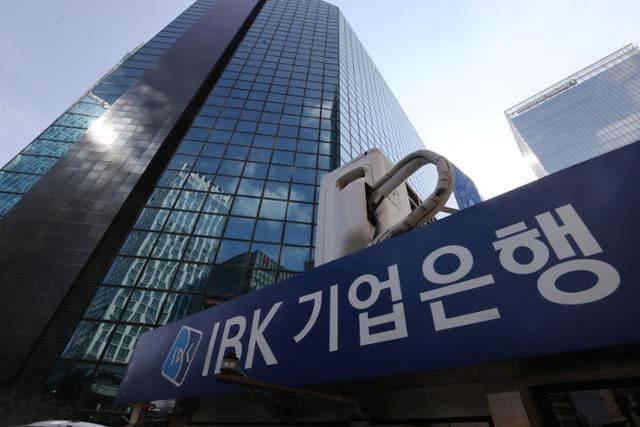
Industrial Bank of Korea headquarters in Seoul / Yonhap
Although public financial institutions have ostensibly promised to follow the government's policy, their employees fear separation from their family, as well as setbacks in their work.
“I'm living in a rented studio, and I visit Seoul every weekend to meet my family,” said one employee of a public financial institution that left the capital area.
Amid growing concerns, several lawmakers of the ruling Democratic Party of Korea (DPK) are even emphasizing that the government's plan to relocate public institutions should exclude state-run banks to avoid the outflow of experts and decreased productivity.
Last December, the DPK announced its plan to foster Yeouido as Northeast Asia's financial hub, after moving the National Assembly's 11 standing committees to Sejong. The ruling party said at that time that it would transform Seoul into the center of international finance by upgrading tax systems, legal services and regulations.
Unionized workers of state-run banks are also protesting the relocation of their workplaces.
“It is necessary for state-run banks to communicate with the government and relevant institutions,” Korean Financial Industry Union leader Park Hong-bae said. “If they are moved outside the capital region, departments in charge of key tasks will stay in Seoul, deteriorating the effect of the relocation and their productivity.”