Bank of Korea stands pat as 4th wave of COVID-19 pandemic ups uncertainties
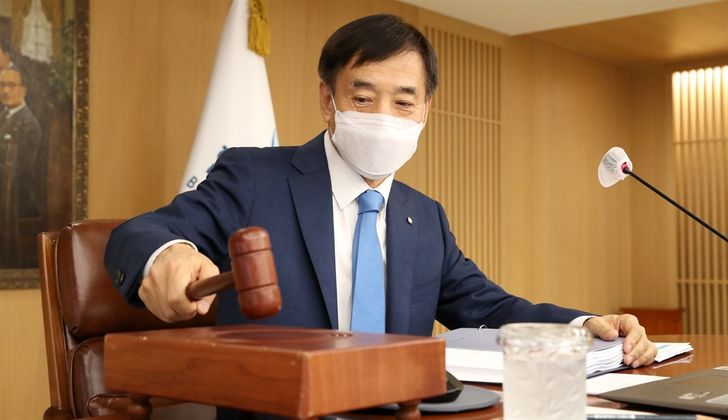
Bank of Korea Gov. Lee Ju-yeol bangs the gavel after a meeting at the central bank's headquarters in Seoul, July 15. Yonhap
South Korea's central bank on Thursday held its benchmark policy rate unchanged at a record low of 0.5 percent as the country is grappling with the recent spike in COVID-19 infections, which put the greater Seoul area under the highest level of virus restrictions.
As widely expected, the monetary policy board of the Bank of Korea (BOK) voted to leave the base rate steady in this year's fifth rate-setting meeting.
The BOK's decision came as the nation was battling against its worst-ever COVID-19 outbreaks with daily new infections rising above 1,000 for more than a week.
Before the fourth wave took hold, many analysts predicted that the BOK may raise its key rate in the fourth quarter of this year as BOK Gov. Lee Ju-yeol strongly hinted that monetary policy may begin to normalize "within this year."
Investors will closely watch Lee's press conference, which will provide details on whether there were any dissenters.
To bolster the pandemic-hit economy, the BOK slashed the key rate to the all-time low of 0.5 percent in May last year by delivering an emergency rate cut of half a percentage point.
Despite signs of a robust recovery in exports, weaker consumption has weighed on employment and increased pressure on policymakers.
So far this year, South Korea's economic recovery has shown signs of a recovery, helped by a strong rebound in exports.
Exports, which account for about half of the nation's gross domestic production, jumped 39.7 percent in June from a year earlier, extending their gains for an eighth consecutive month, as demand for chips and automobiles stayed strong amid the improving global economy.
Outbound shipments came to US$54.8 billion last month, according to government data.
In the first 10 days of July, exports rose 14.1 percent on-year, customs data showed. (Yonhap)