Korea on alert over possible shift in U.S. economic policy
Biden expected to move toward 'multilateral framework'
By Kim Bo-eun
The government is closely watching for shifts in U.S. economic policy, after Democrat Joe Biden was declared president-elect four days after polls closed, Saturday, local time.
The Ministry of Finance and Economy said Sunday it will strengthen the role of a taskforce designed to observe developments in the U.S. presidential election, keeping it running for the time being.
A ministry official said the team was formed last month in consideration of the particularly contentious election.
"We do not set up separate teams each time there is a change in government in major economies. The taskforce was drawn up this time considering the impact on Korea of a U.S. change in government," the official said.
"The team will be keeping an eye on U.S. President Donald Trump's response, and president-elect Biden's foreign and economic policies."
The taskforce will likely prepare for changes and devise policies accordingly.
Ministerial meetings on the global economy led by Deputy Prime Minister and Finance Minister Hong Nam-ki will likely address related policies. The policies are also set be discussed at a macroeconomic meeting led by First Vice Minister of Economy and Finance Kim Yong-beom.
While uncertainty prevails over key policies in diplomacy and trade, Biden has made clear the trajectory the U.S. will take in environmental policy.
Under the Biden administration, the U.S. is set to rejoin the Paris Climate Accord that Trump withdrew from and is expected to call for countries around the world to join efforts to curb emissions.
The global climate accord committed the U.S. to cutting greenhouse gases by up to 28 percent by 2025 from 2005 levels. Biden wants the U.S. to reach net zero emissions by 2050.
Biden's camp has pledged to use trade agreements to make countries around the world comply with the terms of international pacts that require cuts in carbon emissions which have so far been voluntary.
Korea will likely look out for the implications this will have here.
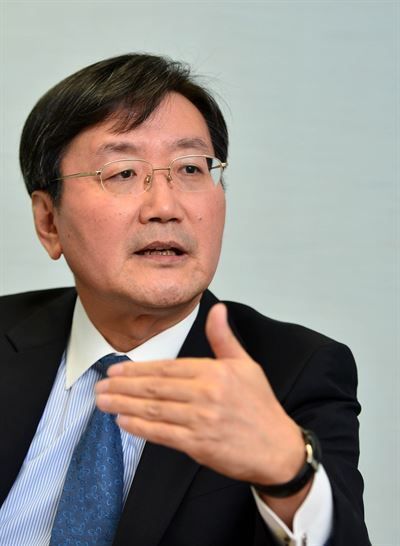
Institute for Global Economics Chairman Jun Kwang-woo
Analysts state that it is a positive that Moon Jae-in's administration's Green New Deal drive is in line with Biden's environmental policies.
"Korea will have to place a greater emphasis on carbon neutrality, which could be a challenge for traditional industries, but it could also serve as an immense opportunity," said Jun Kwang-woo, chairman of the Institute for Global Economics.
"It is important that the industries affected make this transition accordingly."
Yonsei University professor of economics Sung Tae-yoon agreed.
“Korean businesses in manufacturing may be in a difficult position, but this is an inevitable trend and the latest election may serve as an opportunity for the companies to make this big change,” he said.
Biden's pledge, meanwhile, to invest $2 trillion in clean energy and infrastructure is set to benefit local renewable energy businesses.
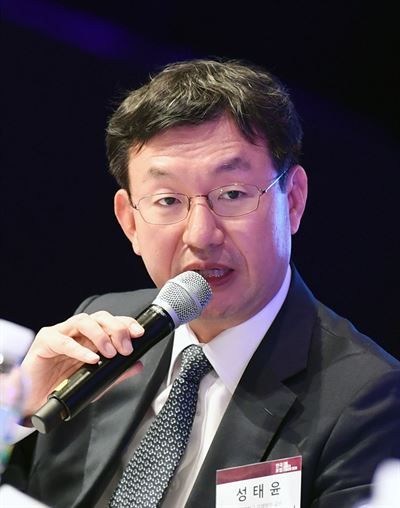
Yonsei University professor of economics Sung Tae-yoon
In terms of trade policies, views are that Biden may continue with protectionism, but to a lesser extent than Trump had. Biden is also expected to lean more toward a multilateral framework.
"The Biden administration may opt for compromise over confrontation, in a multilateral framework," Jun said.
“A multilateral framework will ensure a stable system under which members can seek free trade,” Sung said. “Overall, we can expect much more stability in policies under the Biden administration.”
The Korea Institute for International Economic Policy (KIEP) also stated the Biden administration will likely maintain policies based on the free trade order and a multilateral framework centered on the World Trade Organization (WTO), in a report released Friday.
The KIEP report stated the U.S. may consider joining the Comprehensive and Progressive Agreement for Trans-Pacific Partnership (CPTPP) instead of the tariff war that the U.S has been waging, to pressure China. The CPTPP is a partnership that evolved from the planned Trans-Pacific Partnership, which did not go into force as the U.S. pulled out.
"Korea will need to prepare an action plan in case the U.S. joins the CPTPP in an attempt to contain China," the report said.
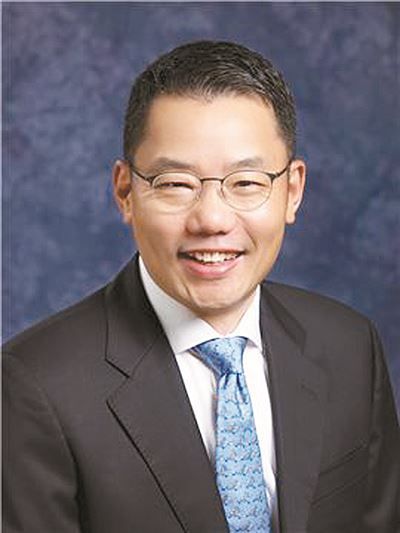
Standard Chartered (SC) Bank Korea chief economist Park Chong-hoon
However, the KIEP viewed that protectionist strategies ― including trade restrictions on China and efforts to bring much of the global supply chain to the U.S. ― will also likely continue.
"Countries such as Korea, Taiwan and Mexico may benefit as the new administration keeps intact trade restrictions on China," Standard Chartered (SC) Bank Korea chief economist Park Chong-hoon said.
The KIEP report said "Korea can look into how it can take part in America's reshoring of supply chains in industries such as automotives, semiconductors and medical equipment."