FSC decides to extend short-selling ban
By Kim Yoo-chul
The Financial Services Commission (FSC) said Thursday that it would extend a ban on short-selling for another six months as the spread of the COVID-19 pandemic continues.
“In order to stabilize investment sentiment for retail investors, we decided to extend the short-selling ban for another six months to March 15, next year,” the FSC said in the statement. The extension will be applied to all listed companies on the KOSPI, Kosdaq and Konex.
The decision came a few hours after the head of the top financial regulator, Eun Sung-soo, told chief executives of the country's leading securities companies that the agency was reviewing “various scenarios” in order to stabilize “investment sentiment” for retail investors including readjusting policies relevant to short-selling.
In March this year, in an apparent attempt to bring stability to the market hit hard by the pandemic, the FSC announced a temporary six-month ban on short-selling of listed stocks and certain other products listed on the Korea Exchange. The ban was scheduled to end Sept. 15. At the time of the announcement, the FSC said it would review market conditions thoroughly at the end of the six-month period and consider extending it.
“The FSC doesn't intend to ban short-selling permanently as we are aiming to readjust policies relevant to this strategy,” Eun said at the start of the meeting with executives from the country's top five securities firms held on Yeouido.
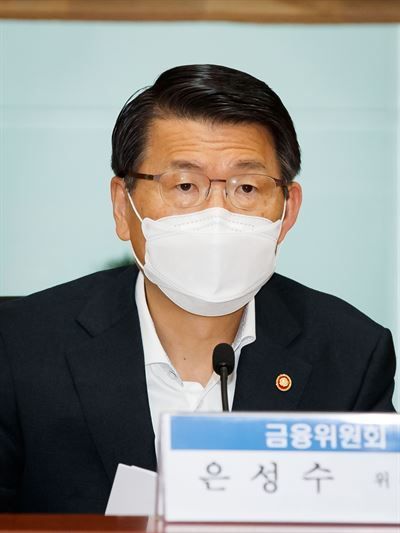
FSC Chairman Eun Sung-soo
“The National Assembly will soon review the Capital Market Law for a possible readjustment which mandates the financial authorities to level up punishment for illegal short-selling. Plus, the FSC will assess the functionality and roles of market makers and liquidity providers both from necessity and an adverse effects standpoint,” the FSC chief told them.
From a political standpoint, the extension of the short-selling ban and improvement of relevant policies are necessary as President Moon Jae-in and his economic team are hoping to demonstrate that they are doing an “excellent job” controlling the coronavirus outbreak and win backing from their supporters who are increasingly disappointed over soaring housing prices in the Seoul metropolitan area.
“The Financial authorities have long been assisting institutional investors. However, we have to treat retail investors equally. If equal opportunity isn't provided to retail investors in major aspects of investment they feel is unfair, then we have to readjust policies and we are ready to do that,” Eun said urging local securities firms to cut commission rates for stock trading in sync with steady cuts in the central bank's benchmark rate.
The FSC statement also backed up Eun's statement on teaming up with other relevant agencies to specify details on how to deal with market players contravening the short-selling ban.
Because of the “accommodative monetary policy” pursued by the Bank of Korea amid the ongoing pandemic, the FSC chief warned that ample liquidity in asset markets may destabilize the financial market. “If companies that have growth potential are listed continuously and the listings lead stock price rises, then that will be beneficial to both investors and companies. This would also be a plus for the stock market in terms of running through liquidity quite positively. We are considering easing rules to help companies that have growth potential go for early IPOs,” Eun said.