Reporter's notebook A letter to busy FSC head: Trust is earned, not demanded.
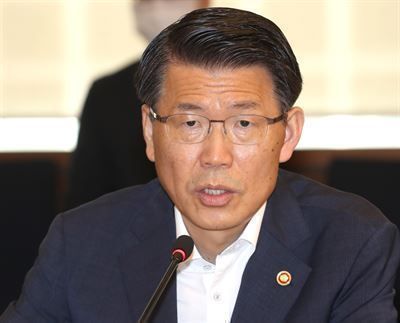
Financial Services Commission (FSC) Chairman Eun Sung-soo / Korea Times file
FSC head stymied by own lapse in judgment over glorification of fraud-ridden lender
By Lee Kyung-min
Financial Services Commission (FSC) Chairman Eun Sung-soo is busy.
At the moment, the issue that most occupies the mind of the head of the top financial authority seems to be creating a deliberative body comprised of the country's five financial groups to better reflect the opinion of traditional market players increasingly unnerved by their new, strong, technology-backed competitors.
At the top of the agenda outlined jointly by the FSC and the groups are ways to ensure fair competition between “the establishment” and latecomers, to limit financial systemic risks brought on by what the groups consider disruptive forces.
Also mentioned was “consumer protection,” a policy goal most often cited yet rarely achieved.
Funny how the issue that goes to the heart of the commission's reason for existence somehow always finds a way to conveniently elude him, especially when he needs to take responsibility for something bad happening, followed by immense investor losses.
From Sept. 9, 2019, the day of his inauguration as FSC chairman, a slew of scandals involving the country's financial service providers, notably hedge funds and peer-to-peer (P2P) lenders.
Redemption requests sought by thousands of investors that put money into Lime and Optimus among many other hedge funds remain unmet. Many of them are seeking a legal remedy for what they claim was the result of fraud. Some estimate their total losses could exceed 6 trillion won ($4.8 billion).
Granted, creators and sellers of the intricately designed financial products are not completely off the hook. But the explosive market expansion was enabled by the FSC's 2015 decision to lower the minimum amount eligible for hedge fund investments to 100 million won per person from 500 million won.
The easing led the market to grow to 424 trillion won as of July, nearly triple the 176 trillion won in 2014.
Eun may claim plausible deniability given he was not in charge at the time. But he has no excuse for remaining negligent in monitoring the financial market, especially because it tends to grow much faster than oversight measures can keep up with.
The embarrassment from fiascos concerning mismanaged hedge funds pales in comparison to one that involved P2P lenders, the once-touted “innovative” method of debt financing defined as borrowing between individuals and firms on a digital platform that bypasses traditional intermediary banks.
In November 2019, Eun paid a rare visit to a storage warehouse in Paju, Gyeonggi Province, operated by P2P lender Pop Funding, praising with the highest regard what he said was the “prime example of financial innovation to lead the industry development.”
What he failed to see at the time though was the fraudulent nature of its business model whereby the principal and interest paid on the initial investments of previous investors were pulled from a group of new investors, an allegation substantiated by the Financial Supervisory Service (FSS) about a month after his visit.
Three key officials from the firm were indicted for fraud July 17 following months of investigation. They allegedly defrauded 156 investors of 55.1 billion in funds pooled by six asset management firms by forging appraisal documents for collateral.
The lender-created financial product was repackaged and sold to about 23,000 investors, reporting sales of 166.8 billion won. The amount yet to be redeemed stands at 105.9 billion won, over 63 percent of the total.
Further tainting the reputation of Korea's financial regulator is a loss of 43.6 billion won allegedly incurred by a Luxembourg-based hedge fund Silverhorn, an investment consultancy that bought the shaky products via the Industrial Bank of Korea (IBK) Securities since 2016.
Every time Eun has since been asked about the fraud-ridden lender, he said the issue was regretful adding he felt devastated. But clearly lacking beyond the obvious “lip service” answers was his sincere acknowledgement of his poor judgment.
Instead, he preached that financial services should be “all about trust,” a remark that rings hollow given that the rash glorification of what later turned out to be a fraud-ridden lender is a clear indication of how the FSC patently failed to screen the high-risk business. Trust is earned, not demanded.
More worrisome is that “the few isolated” irregularities have led to an overall stricter rule set to take effect Aug. 27,which is being rapped by the P2P industry as “growth-stunting” measures under which not a single P2P firm will flourish.
The commission's catchphrase under his leadership has been “Innovative finance: greater opportunities, grow together.”
Perhaps Eun should take this moment to reflect on his rash judgment that “inadvertently” has entailed far-reaching consequences, not only to himself but to a budding industry in dire need of government help to become a much-needed new source of innovation.
Otherwise, what was meant to inspire will be ridiculed for the exact opposite outcome ― lost opportunities for most P2P lenders, with the industry crumbling altogether.
Eun is busy. Everybody knows it. But he shouldn't be too busy to take the time for an opportunity to learn from his mistakes.