INTERVIEW Another market turmoil in the offing, warns JPMorgan Asset Management
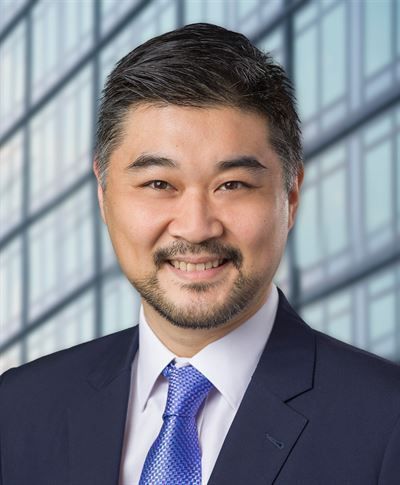
JPMorgan Asset Management Asia Chief Market Strategist Tai Hui / Courtesy of JP Morgan Asset Management
Senior Asia market chief suggests 'defensive approach' until virus containment in US, Europe
This is the seventh in a series of interviews with global economic experts analyzing the economic fallout of the COVID-19 pandemic and possible countermeasures against a global recession. ― ED.

By Lee Kyung-min
Investors should avoid stocks and focus on safer assets in the short term as financial markets here and abroad are highly likely to undergo another round of severe turbulence amid the spread of COVID-19 in the U.S. and Europe, a senior market strategist at a global investment banking powerhouse said Wednesday.
His advice comes as markets have shown signs of stabilization over the past week on the back of a global wave of economic rescue packages that are providing unprecedented amount of liquidity.
“We are still advocating a more defensive approach in the short term with more emphasis on government bonds and fixed income,” JPMorgan Asset Management Asia Chief Market Strategist Tai Hui told The Korea Times.
Notwithstanding the recent plunge in stocks, in his view, it is too early to reorganize investment priorities to increase holdings in the highly volatile equity market, given the global pandemic is still spreading in the United States and Europe with the first round of economic impacts just starting to hit.
Also factoring into the assessment is the collective trend he points to that is far from a market stabilization perspective.
“I think in the near term, we could still experience high volatility in the equity market as investors adjust their expectations on the economy and corporate profitability. We think Asian investors should still focus more on volatility management,” said the Hong Kong-based economist at the investment arm of JPMorgan Chase.
He believes that it would be better for investors to hold off going into the equity market until after COVID-19 shows considerable signs of abating.
“Once the rate of increase in new infections peaks in the U.S., or there is material progress in the development of a vaccine, we think investors can then increase their allocation in equities,” said the Cambridge-educated economist with a master's in international and public affairs from the University of Hong Kong.
Unlike many short-term investors strained by sharp plummets in asset values over the past few months, however, the asset classes that have become more “attractive” could in his view prove an optimal opportunity for long-term investors.
“The good news for long-term investors is that a lot of asset classes are now more appropriately priced. The correction in March meant that a lot of risk assets have become cheaper which in turn will attract long term investors once the pandemic has stabilized,” Hui said. “This therefore is an opportunity to those who can tolerate some short-term market volatility.”
Focus on saving businesses
In order to cope with crisis triggered by the coronavirus pandemic, Hui called on governments and the financial authorities to place top priority on offering the best support for companies to prevent them from going bankrupt.
“The ability to recover from this crisis will depend on whether businesses can survive in the coming months,” he said. “Households, especially workers in the retail sectors and others impacted by social distancing will also need help to support their spending.”
He pointed out that the economic slowdown of the magnitude illustrated by the latest economic data is something that has not been observed in modern history, citing China's sagging growth and devastating U.S. job data.
China's growth is likely to contract in the first quarter from a year earlier, the first since China's economic liberalization started in late 1970s. The U.S. Labor Department reported unemployment claims soared to a record-high 6.6 million in the fourth week of March, more than double the week before.
Expectations are that in the coming weeks the labor market could blow past the 8.7 million jobs lost during the 2009 global financial crisis.
Hui expects that the future course of the global economy will hinge on how fast the pandemic comes to an end and when governments relax restrictive measures, such as “social distancing” and lockdowns.
“If this can be achieved in the next one or two months, the global economy can still recover quickly. However, a prolonged shutdown would undermine the pace of global recovery.”
Dollar's strength continues
In the near term, he views, the U.S. dollar is likely to stay strong since it is the currency of choice when markets are under stress, implying pressure on Asian and emerging market currencies, including the Korean won.
But once the pandemic stabilizes and an economic recovery is underway, the greenback is expected to weaken.
“The U.S. dollar is expected to depreciate given the country's current account and rising fiscal deficit, as well as much lower yields compared to before the pandemic started. This would also imply that Asian currencies should appreciate thereafter,” he said.
He attributed the massive foreign selling spree in the local market to Korea's heavy exposure to the global economy, saying that it is not caused by a Korea-specific domestic problem.
Korea is a very open economy making its economic and corporate performances highly exposed to the global economy, which he considers the most important aspect in driving market volatility here.
“Typically we don't see capital outflow in one specific Asian market, unless there are specific domestic problems. Hence if we see capital outflow out of Korea, this is because of a global trend of risk aversion, rather than specific factors to the Korean market,” he said.