All eyes on SkyLake's exit from Outback Steakhouse

An Outback Steakhouse restaurant in Pohang, North Gyeongsang Province / Korea Times file
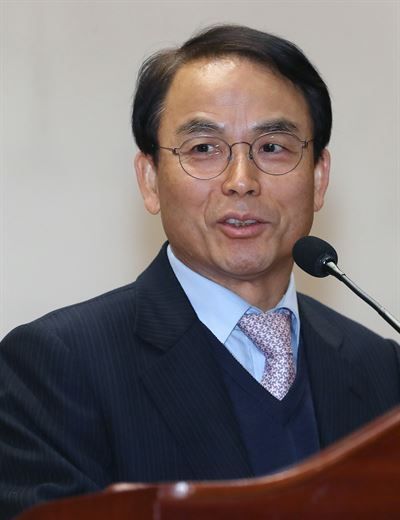
SkyLake Investment CEO Chin Dae-je
By Park Jae-hyuk
SkyLake Investment is drawing keen attention from observers in the nation's capital market as the private equity firm (PEF) began moving this year to unload Outback Steakhouse Korea which it bought four years ago.
According to industry sources, SkyLake recently selected Credit Suisse as the adviser to the sale of the Australian-themed casual dining restaurant chain's Korean operation.
Given that foreign PEFs have failed in their attempts to exit restaurant franchises here over the past few years, all eyes are on the domestic buyout fund operator's latest step.
SkyLake took over the entire stake in Outback's Korean subsidiary from the U.S.-based Bloomin' Brands International for 57 billion won ($47 million) in July 2016.
Back then, the local subsidiary posted 195.5 billion won in sales and 2.5 billion won in operating profits, having suffered from falling popularity of casual dining restaurants amid changes in trends.
As SkyLake closed underperforming stores and began to sell premium steak, however, the restaurant chain's revenue and operating profit in 2018 jumped to 230 billion won and 13 billion won, respectively.
Its enterprise value is now estimated at up to 260 billion won.
“Outback's earnings improvement is a positive factor for its enterprise value,” a restaurant industry official said.
As for buyers, Hyundai Department Store Group has been mentioned as a potential bidder.
The retailer had participated in the bidding in 2016 as a strategic investor, but withdrew from it afterwards as the restaurant chain's price was higher than expected.
Its aggressive M&A drive in recent years, however, has more market observers expecting the department store operator to join the forthcoming bid for Outback.
Hyundai Department Store Duty Free, one of the group's subsidiary, plans to acquire Doosan's duty free business unit by the end of February.
In 2018, another of the group's subsidiaries, Hyundai Home Shopping, took over Hanwha L&C, a local construction materials maker, for 368 billion won. In 2017, Handsome, the group's apparel business unit, bought SK Networks' fashion business unit.
But there still exists skepticism about SkyLake's exit from Outback.
Analysts expect PEFs will continue to face problems selling their food franchises because of rapid minimum wage hikes and the economic slowdown, both of which have reduced the attractiveness of investing in restaurant franchises.
“Due to soaring rents, in addition to surging minimum wages and interest costs, restaurants have faced intensifying financial difficulties,” Kiwoom Securities analyst Park Sang-joon said.
“The increase in the number of single-person households and fewer working hours has also led customers to eat prepared food at home, rather than going out for meals.”
Morgan Stanley PE, which bought Nolboo for 120 billion won in 2011, has not been successful in making an exit from the Korean-style restaurant brand for eight years, which is far longer than the average exit period of three to five years.
Affirma Capital, which was formerly Standard Chartered Private Equity, failed in its attempt to exit Mad for Garlic in July in 2018.
Although the PEF hired Samsung Securities as lead manager at the time to sell the restaurant franchise it acquired in 2014, it could not agree on a price in negotiations with potential buyers, who were concerned about the rising minimum wage.