Xenophobia rises after real estate regulations

gettyimagesbank
By Park Jae-hyuk
The Moon Jae-in administration's toughest-ever real estate regulations that went into effect Dec. 16 have caused another unexpected side effect in Korean society ― hostility toward foreigners and immigrants.
The hostility is especially pointing at ethnic Koreans with Chinese citizenship.
In the latest demand-side regulations, the government banned mortgage lending on properties worth over 1.5 billion won ($1.3 million) and drove down the requirement for the loan-to-value (LTV) ratio from 40 percent to 20 percent on those valued at between 900 million won and 1.5 billion won.
Since then, Korean-Chinese immigrants have fallen victim to rumors spreading among investors here via internet forums, such as Dcinside, “mom cafes” and real estate investors' communities.
The rumors say the government has given benefits to the immigrants in policies regarding loans, investments and childcare, which are not available for Koreans.
“The Moon government has imposed strict real estate regulations on Koreans, while allowing Joseonjok and multiracial families to be exempt from those regulations,” one rumormonger wrote on an internet forum.
“Korean Chinese can get a mortgage for 70 percent of the appraised value of their houses. If they borrow money from banks outside of Korea, they can get unlimited amounts of money.”
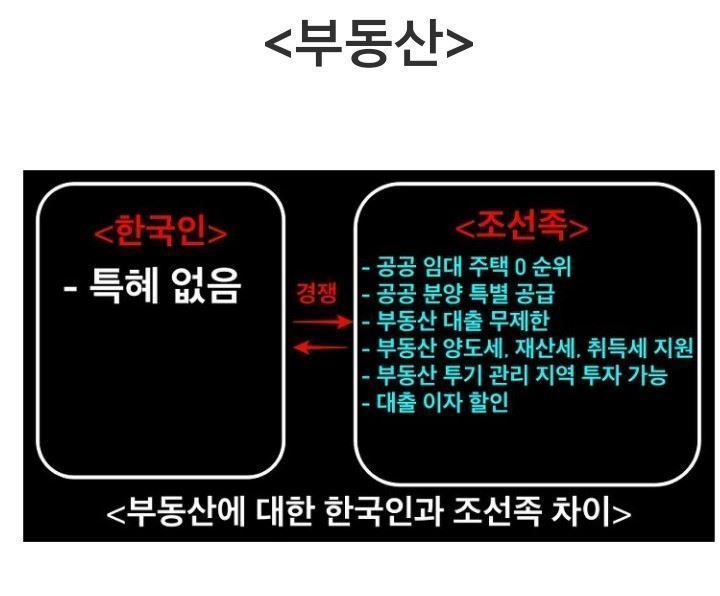
This graphic spreading among Korean investors shows that the government does not give any benefit to Koreans at all, while giving various benefits to Korean Chinese when they buy houses here. / Captured from Dcinside
Some Korean investors have begun to believe the rumor, since it was revealed a large percentage of local real estate purchases over the past few years, have been by Chinese buyers.
According to Korea Appraisal Board (KAB) data given to Rep. Hong Chul-ho of the main opposition Liberty Korea Party, foreigners bought Seoul apartments and houses collectively worth 6.36 trillion won between January 2015 and September 2019.
Other KAB data showed most of the foreign buyers were Chinese.
Their purchases accounted for 46.2 percent of Seoul housing bought by foreigners during the period, while American purchases accounted for 25.9 percent and 1.8 percent went to Japanese buyers.
“Only Korean Chinese are making money from the housing price hike,” an internet user wrote.
“We may have to rent our houses from them in the near future.”
Bank signboards written in Chinese, which can be seen easily in Seoul's Garibong-dong, Daerim-dong, Mangwon-dong and Jayang-dong, have aroused more antipathy among investors.
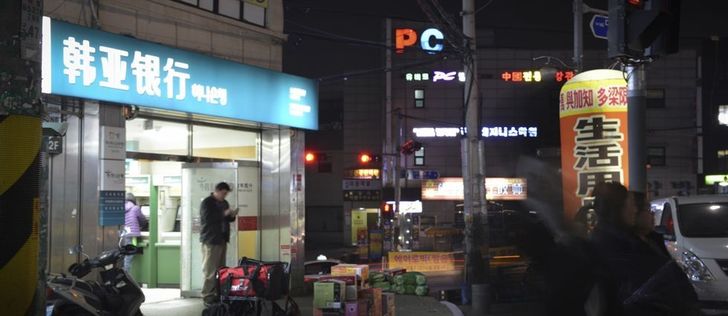
A signboard of KEB Hana Bank's branch in Garibong-dong, southwestern Seoul, is written in Chinese in this February 2014 file photo. / Korea Times file
The nation's financial regulator dismissed the rumors as groundless.
“Regulations on loans are based on national location of properties, not nationality of buyers,” said Sohn Joo-hyung, head of the Financial Services Commission's financial policy division.
“If foreigners borrow money from Korean banks to buy houses here, they are subject to the same regulations.”
He also said it iwas unlikely that foreign banks would offer mortgages for houses in Korea.
Rep. Hong, however, refuted the claim, saying foreigners have raised money for housing purchases here from “unclear sources” in other countries.
Against this backdrop, experts advised the government to ease regulations on Koreans, if it wants to eradicate xenophobia.
“The government should alleviate real estate regulations on Koreans, rather than imposing similar regulations on foreigners,” said Kwon Dae-jung, a professor of real estate studies at Myongji University.
“Fair competition is one of the principles of a market economy.”