Bithumb protests 'undue' income tax

gettyimagesbank
By Lee Kyung-min
Korea's leading cryptocurrency exchange Bithumb will file a lawsuit against the National Tax Service (NTS) over what it considers a “groundless” tax the agency imposed on its customers, sources said Sunday.
The firm will likely claim that the cryptocurrency is not a legally recognized currency and therefore lacks grounds for the authorities to impose a tax of any kind.
This followed a Dec. 27 disclosure on the Financial Supervisory Service (FSS) website about a report that the NTS imposed 80.3 billion won ($69.1 million) in withholding tax to Bithumb in November.
A withholding tax, also known as a retention tax, is an income tax paid to the government by the payer of the income rather than by its recipient.
Most applied to employment income, the tax is withheld or deducted from the income in most jurisdictions.
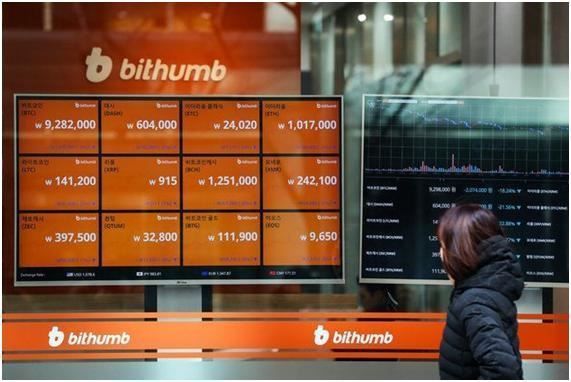
Bithumb headquarters in Seoul
This means Bithumb will have to pay the imposed amount to the NTS first before paying the remaining income to its customers.
“We are preparing for arguments after being notified of the tax,” a Bithumb official said. “We believe we will be given a chance to clarify our stance in court.”
The dispute coincides with ongoing efforts to impose tax on the new form of digital currency, which has long been criticized for its use as a means of speculation among seekers of short-term windfall gains.
The Ministry of Economy and Finance said Dec. 8 that it would seek to establish legal grounds to impose tax on income derived from, and transactions of, digital currency.
The move came amid growing public outcry demanding fair taxation based on the principle that “where there is an income there should be a tax.”
A revision bill pending at the National Assembly seeks to strengthen regulations cryptocurrency operators are subject to.
Under the revision, crypto operators must obtain approval from Korea Financial Intelligence Unit (KoFIU) for operation.
Failure to do this will result in prison terms of up to five years and fines of up to 50 million won.
Approval requests can be denied if applicants fail to meet certain safety requirements including failure to identify real-name transaction accounts.