Gov't to allocate 71.4% budget in 1st half to spur economy
By Lee Kyung-min
The Ministry of Economy and Finance plans to allocate 305 trillion won ($262 billion) in budget within the first half of 2020, in a move to spur the economy via prompt execution of public spending, it said Tuesday.
The amount is 71.4 percent of 427.1 trillion won available out of 512.3 trillion won total national budget in 2020. The remaining 85.1 trillion won is reserved for special purposes, with the use exempt from parliamentary oversight.
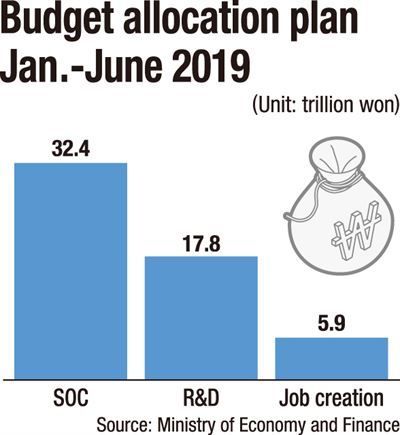
Budgets will be allocated in the January-June period by sector; 82.2 percent of the job creation budget (5.9 trillion won), 74.3 percent of the social overhead capital (SOC) budget (32.4 trillion won) and 79.3 percent of the research and development (R&D) budget (17.8 trillion won).
“The plan reflects the government's strong determination to revitalize the economy as soon as possible, in line with the previous announcement last week,” the ministry's budget coordination division director Kim Myeong-joong said.

Korea Development Institute Macroeconomic Analysis and Forecasting Director Kim Seong-tae
“Areas most in need of prompt government spending are job creation and R&D to boost competitiveness of domestic materials, parts and equipment industries.”
The ministry allocated 9.6 trillion won with which other ministries can ink contracts to initiate development projects among others within 2019, up 800 billion won from the year before.
This allows government projects eligible to use this 9.6 trillion won to be launched by up to two weeks earlier than usual, following notices set to be put up before the year's end.
Korea Development Institute (KDI) Macroeconomic Analysis and Forecasting Director Kim Seong-tae said the effort itself is commendable while uncertainties remain.
“The government tend to allocate more budget in the first half as more complications are expected in the latter half,” he said.
“SOC projects can be pushed forward relatively quickly compared to job training projects, for example, because the latter requires job seekers actually attending the programs, something the government simply cannot force people to do. It will be up to budget execution in the months to come to determine the success of the plan.”
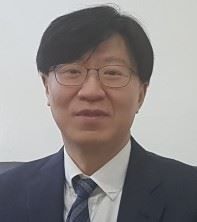
Seoul National University economist Kim So-young
Seoul National University economist Kim So-young said the priorities should be about consistency, not timeframe.
“R&Ds should not be about which month the project can be eligible for a lump sum funding, but about whether the funding can last long enough to help the project advance uninterrupted without being cut short by unfortunate budgetary constraints. R&D by definition requires time and money with long-term goals, the factors that should be taken into consideration before budget allocation,” he said.
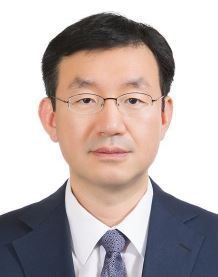
Yonsei University economist Sung Tae-yoon
Full and thorough review on necessity should precede allocation, according to Yonsei University economist Sung Tae-yoon.
“Sometimes the allocated budget remains unspent, meaning no prior review had been conducted as to whether certain projects really needed government spending. More attention should be paid to whether the money will be spent for proper use, not when,” he said.