Gov't urged to revitalize private sector in 2020

Economy and Finance Minister Hong Nam-ki / Korea Times file
By Lee Kyung-min
Economy and Finance Minister Hong Nam-ki should modify economic policies in a way that can minimize state intervention and rehabilitate the sluggish private sector in 2020, according to economists, Friday.
They have called for the finance minister, who concurrently serves as the deputy prime minister, to take more action to speed up regulatory reform and foster entrepreneurship to make Asia's fourth-largest economy more productive and innovative.
These are views of four economic experts The Korea Times interviewed as Hong just passed his first anniversary on Dec. 10.
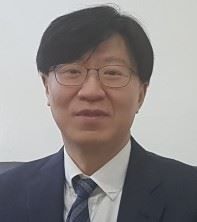
Seoul National University Economics professor Kim So-young
Seoul National University Economics professor Kim So-young said that the government should not dictate which areas should be prioritized.
“The government subsidy requirements simply lack principle, vision and understanding,” he said.
“Businesses should be able to invest and allocate resources where they best see fit to boost corporate profit. The government's meddling only stands in their way of innovation.”
The government, Kim said, should understand that an increase in short-hour, low-quality jobs undermines productivity.
“If production decreases despite a large number of people put into the workforce, this could lower productivity. Creating low-pay, low-quality jobs for people over 60 does little to boost economic growth. This coupled with policies strengthening labor rigidity is a recipe for the loss of growth drivers.”
Yoo Jung-joo, corporate innovation team head at the Korea Economic Research Institute (KERI)
Yoo Jung-joo, corporate innovation team head at the Korea Economic Research Institute (KERI), said the current administration's campaign pledge of regulatory reform and fostering entrepreneurship are nowhere to be found.
“The government is seeking to reform regulations on antitrust practices, commerce, the National Pension Service and the capital market. This is good on the face of it, but as long as the policymakers consider the enforcement ordinances revision the last resort that trumps all previous reforms, the businesses are bound to feel helpless,” Yoo said.
Similarly, an 18-month grace period given to violators of the 52-hour maximum workweek is hardly a policy redirected, he said.
“A grace period by definition means the violation constitutes a crime. This still criminalizes businesses in dire straits amid soaring labor costs and the shorter workweek, the very outcome of the failed economic policy of the current administration.”
The businesses need regulatory reform that is both clear and consistent, not ambiguous and arbitrary.
“A regulatory sandbox ― a set of laws exempting businesses from certain regulations thereby fostering them to create business models using new technologies ― is in effect, but this has limited impact on the economy. Pan-industry measures should be implemented to have a much greater, far-reaching effect,” he said.
However, some economists said Hong may deserve some credit for making continued attempts to implement economic policies in the most debated areas, Sung said.
“The regulations devised to curb both the housing market and the ride-hailing service involving Tada, a ride-hailing service operator, have backfired, but they are efforts nonetheless.”
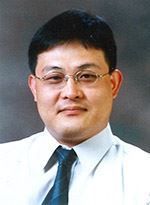
Hyundai Research Institute (HRI) Economy Deputy Director Ju Won
Hyundai Research Institute (HRI) Economy Deputy Director Ju Won partially echoed the positive assessment.
“The Hong-led policy body is undoubtedly stable in terms of the advisers' relationships compared to the previous one,” Ju said.
However, no discord does little, in his view, to dispel criticism that the economy is in worse shape than it would have been due to a string of policy failures.
Economic downcycle notwithstanding, effective fiscal policies would have slowed the pace of downturn ― if not prevented it.
“This year's growth rate is expected to be 1.9 percent, a sharper fall resulting from questionable government spending. Criticism of the finance ministry is inevitable given the failed fiscal policies,” he said.
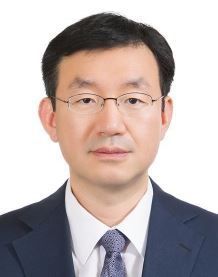
Yonsei University economist Sung Tae-yoon
Yonsei University economist Sung Tae-yoon said Hong deserves some credit for playing a key mediating role, leading to minor friction among top advisers, the government and Cheong Wa Dae.
This is an improvement from his predecessor Kim Dong-yeon whose management of state affairs essentially took a backseat to clarifying stances over “rumors” and “misinterpretations” of constant internal discord among advisers.
“If the members of the presidential office and government officials not bickering over whose voice counts more is a reason to be appreciated, the bar is set far too low,” he said.
“They are put there by the public to come together for the good of the country, not to engage in power struggles.”