Insurers cry foul over KDIC premium
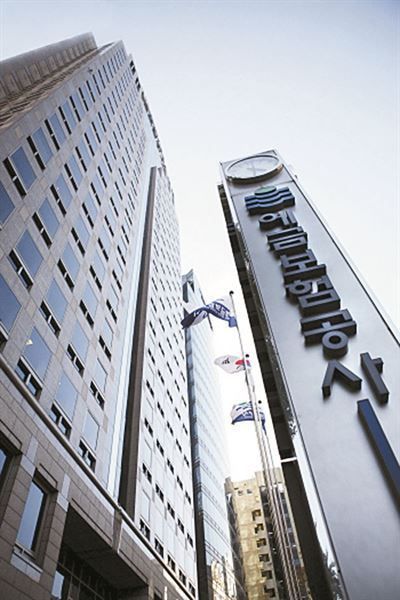
KDIC headquarters in Seoul
By Lee Kyung-min
Insurers want a reduction in the premiums charged by the Korea Deposit Insurance Corp. (KDIC).
The collective demand by life and non-life insurers has resurfaced after Korea Life Insurance Association (KLIA) Chairman Shin Yong-gil recently claimed they were unreasonable.
“The premium has doubled over the past five years,” Shin said. “If the current increase rate continues, the annual premium for life insurers will far surpass 1 trillion won ($880 million) in 2022. Measures are needed to lower the premium given the adverse business circumstances for the industry.”
Insurers and non-life insurers paid over 1.1 trillion in 2017, up from 564 billion won in 2013.
According to Shin, life insurers will have to pay 851 billion won this year and the amount will soar to 1.8 trillion won in 2022.
The insurers are even calling for a separate deposit protection scheme, given they are not exposed to the risk of a “bank run,” the main reason the KDIC requires a high premium.
A bank run occurs when a large number of customers withdraw their deposits at the same time on a shared fear that their money will be lost over insolvency concerns.
“Bank run is a fear that only concerns banks not us,” a KLIA official said. “We only give an insurance payout when certain conditions are met, including the injury or death of a subscriber.”
This is different from banks' deposits, the full amount of which should be given to customers with interest at account maturity.
“Insurance subscribers rarely seek such large withdrawals because they know they will be given only up to 30 percent of the principal if they cancel before the contract period matures,” the official said.
The reserve amount for life insurers in Korea stands at 4 trillion won, the same held by their Japanese counterparts.
“Japan has a market size four times bigger than us, and the reserve amount is the same,” the official said. “This shows how we are under greater pressure to comply with the current guideline. We are asking that the rate be readjusted in a rational manner.”
The KDIC said no immediate change in policy was in store.
Comparing Japan to Korea simply lacks logic, given Japanese subscribers have to shoulder the loss incurred by a financial institution before the burden falls on the state insurance body, a KDIC official said.
“In the event of insolvency, subscribers in Japan have to cover up to 10 percent of losses before the state deposit bodies, unlike our system, under which the KDIC has to cover the whole cost,” the official said.
While insurers are subject to a lower risk of a run compared to banks, risks still remain because about half their products are similar to installment savings offered by banks, the official said.
“Half of the insurance products offer coverage and they give back the monthly premium accumulated in total upon maturity of the contract period,” he said. “So we must consider the risks are always there.”
The 4 trillion won reserve falls short of the 8.8 trillion won spent to resolve the insolvencies of life insurers in the late 1990s when the Asian Financial Crisis hit Korea.
“Insurers say they no longer have to pay high premiums because the reserve amount is large enough, but only 30 percent of the 8.8 trillion won has been recovered thus far,” the official said. “Also, the insurance market has grown tenfold over the past two decades, meaning the risk has also become greater. It still requires a cautious approach in cutting the reserve amount.”
Discussions will continue among the Financial Services Commission (FSC), the KDIC and premium payers, the official said.