Savings banks cry foul over KDIC premiums
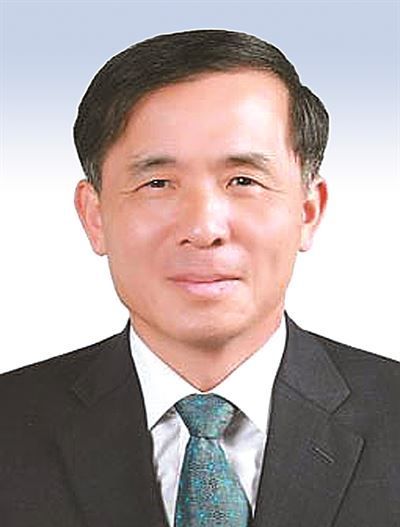
KDIC CEO Wi Seong-bak
By Lee Kyung-min
A growing number of savings banks are calling for a reduction in the amount of premiums taken by the Korea Deposit Insurance Corp. (KDIC), Wednesday.
This is part of a larger collective demand from non-bank financial institutions (NBFIs) that have long criticized what they consider an outdated, unreasonable policy.
They claim paying regular, stable premiums is unreasonable because they have rarely sought help for credit default in recent years.
KDIC said lowering the rate is not possible as of now, given the 2011 fiasco whereby 30 major savings banks shut down due to financially unsound management.
“We spent 27.2 trillion won ($25 billion) to resolve the situation at the time including setting up a special financial account by other banks, financial investment firms and insurers,” a KDIC official said.
“The account will have to be operated until 2026 and it is unacceptable for the savings banks to ask for premium reductions citing recent improvements in their financial situation.”
A possible default by a large financial firm that is deeply intertwined with the country's economy is sure to have far-reaching consequences in the market, he added.
“Retaining the current policy will help us increase our readiness in the event of such an occurrence, given the high interest rate business whose clients are mostly of mid-level to low credit, always much more vulnerable to default than their high credit counterparts.”
However, savings banks say it is unfair for the sector to be held responsible for the misdeeds of their “old, bad fellows.”
“Those that caused the 2011 fiasco are all gone now and we are left with the taint and criticism not to mention the undue financial responsibility,” said an official from the Korea Federation of Savings Banks (KFSB) representing 79 savings banks.
“The premium rate for us is high at 0.4 percent, given banks' rate is 0.08 percent. The insurance premiums pose a burden on many of us. We are asking that the rate be readjusted in a rational manner.”
Meanwhile, savings banks are pinning high hopes on Park Jae-sik, who was elected as the KFSB's new chairman, Monday.
“We are hopeful that Park will help us with our demand. He is expected to continue talks with not only KDIC but also the financial authorities,” a KFSB official said.
Meanwhile, insurers are likely to make similar claims as they paid over 1.1 trillion in 2017, doubling from 564 billion won in 2013.
The increase is notable compared to the amount paid by banks that saw only a 27 percent increase in the same period ― from 1.6 trillion won to 1.9 trillion won.