Dropping 'jeonse' prices perplex homeowners
By Yoon Ja-young
The massive supply of new apartments in and around Seoul is pulling down “jeonse” prices, adding to the concerns of housing investors who use deposits from tenants as leverage. Market watchers warn such leveraged investments will inevitably lead to financial losses for owners.
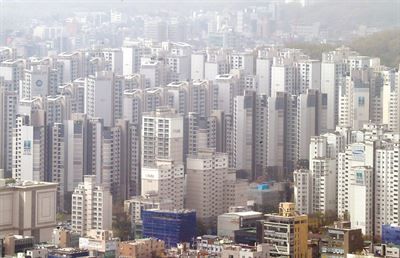
Jeonse refers to Korea's unique home rental system where tenants provide a lump-sum deposit to homeowners without paying monthly rent and get the full amount back at the expiration of the contract which usually lasts two years.
According to real estate agents in Songpa-gu in southern Seoul, jeonse prices of Jamsil LLLs and Jamsil Recenz, which are among the most popular apartment complexes in the district, are falling steeply.
To lease an 84-square-meter apartment in either of these complexes, tenants need to pay around a 750 million won ($707,000) deposit, which compares with 1 billion won several months ago.
The plunge is due to the oversupply of new apartments coming on the market over the past few months. The number of new apartments supplied in Seoul, Incheon and Gyeonggi Province recorded 10,011 in April, which is double the figure of a year ago. Construction on 55,982 new apartment units was completed in the area in the first quarter of this year, up 84 percent from a year ago. Seoul's upscale residential areas in the southeastern districts, including Songpa-gu, have especially been hit due to Helio City, an apartment complex that will supply 9,510 luxurious new homes around the end of this year on the former site of an old 134-building apartment complex.
“Homeowners of Helio City are seeking tenants in advance since they may not find any at the right time due to the massive supply on the market. It is pulling down jeonse prices of other apartments as well,” said a real estate agent in the area.
He said there isn't enough demand for jeonse. “The tenants who had enough money purchased homes recently following the steep rise of housing prices. As a result, there is not enough demand for jeonse homes now,” he said.
Homeowners are especially concerned since it reminds them of 10 years ago when 18,000 new apartments were supplied in the district. It pulled down jeonse prices, with an 84-square-meter apartment being leased for deposits below 300 million won.
Market watchers say the investors who used jeonse deposits as leverage are facing increasing risks.
“If the housing prices begin to fall, investors who leveraged on jeonse will face losses. They may put their homes up for sale at cheaper prices, further pulling down housing prices,” said Lee Mi-yun, an analyst at Real Estate 114, a housing market information provider.
“Investors should be cautious about leveraged investments since there are negative factors such as the increasing supply of new housing, stricter regulation on mortgages and a property tax hike, which may snowball their losses,” she said. A steep fall in jeonse prices increases tenant risks as well since they may not get their full deposit back upon the maturity of their contract.
According to the Korea Housing Institute, 24.4 percent of new apartments recently built around the country are vacant. Forty-two percent of the owners of these vacant apartments said they failed to find tenants, while 23.2 percent said they can't move into new housing as their old homes are not selling.